

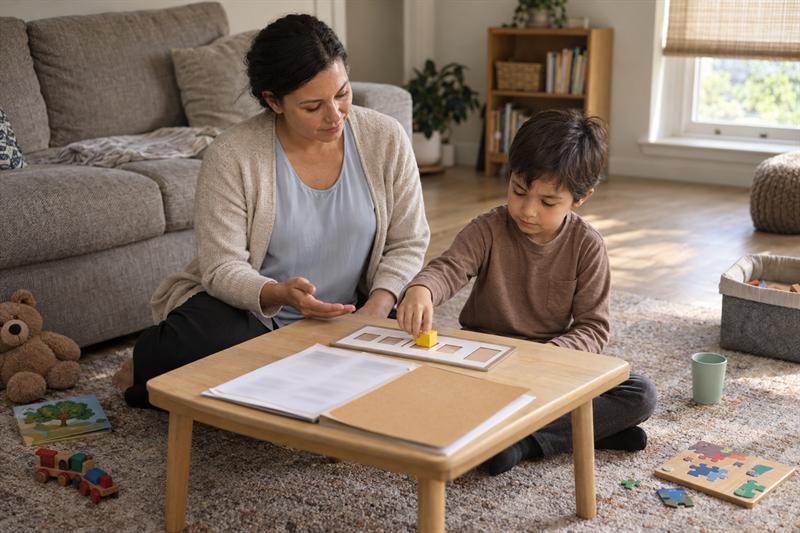
At Strive ABA Consultants LLC, this is a decision point many families reach after an evaluation, during a school transition, or when a current plan no longer fits daily life. The right choice is usually not about picking the most intensive-looking option. It is about matching goals, routines, structure, caregiver bandwidth, and access in a way that can hold up week after week.
How to Use This ABA Service Model Decision Guide
There is no single best ABA setting for every child. The right fit depends on what needs support right now, where the biggest breakdowns are happening, how much structure helps, and what the family can sustain consistently.
This guide is designed to help families compare ABA service model options with more clarity. Instead of treating home, center, school, and consultation as interchangeable, it explains what each setting is designed to do and how to decide what fits best now.
The Four Main ABA Service Models Families Compare
- Home-based ABA: Support delivered in the home, usually focused on routines, caregiver involvement, and daily carryover.
- Center-based ABA: Support delivered in a structured therapy setting, usually with predictable routines, closer supervision, and repeated practice.
- School-based ABA: Support tied to classroom participation, transitions, peer interaction, and school-day functioning.
- ABA consultation: Strategy-focused support that helps caregivers, staff, or teams use a more consistent plan across settings.
Why the Best Option Depends on More Than Location
The setting matters, but location alone does not solve the problem. A child may struggle most at home, but still need a structured environment first to learn a skill before using it during home routines.
Families often focus first on where the problem shows up. The better question is where the skill can be taught most effectively and where it needs to hold up in real life. That shift often leads to better decisions.
What Each ABA Service Model Is Designed to Do
Each ABA service model supports a different kind of need. Problems often start when families are offered a setting without a clear explanation of what that setting is meant to accomplish.
The goal is not to rank the settings from best to worst. The goal is to understand which model fits the child’s goals, the family’s routines, and the level of coordination needed across environments.
Home-Based ABA
Home-based ABA is often a good fit when the most important goals live inside daily routines. That includes transitions, mealtimes, dressing, toileting, sibling interaction, safety routines, and caregiver follow-through.
Sometimes families need support not because the child lacks all skills, but because those skills break down during real routines. In those cases, home-based work gives the team a direct view of what is happening and what may need to change. For a closer look at what this setting requires, see Planning for Home-Based ABA: Logistics, Routine Fit, and Caregiver Communication.
Center-Based ABA
Center-based ABA is often chosen when a child benefits from a more structured environment with predictable expectations, repeated practice, and close supervision. This setting may be useful when skill acquisition needs to happen with fewer distractions and more consistency.
This setting is often helpful when a child needs a strong teaching environment first. It may be less effective when families expect the center alone to address routines that mainly happen at home or in school. For a side-by-side comparison, read In-Home vs Center-Based ABA Therapy: A Practical Fit Guide.
School-Based ABA
School-based ABA is designed for classroom participation, transitions between activities, group routines, peer interaction, and staff consistency during the school day. It may be a better fit when the biggest barriers are tied to learning in an educational setting rather than to home routines alone.
Challenges in this setting can become more noticeable when support is delayed. A child who has difficulty following group directions, moving through transitions, or staying regulated in class may also have a harder time participating fully in the school day. For a deeper explanation, see What Is School-Based ABA? A Plain-Language Guide for Families.
ABA Consultation
ABA consultation is not simply a smaller version of direct therapy. It is often the right fit when the main need is helping adults respond more consistently, solve routine-specific problems, or align support across home, school, or other caregivers.
This can be especially useful when a child’s plan breaks down because adults are using different responses in different settings. In that situation, consultation targets the system around the child, not just the child’s behavior in isolation. A helpful related resource is Behavior Consultation for Families: What a Home-First ABA Consultation Process Looks Like.
The 7 Questions That Help Families Choose the Right ABA Setting
If a family is trying to decide between home, center, school, or consultation, these are the questions that usually make the answer clearer. This is where a general comparison turns into an actual decision.
1. What Skills Need the Most Support Right Now?
Start with the skills, not the setting. Communication, daily living, emotional regulation, classroom participation, social interaction, independence, and safety needs do not all point to the same model.
If the biggest concern is using skills in real home routines, a home-based model often makes more sense. If the child first needs focused teaching with more structure, center-based support is often a stronger starting point.
2. Where Do the Biggest Challenges Actually Happen?
Look at where breakdowns show up most clearly. That might be mealtime, morning transitions, the classroom, after-school care, or community outings.
What often gets misunderstood is that the hardest setting is not always the best teaching setting. A child may struggle most at school but need skills built in a more controlled environment first, then carried back into the classroom.
3. How Much Structure Does the Child Benefit From?
Some children do best when the environment is highly predictable and distractions are reduced. Others need support directly inside natural routines because that is the setting where the skill needs to work.
This usually becomes clear when a child can perform a skill in one setting but not in another. That gap can help show whether the next need is structured teaching, real-world practice, or both.
4. How Involved Can Caregivers Be During the Week?
Caregiver role matters more than many families expect. Home-based work especially depends on consistent adult participation, not because parents are expected to become therapists, but because routines can fall apart quickly when carryover is weak.
Sometimes families choose a model that looks ideal on paper but does not match the time, energy, or coordination they can realistically maintain. That can lead to missed sessions, inconsistent follow-through, and slower carryover.
5. What Role Does School Currently Play?
If the child’s hardest moments are tied to classroom demands, transitions, peer interaction, or group learning, school-based support deserves more weight. When school is the setting where the child is losing access to instruction or social participation, that is an important part of the decision.
This usually means the plan has to account for educational functioning directly. For families comparing these settings, School-Based ABA vs Home ABA: How Families Can Choose and Coordinate Support gives a more focused breakdown.
6. What Practical Barriers Could Affect Consistency?
Transportation, distance, attendance, schedule fit, caregiver work demands, and funding pressures are not side issues. They are often the reason a technically good plan becomes hard to maintain in real life.
A service model that cannot be attended consistently often leads to interruptions, uneven carryover, and repeated plan changes. At Strive ABA Consultants LLC, access planning matters because transportation, scheduling, and available funding pathways can affect whether the right plan is realistic, not just whether it sounds right.
7. Is Direct Therapy Needed, or Is Consultation Enough?
Direct therapy is often needed when the child requires structured teaching, repeated practice, or close support to build new skills. Consultation is often the better fit when the main problem is inconsistent adult response, unclear routines, or poor coordination across settings.
If adults around the child are all doing something different, the same challenges can keep repeating in multiple places. In that case, consultation is not a lesser service. It is the service that targets the actual breakdown.
When Home-Based ABA May Be a Better Fit
Home-based ABA is often the better fit when the main goals involve routines that happen at home and need to work in real time. That includes dressing, eating, toileting, transitions, bedtime, sibling interaction, and everyday communication.
- Home routines are the main source of stress
- Caregiver coaching is necessary for consistency
- The child needs support using skills during real-life routines
- Carryover matters more than a highly structured clinical environment
The tradeoff is that home-based work depends heavily on routine stability and caregiver coordination. When the home environment is inconsistent or overloaded, progress may slow unless the plan is built around what the family can realistically sustain.
When Center-Based ABA May Be a Better Fit
Center-based ABA is often the better fit when the child needs predictable structure, repeated teaching opportunities, and a setting with fewer interruptions. It is commonly used when skill building needs a strong foundation before those skills are expected to hold up at home or school.
- The child benefits from consistent structure and routine
- Focused teaching is the immediate priority
- Peer exposure or supervised practice matters
- Home or school distractions are interfering with early learning
The tradeoff is that strong performance in a center does not automatically transfer into home or classroom success. This usually means a carryover plan is needed early, not only after problems show up later.
When School-Based ABA May Be a Better Fit
School-based ABA is often the better fit when the child’s biggest barriers affect access to learning, participation in group routines, classroom transitions, or peer interaction. If the school day is where the child is consistently struggling, that setting should not be treated as secondary.
- Classroom participation is breaking down
- Transitions during the school day are a major issue
- Peer interaction goals matter now
- Staff consistency and school routines need support
The tradeoff is that school-based work may not fully address routines at home unless the plan includes communication across settings. When that connection is missing, school success and home success can split apart.
When ABA Consultation May Be the Right Starting Point
ABA consultation is often the better starting point when adults need a more consistent plan before adding more direct service hours. This happens when the child’s routines are changing, responses are inconsistent across caregivers, or home and school teams are working from different assumptions.
- Caregivers or staff need strategy alignment
- The child’s goals are clear, but implementation is inconsistent
- Transitions between settings are causing repeated breakdowns
- The support system needs clearer routines, expectations, and follow-through
This approach may lead to cleaner carryover and fewer repeated setbacks when the real problem is inconsistency around the child. Consultation is especially useful when adults need a shared plan before the child can succeed across settings.
When a Blended ABA Model Makes More Sense Than a Single Setting
Some children need more than one setting because learning, practice, and carryover are not the same task. A single-setting plan can start to fall short when a child can do the skill in one place but not in the place that matters most day to day.
A common pattern is that a child learns a skill in a structured environment, but the routine falls apart at home, in school, or during transitions. That may mean the issue is not whether the skill exists. It may mean the skill is not carrying across settings well enough yet.
Common Combinations Families Consider
- Center-based support plus home-based work for carryover into routines
- School-based support plus consultation for staff and caregiver alignment
- Home-based support plus periodic school collaboration when routines overlap across settings
How Goals Shift Across Settings
One setting may be better for teaching a skill. Another may be better for practicing it where distractions, transitions, and real expectations are present. That is why blended support can make sense.
What usually goes wrong is adding settings without a clear reason. More hours do not fix poor coordination. A blended plan usually works best when everyone is targeting the same goals with a clear role in how the skill is built and used.
Common Mistakes Families Make When Choosing an ABA Service Model
Most decision mistakes are not caused by a lack of effort. They usually happen because families have to choose quickly without being shown how service models differ in daily practice.
Choosing Based Only on Convenience
Convenience matters, but it is not enough on its own. If the easiest option does not match the child’s actual goals, the family may end up reworking the plan later after time and energy have already been spent.
Assuming One Model Works Forever
Needs change over time. A model that fit during one stage may stop fitting when school demands, routines, communication needs, or independence goals change.
This is where families often feel stuck. They think changing the model means the earlier decision was wrong, when it often means the child’s needs have shifted and the plan now needs to shift too.
Overlooking Transportation, Scheduling, or Funding Realities
Practical barriers usually do not stay small. When transportation is unreliable, schedules do not hold, or funding stress builds, consistency can break down first and progress may be affected next.
If those barriers are already showing up, the service plan may need to be adjusted before it becomes unstable.
If there are repeated missed sessions, carryover problems across caregivers, or goals that work in one setting but fall apart in another, the current model may not be fitting well enough.
- Home routines are still the hardest part of the day even with services in place
- School concerns keep coming up, but the current plan does not address the classroom directly
- The child performs well in sessions, but those gains are not showing up at home or in the community
- Different adults are using different expectations, prompts, or responses across settings
When those signs are present, a service-model change, stronger coordination plan, or updated reevaluation may be worth considering.
How Evaluations and Reevaluations Can Clarify the Best Next Step
Sometimes the problem is not the effort level or the service setting alone. The problem is that the current plan is being built from outdated information about the child’s needs, routines, or developmental stage.
This usually becomes clear when goals no longer match what the family is dealing with day to day. In those cases, an updated review can help sort out whether the issue is goal fit, service model fit, or a bigger change in support needs. Families trying to understand that shift may find What Is an ABA Treatment Reevaluation? Timing, Scope, and Questions for Families especially useful.
Key Takeaways
- The best ABA service model is the one that matches the child’s goals, the demands of the setting, and what the family can sustain consistently.
- Home, center, school, and consultation are not interchangeable. Each setting is designed for a different kind of need.
- A child may need one primary setting or a blended plan when learning and carryover need to happen in different places.
- Most service-model problems show up as weak carryover, repeated routine breakdowns, inconsistent adult response, or support that does not match the hardest setting.
- When the current plan no longer fits daily life, reevaluation and coordinated planning often become the next step.
Conclusion
The real problem is not simply choosing between home, center, school, or consultation. The real problem is choosing a model that looks right on paper but does not hold up in the child’s actual routines, school demands, or support system. When that happens, stress can build, carryover can weaken, and families may lose time trying to force the wrong format to work.
At Strive ABA Consultants LLC, this decision is approached as a fit issue, not just a service choice. When support is matched to the child’s goals, the demands of the setting, and the family’s ability to stay consistent, the plan becomes clearer and more workable. If home routines, school participation, coordination problems, or outdated goals are making the current model hard to sustain, Strive ABA Consultants LLC can help with evaluation, reevaluation, and family-centered planning.
Company Approach
Strive ABA Consultants LLC helps families sort out what support needs to happen, where it needs to happen, and what will realistically hold together over time. That includes autism evaluations and reevaluations when updated information is needed, along with planning that takes routines, school demands, transportation access, and funding pathways seriously.
The goal is not to push every family toward the same format. The goal is to build a plan that fits how the child learns, where the hardest breakdowns are happening, and what support can stay consistent across home, school, and the rest of daily life.
FAQ
How do families choose the best ABA service model?
Families usually choose the best ABA service model by looking at four things together: what skills need support, where the biggest challenges happen, how much structure helps, and what the family can sustain consistently. The answer usually becomes clearer once those four pieces are lined up.
For example, a child who struggles with mealtimes, dressing, or transitions at home usually needs a different setting than a child whose biggest barriers show up during classroom routines or peer interaction. The setting should match the problem that most needs to change, not just the option that is easiest to start.
What is the difference between home-based, center-based, and school-based ABA?
Home-based ABA focuses on daily routines and caregiver-supported carryover in the home. Center-based ABA focuses more on structured teaching, repeated practice, and predictable routines. School-based ABA focuses on classroom participation, transitions, staff consistency, and peer interaction during the school day.
The key difference is not just where services happen. The difference is what each setting is built to support most effectively. That is why these models should not be treated as interchangeable.
Can a child receive ABA in more than one setting?
Yes. Some children need one setting for learning a skill and another for using that skill where daily demands are different.
A child might build a skill in a structured center-based setting, then need home-based work to use it during real routines. Another child might need school-based support plus consultation so adults across settings respond more consistently. The important point is that multiple settings only help when the goals and roles are clearly coordinated.
When is ABA consultation enough without full direct therapy?
ABA consultation is often enough when the main problem is not that the child lacks needed skills, but that adults around the child are not using a consistent plan. In that case, adding more direct hours without fixing coordination may leave the same breakdowns in place.
For example, if home, school, and after-school caregivers are all responding differently to transitions or challenging behavior, consultation can target the real issue. It helps align routines, cues, and follow-through so the child is not relearning expectations in every setting.
Is home-based or center-based ABA better for daily routines and behavior at home?
Home-based ABA is usually the stronger fit when the main goal is improving routines and behavior that happen at home, because support is happening where the problem actually occurs. That matters for mealtimes, morning transitions, toileting, bedtime, and caregiver communication.
Center-based ABA still has a role when the child first needs stronger skill-building in a more structured setting. In that case, the center helps teach the skill, and home-based support helps make sure the skill works during real routines.
When should a family consider an autism reevaluation before starting or changing ABA services?
A family should consider a reevaluation when the current plan no longer matches the child’s actual needs, routines, or developmental stage. This usually shows up when goals feel outdated, progress stops carrying over, or school and home concerns have changed significantly since the last review.
For example, a plan built around earlier needs may no longer fit a child who now has very different classroom expectations, independence demands, or communication challenges. In that situation, the reevaluation can help clarify whether the service model needs to change, whether the goals need to change, or both.