

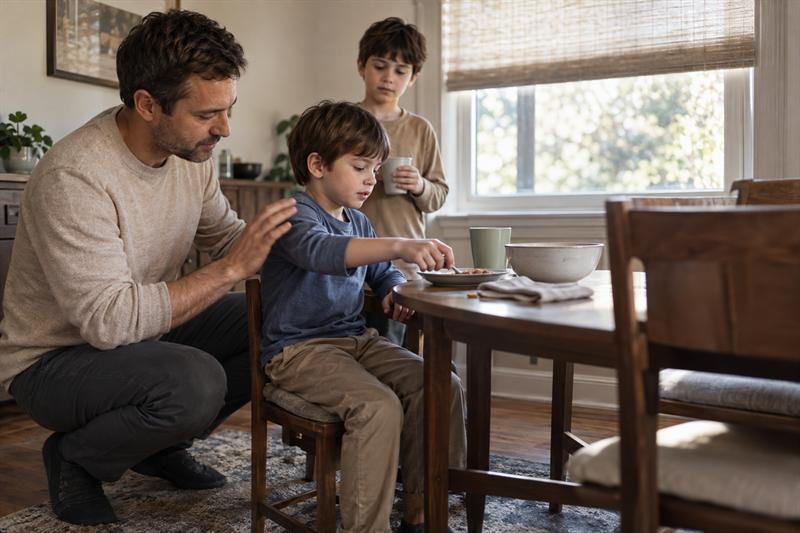
Families usually reach this decision after an assessment, a school recommendation, or an early conversation about services. That is often where the confusion starts. Both options can sound reasonable, but the decision becomes clearer when the focus shifts to three practical questions: where support breaks down most, what kind of learning environment helps most, and which format can be followed consistently.
At Strive ABA Consultants LLC, this question comes up early in the process. Families often ask which setting is better overall, when the more useful question is which setting makes progress easier to teach, easier to practice, and easier to maintain in daily life. That difference often shapes whether services feel connected to real routines or disconnected from them.
In-Home vs Center-Based ABA: What Families Are Really Choosing Between
In-home versus center-based ABA is not just a location choice. It is a decision about where learning may happen best, where routines are hardest, and what kind of support is realistic week after week. For a broader look at setting differences, see School-Based ABA, Behavior Consultation, and Staff Coaching: Which Approach Fits a Program?.
What in-home ABA usually looks like
In-home ABA therapy takes place in the child’s home and often focuses on the routines, communication demands, and behavior patterns that happen there every day. That can include getting dressed, eating, transitions, waiting, play, communication during routines, and self-help skills.
One advantage is direct practice where the challenge is happening. If the hardest part of the day is bedtime, mealtime, sibling conflict, or getting out the door, in-home services may make the most sense. Families also get to see strategies in the same setting where they will need to use them later.
What center-based ABA usually looks like
Center-based ABA therapy takes place in a structured setting designed for teaching, repetition, and routine. Sessions usually happen in an environment with fewer household interruptions and clearer expectations around transitions, attending, waiting, and participation.
This structure matters more than many families expect. Children who are easily pulled off task by noise, competing routines, or unpredictable home demands may do better when the learning environment is more consistent. That may create more usable teaching time, fewer disruptions, and clearer pacing across sessions.
Why the “best” setting depends on fit, not labels
The setting that sounds best is not always the setting that works best. This is where many families get stuck. They choose based on convenience, proximity, or a general impression of what sounds more intensive, then realize later that the goals and the setting do not line up.
When the setting and the goals are mismatched, progress may slow and consistency may become harder to maintain. That can lead to frustration, weaker carryover, and a treatment plan that looks reasonable on paper but does not hold up as well in daily life.
Quick Comparison: Key Differences at a Glance
- Environment and structure: Home is familiar but usually has more distractions. A center is more controlled and more predictable.
- Parent involvement: Home usually requires more direct caregiver participation. Centers still involve families, but not always in the same moment-to-moment way.
- Social opportunities: Centers usually make peer exposure and transition practice easier to build in. Home settings usually need more intentional planning for that.
- Scheduling and travel: Home reduces travel time but increases the need for household readiness. Centers require transportation and commute planning.
- Skill practice and generalization: Home supports direct practice in daily routines. Centers usually help build skills in a structured format before using them across settings.
The decision often becomes clearer when one of those differences stands out as the main issue. If the child’s biggest barriers are routine-based and happen in the home, that points in one direction. If the child needs a more stable teaching environment before those skills carry over, that points in another.
Environment and structure
Home gives immediate access to real-life routines, but it also brings real-life interruptions. Siblings, noise, limited space, changing schedules, and household movement usually affect how smoothly sessions run.
Centers remove many of those barriers. That does not automatically make center-based ABA better, but it can make it easier to maintain predictable expectations and cleaner teaching time. If a child loses focus quickly in a busy environment, this difference usually matters.
Parent involvement
In-home ABA usually places caregivers closer to the session and closer to the strategies being used. That can be a strength when families want direct carryover into routines and have the time and bandwidth to stay engaged.
It can become a problem when the expectation for caregiver involvement is higher than the household can realistically support. This comes up with busy families. Willingness is not the same as capacity, and when those get confused, consistency may start to slip.
Social opportunities
Center-based settings usually make it easier to work on learning near peers, tolerating transitions, waiting, sharing space, and moving through structured routines. That matters when social skill development depends on repeated practice in a setting built for it.
Home-based services can still support social goals, but they usually need more planning to create those opportunities. If social learning is a major reason services are being considered, families need to look closely at whether the home setting will provide enough practice.
Scheduling and travel
In-home ABA removes the commute, which solves one problem but exposes another. The family still has to make the home workable for sessions, protect the therapy time, and manage whoever else is moving through the routine.
Center-based ABA adds travel and transportation demands, and this is where access problems often become obvious. If commute time, pickup coordination, work schedules, or unreliable transportation interfere with attendance, the recommended setting may stop being the practical setting. If you are weighing how logistics affect consistency, Planning for Home-Based ABA: Logistics, Routine Fit, and Caregiver Communication breaks that down in more detail.
Skill practice and generalization
Home-based ABA is a strong fit when the goal is to teach and practice skills exactly where they are needed. That includes routines like meals, dressing, transitions, communication with caregivers, and expectations that happen every day.
Center-based ABA can be a strong fit when a child first needs a more structured teaching setup. Sometimes a child learns a skill in a center but still struggles to use it at home, in the community, or with different adults. That is where generalization becomes the real issue, and families often find it helpful to review how to plan skill carryover from ABA sessions to home, school, and community.
When In-Home ABA May Be a Better Fit
In-home ABA is often the stronger option when the most important goals are built into the family’s daily routine. It works best when therapy needs to meet the child in the exact setting where challenges happen and where new skills will be used repeatedly.
Goals tied to home routines
Home-based therapy is often a better fit when the priority is working on:
- mealtime routines
- dressing and hygiene
- bedtime or morning transitions
- toileting routines
- sibling interactions
- communication during everyday activities
If those are the moments that regularly fall apart, working somewhere else first may create a gap. The child may learn parts of the skill, but the hardest version of the problem is still waiting at home.
Children who benefit from familiar surroundings
Some children do better when learning starts in a setting they already know. That can reduce transition stress and make early participation easier. But familiar does not automatically mean effective.
This usually works best when the home environment is stable enough to support teaching. If the home itself is overstimulating, crowded, or constantly interrupted, the familiar setting may make learning harder, not easier.
Families who want direct carryover into everyday life
In-home ABA makes it easier for caregivers to see what supports are being used and how those supports fit into real routines. That direct visibility usually helps with carryover when caregivers can practice the same strategies between sessions.
This is often where families either gain traction or lose it. If the family wants immediate routine-based application and can stay involved, home is often a strong fit. If the plan depends on caregiver follow-through that is not realistically possible, the benefit may drop quickly.
When Center-Based ABA May Be a Better Fit
Center-based ABA is often the stronger option when the child needs more structure than the home can reliably provide. It is also more practical when the teaching environment needs to be protected from distractions, interruptions, or inconsistent routines.
Need for a highly structured learning environment
Some children learn better when the session flow is predictable, the expectations are consistent, and the environment is built for teaching. That often includes children who have difficulty with attending, transitions, waiting, or staying engaged in a busy setting.
Structure is not just about being more formal. It often leads to more usable teaching time and fewer derailments. If the child spends a large part of each session getting reoriented at home, the center may start to make more practical sense.
Opportunities for routine, transitions, and peer exposure
Center-based settings usually make it easier to work on tolerating transitions, following a routine, learning near others, and adjusting to changes in expectations. Those are meaningful differences and are often part of the reason a center-based recommendation is made.
Families sometimes focus on travel burden and underestimate how valuable structured transitions and peer exposure can be when those are active goals. If those goals are central, a home-only plan may leave part of the problem untouched.
Cases where the home environment makes sessions harder to run consistently
Sometimes the deciding factor is not the child’s preference or the family’s preference. It is the simple fact that the home setting is too difficult to use consistently for therapy. Limited space, constant interruptions, multiple caregivers coming and going, or an unpredictable household schedule can lead to uneven sessions.
If that is already happening, it may not improve on its own. It can lead to reduced teaching quality, weaker follow-through, and frustration for everyone involved. In that situation, the center is often the more workable setting.
Questions That Often Change the Recommendation
These are the questions that usually separate a general preference from a strong setting match. Families who work through them clearly tend to make better decisions and avoid the back-and-forth that happens when the format is chosen too quickly.
What are the top treatment goals right now?
Start with the goals, not the setting. If the biggest priorities are home routines, self-help, caregiver communication, and household transitions, in-home ABA usually makes more sense. If the priorities are structured teaching, sustained participation, transition tolerance, and learning in a more controlled environment, center-based ABA usually makes more sense.
When the goals are vague, the setting decision usually stays vague too. Once the top goals are clearly named, the setting becomes easier to justify.
How much caregiver participation is realistic each week?
This question matters because home-based services usually ask more of the household in real time. Families may want that involvement, but the better question is whether they can sustain it without constant disruption.
If caregiver participation is expected but not realistic, the plan may start slipping early in services. That can lead to uneven implementation, mixed expectations, and slower carryover across the week.
Is the child learning skills but struggling to use them across settings?
If a child is showing progress in one place but not using those skills at home, at school, or with different adults, the issue is usually not just teaching. It is carryover. That may mean the setting needs to be reconsidered, the plan needs better coordination, or both.
This is something families can miss because progress can look solid in session notes while daily life still feels stuck. When that happens, the important question is not whether therapy is happening. It is whether the skills are showing up where they are actually needed.
Are transportation or schedule barriers affecting access?
If attendance is hard to maintain, the setting is not a good fit no matter how strong it sounds in theory. Transportation problems, work schedules, school coordination, and caregiver availability often decide whether the plan is sustainable.
If you are seeing these signs, it may be time to revisit the format:
- sessions are being missed because travel or timing keeps falling apart
- the household cannot reliably support in-home sessions without disruption
- the child’s goals depend on a setting the family cannot attend consistently
- progress discussions keep circling back to logistics instead of skill growth
When those indicators are showing up, the issue is no longer just preference. The service format may need to be adjusted or clarified before consistency gets worse.
Common Situations Where a Mixed or Evolving Approach Makes Sense
Some families do not need a permanent answer. They need the right answer for the current stage of support. That is an important distinction, and it is one many comparison pages skip.
Starting in one setting and transitioning later
A child might begin in one setting because it fits the immediate goal, then move to another as those needs change. For example, home-based support may be the strongest starting point when the main concerns are routine-based and happen throughout the day at home.
Later, if the priorities shift toward more structured learning, longer routines, or learning around peers, center-based services may become the better fit. A setting change does not mean the first decision was wrong. It usually means the priorities changed.
Combining goals across home, center, and school realities
Different settings solve different problems. Some goals need direct practice in the home. Others improve faster in a structured setting. Others only become clear when the child moves between settings and expectations change.
This is why families need to watch for where support breaks down, not just where services happen. If the skill looks solid in one environment and disappears in another, the treatment plan needs to account for that difference directly.
Keeping therapy consistent during changes
Transitions between settings usually create confusion unless the team is clear about cues, goals, and expectations. This is where consistency often starts to break down. What worked in one place may not transfer automatically somewhere else.
If a child is moving between home, center, or school routines, how to keep ABA consistent when moving between home, center, or school settings offers practical guidance for reducing that drift. Without that kind of alignment, families may end up reteaching the same skills in multiple places.
How Evaluations and Reevals Help Clarify ABA Setting Fit
When families feel stuck between in-home and center-based ABA, the missing piece is usually not more opinion. It is clearer information about what the child needs right now and where those needs show up most clearly.
At Strive ABA Consultants LLC, autism evaluations and reevaluations can help clarify those patterns. That does not mean an evaluation automatically picks the setting. It means the decision may get stronger when it is based on current communication, adaptive functioning, support needs, and routine demands instead of guesswork.
What an evaluation may reveal about support needs
An evaluation may help clarify:
- current communication needs
- adaptive and self-help skill demands
- learning readiness and participation patterns
- support needs across routines
- where breakdowns happen most consistently
That information matters because the same child can need different kinds of support in different environments. Families who want a clearer picture of what the process looks like can review what happens during an ABA assessment before making a setting decision.
When a reevaluation can help if the current format is not working well
A reevaluation usually becomes important when the current format is no longer producing usable progress, when family logistics have changed, or when the original goals no longer match the child’s current needs. This often shows up as stalled progress, poor carryover, or constant friction around scheduling and participation.
If that is happening, continuing in the same format without reexamining the fit may lead to more of the same. The problem is not always the therapy itself. It is often the mismatch between the plan and the setting where it is supposed to work.
A Practical Decision Checklist for Families
Key Takeaways:
- The right ABA setting is the one that matches the child’s goals and the family’s ability to stay consistent.
- In-home ABA is often stronger when the biggest challenges happen inside daily home routines.
- Center-based ABA is often stronger when the child needs more structure, fewer interruptions, and a predictable teaching environment.
- Logistics matter because a strong recommendation still may fail if attendance and follow-through break down.
- A setting change usually reflects changing needs, not a failed first decision.
Clinical fit
- Where do the hardest problems happen most often?
- What skills need to be taught first?
- Does the child need direct routine-based practice, more structure, or both over time?
Family logistics
- Is it realistic to protect in-home session time without constant interruption?
- Is transportation to a center realistic every week?
- How much caregiver involvement is possible on a repeated basis?
Access and follow-through
- Which setting is most likely to be attended consistently?
- Which format is least likely to break down because of scheduling or environment issues?
- If the current plan is hard to maintain, what part is failing first?
Conclusion: The Right ABA Setting Is the One That Supports Progress and Participation
The real problem is not choosing between two acceptable ABA formats. The real problem is choosing a setting that does not match the child’s goals, the family’s routine, or the practical demands of staying consistent. When that fit is wrong, progress may slow, carryover may weaken, and families may end up spending time adjusting around avoidable barriers.
This is why the decision should be made with clear goals, clear expectations, and a realistic view of what the household or commute can support. At Strive ABA Consultants LLC, families can get help sorting through those patterns with autism evaluations and reevaluations that help clarify support needs and make the next step more practical. If the current choice still feels unclear, or if the current format is not holding up in daily life, Strive ABA Consultants LLC can help families sort through what is getting in the way and what may be a better fit.
How Strive ABA Consultants LLC Approaches This Decision
Strive ABA Consultants LLC approaches this choice as a fit problem, not a simple format preference. The focus stays on where support breaks down, what kind of learning conditions are needed, and what the family can actually sustain without the plan unraveling.
That matters because this is where many families get stuck. They may receive a recommendation but still not know whether the setting will work in real life. When the decision is grounded in routine demands, skill targets, and consistency barriers, the next step becomes clearer and more workable.
FAQ
Is in-home ABA better than center-based ABA?
No. One is not better overall. In-home ABA is often the better fit when the biggest challenges happen during home routines like meals, dressing, bedtime, or sibling interaction. Center-based ABA is often the better fit when a child needs a more structured environment with fewer interruptions and more predictable teaching time.
The most important distinction is that this is not a quality ranking. It is a setting match. If the child’s main difficulty shows up in daily routines at home, working somewhere else first may leave the hardest part unresolved. If the child cannot engage well because the home is too distracting, the center may be the more practical option.
Who is a good candidate for in-home ABA therapy?
A good fit for in-home ABA is a child whose most important goals are tied directly to home routines and whose family can realistically support that format. That usually includes goals like toileting, dressing, transitions at home, communication during routines, or reducing friction in everyday activities.
What families commonly misunderstand is that in-home does not just mean convenient. It means the home itself becomes part of the teaching plan. That works well when the home is where the skill needs to happen and when caregivers can help maintain what is being taught between sessions.
Who is a good candidate for center-based ABA therapy?
A good fit for center-based ABA is a child who benefits from structure, consistency, and a more controlled learning environment. That usually includes children who struggle with attention, transitions, waiting, or staying engaged when the home environment is busy or unpredictable.
The useful distinction is that a center changes the teaching conditions. It usually creates cleaner session flow, fewer interruptions, and more repeated practice in routines that are hard to build consistently at home. When the home setting keeps breaking the session apart, the center often solves a practical problem, not just a scheduling one.
Can a child switch from in-home ABA to center-based ABA later?
Yes. That usually happens when goals change or when the current setting is no longer the strongest match for the child’s needs. A child may start with home-based therapy to work on immediate routine challenges, then move to a center later when the priority shifts toward structured learning, transitions, or learning around peers.
This does not mean the first choice was wrong. It usually means the child’s needs changed enough that the setting should change too. The mistake is assuming the original format should stay in place just because it was the first recommendation.
How does an ABA assessment help decide the right setting?
An ABA assessment helps by clarifying what supports are needed most right now and where the biggest breakdowns happen. That usually includes communication needs, adaptive skills, learning readiness, support needs, and routine-specific challenges.
That distinction matters because the setting decision becomes much clearer when it is tied to actual support patterns instead of broad assumptions. If the assessment shows that the biggest problems are happening inside home routines, in-home ABA usually makes more sense. If it shows a need for stronger structure and more predictable teaching conditions, center-based ABA usually becomes the stronger match.
What if the recommended ABA setting does not work for our family’s schedule or transportation?
Then the recommendation is not workable yet, even if it sounds strong on paper. A setting that cannot be attended consistently usually leads to missed sessions, disrupted routines, and weaker progress over time.
This is where families need to be direct about what keeps falling apart. If transportation is blocking attendance, or if in-home sessions are constantly interrupted by the realities of the household, that is not a minor inconvenience. It usually means the format needs to be adjusted, clarified, or reconsidered before consistency gets worse.