

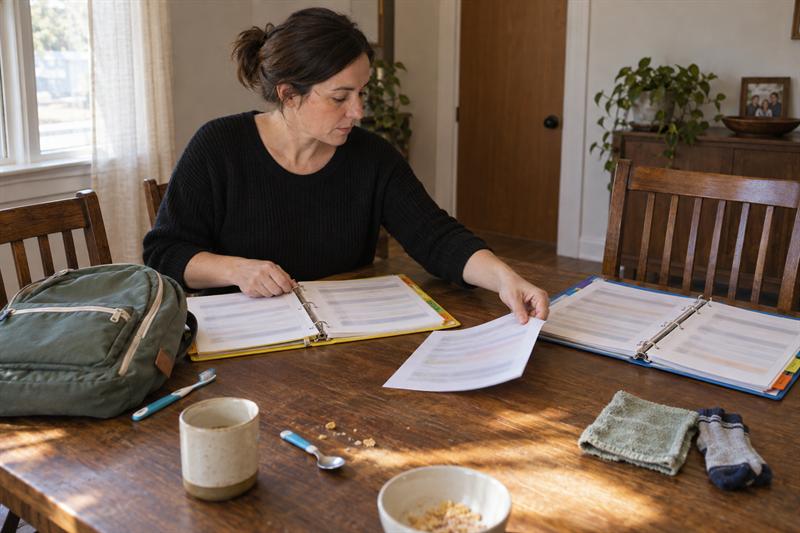
When families compare school-based ABA vs home ABA, the real question is not which one sounds better. The real question is where support is breaking down, what needs to change in that setting, and how to keep school and home efforts from pulling in different directions.
A common pattern is that a child is struggling in one place, but adults in multiple settings start using the same broad label for very different needs. That is often where confusion starts. Once goals get copied across home and school without clear role division, progress can become harder to track, expectations may get mixed, and the child may experience that inconsistency directly.
If school-based support is new, this plain-language guide to school-based ABA gives useful background. For families already comparing settings, the bigger issue is understanding what belongs at school, what belongs at home, and what needs coordination across both.
School-Based ABA and Home ABA Are Not Always Trying to Do the Same Thing
School-based ABA usually focuses on what affects the school day. That may include class participation, transitions between activities, peer interaction, following routines, and behavior that interferes with learning or safety at school.
Home ABA usually focuses on what affects life outside school. That often includes communication during routines, dressing, meals, toileting, transitions at home, sibling interaction, safety concerns, and independence in daily living.
Both settings may use ABA principles, but that does not make them interchangeable. A child can need help waiting in line, responding during group instruction, or managing classroom transitions at school and need different supports for bedtime, mealtime, or asking for help at home.
Families often hear “ABA” from more than one source and assume the same plan should apply everywhere. It usually does not. When support is matched to the setting where the breakdown actually happens, goals can become clearer and progress may be easier to interpret.
The Biggest Differences Between School-Based ABA and Home ABA
Goals and Outcome Expectations
School-based goals are usually tied to functioning during the school day. The support is centered on classroom participation, routines, peer engagement, and school-related behavior needs.
Home ABA goals are usually tied to what is happening in daily life outside school. That includes routines, communication, self-care, safety, and practical skills that affect the family every day.
If you are seeing the same skill named in both places, the next question is whether it is actually the same goal. “Communication” at school might mean asking for help during group work. “Communication” at home might mean requesting a break during dressing or telling a caregiver what is wrong during a hard transition. The label is similar, but the function is different.
Who Drives the Plan
School-based plans are built around school-based needs. The school team is looking at what is affecting access, participation, and behavior during the school day.
Home ABA plans are usually driven by outside assessment, caregiver priorities, and what is breaking down in everyday routines. That difference matters because families often assume one team will naturally cover the other team’s concerns. That can leave important gaps.
If the school is focused on classroom transitions and the family is focused on bedtime aggression or unsafe bolting during outings, one setting is not automatically solving the other. This is where role confusion can turn into delayed progress.
Where Skills Are Practiced
School is a group environment with classroom rules, peer demands, transitions, waiting, and shared attention. Home is a routine environment with meals, dressing, sibling interactions, toileting, free time, and family expectations.
That difference changes how skills show up. A child may do well one-on-one at home and still struggle in a busy classroom. Another child may follow structure at school but have difficulty during open-ended routines at home. Adults sometimes assume a skill is “learned” because it appears in one setting. It may not be stable until it works where the real demand exists.
How Parent Involvement Usually Differs
Home ABA often depends on caregiver participation. Parents and caregivers are usually part of the carryover because the routines being addressed belong to everyday family life.
School-based support works differently. Families may get updates, planning input, or progress information, but they are not usually present during daily implementation in the classroom.
This changes expectations. If a home plan is built around mealtime or transitions before school, caregiver consistency matters directly. If a school plan is built around group instruction or hallway transitions, the classroom team is usually carrying that work during the day.
When School-Based ABA May Be the Better Fit
School-based ABA is often the better fit when the main problem is happening in the school environment and interfering with participation. That includes patterns like:
- difficulty during classroom transitions or group instruction
- behavior that disrupts learning or school safety
- struggles with peer interaction during the school day
- problems following classroom routines, directions, or expected school activities
If the hardest moments are tied to the pace, structure, and demands of school, support usually needs to exist in that environment. This is one reason a school recommendation can be appropriate even when home routines are going relatively well.
What often goes wrong is that families assume home ABA will fix school problems from a distance. Sometimes home support helps with related skills, but when the breakdown is happening inside the school day, school-based planning often needs to be part of the solution.
If the school has already raised ABA as an option, families often benefit from organizing the conversation clearly. A practical next step is using a structure like this school ABA planning meeting agenda so everyone is discussing the same problem, setting, and outcome.
When Home ABA May Be the Better Fit
Home ABA is often the better fit when the main problems are happening in daily routines outside school. That often includes:
- communication breakdowns during meals, dressing, toileting, or transitions
- safety concerns at home or in the community
- self-care routines that lead to daily stress
- caregiver difficulty carrying strategies into real-life routines
Home support becomes especially useful when the family needs strategies built into routines that happen every day. That is different from practicing a skill in a school environment where the demands, pace, and people are different.
It can get harder when families wait too long and assume the child will simply “generalize” a skill from one setting to another. A child who can ask for help at school does not automatically ask for help during a rushed morning routine at home. A child who handles structured classroom transitions does not automatically manage bedtime without support.
Families comparing home-based options more broadly may also want to review this practical guide to in-home vs center-based ABA therapy if they are still deciding where outside support should happen.
When Families May Need Both School-Based and Home ABA
Signs Support Is Needed Across Settings
Some families need both because the child is struggling in more than one environment for different reasons. The clearest signs are when the child has meaningful support breakdowns at school and at home, when skills do not carry over between settings, or when each environment creates its own demands that need separate planning.
If you are seeing support break down across school routines and home routines, that often means one setting alone is not covering the full picture. The answer is not adding more services blindly. The answer is defining what each setting is responsible for.
How to Avoid Duplicated Goals
Consistency does not mean copying the same target word for word into every plan. That can create confusion instead of clarity.
A better approach is shared priorities with distinct settings. For example, both teams may care about communication, but school may focus on requesting help during class while home works on asking for help during dressing, meals, or transitions. Sometimes the same broad goal gets repeated in both places, but no one can clearly tell which setting is producing progress or where the strategy is breaking down.
If you are seeing duplicated goals, it often means the teams need clearer role boundaries. Without that, data can become messy, families may get mixed messages, and the child may have to adapt to two competing versions of “consistency.”
Why One Plan Should Not Simply Copy the Other
What works in one environment does not always transfer neatly into another without adjustment. The same behavior can look similar on the surface and still serve a different purpose depending on the setting.
A child who avoids a worksheet at school may be escaping academic demand. A child who resists getting dressed at home may be responding to a different routine pressure. Copying a plan without looking at what is driving the behavior can lead to poor fit. This is where problems can start to compound because adults assume they are aligning support when they are really flattening two different situations into one.
Clear role division can make progress easier to measure. It also helps keep each team focused on the routines and demands they actually control.
If you are seeing any of these signs, a more coordinated plan is usually needed:
- the same goal appears in both school and home plans with no clear reason
- the child is progressing in one setting but not the other
- school and home describe the same behavior in very different ways
- caregivers are spending most of their time relaying information between teams
When those patterns show up, the problem is often no longer just support need. It is also a coordination problem, and that usually calls for clearer planning.
How to Coordinate School and Outside ABA Without Creating More Stress
Decide Who Is Responsible for Which Goals
The first step is assigning goals by setting and function. School should own school-day barriers. Home support should own home-routine barriers.
That sounds simple, but this is where families often get stuck. A common pattern is that everyone agrees communication, transitions, or behavior regulation matters, but nobody clearly assigns which team handles which part. That usually leads to overlap, mixed expectations, and slow progress.
If a goal belongs in more than one environment, define the version of that goal each setting is responsible for. The child can get a clearer experience, and the adults can get clearer data.
For families trying to organize provider roles, this ABA care team meeting guide can help structure the conversation.
Share Useful Information, Not Every Piece of Data
Families do not need to become full-time translators between systems. What helps most is sharing the information that changes decision-making: what triggers the problem, what helps, where the breakdown happens, and what each setting is actually targeting.
Constant updates without a filter often create more noise. Focused communication works better because it gives each team what they need without turning coordination into a second job for the family.
If you are sharing daily details but nothing is getting clearer, that often means the communication is too broad and the roles are still too vague.
Build Consistency Where It Matters Most
Consistency matters, but not every strategy has to look identical in every environment. What matters most is that the child is not getting conflicting cues around key supports such as how to request help, when to use a break, or what happens during transitions.
This is where thoughtful alignment helps. The goal is not to make school look like home or home look like school. The goal is to reduce confusion around a few important patterns the child encounters in both places.
This can get harder when adults try to align everything. The result can be too much complexity, unclear ownership, and weaker implementation in both settings.
Use Meetings and Written Follow-Up to Reduce Confusion
Brief meetings with clear follow-up often solve more than long informal back-and-forth. A written summary of who is working on what, what supports are shared, and what needs review helps keep everyone grounded.
This is especially important when the child is receiving support across home and school and the family is already managing multiple routines. Without written follow-up, the same conversations can repeat, details may shift, and no one may be fully sure what was agreed to.
When coordination is slipping, a simple home-school format can help families reduce confusion and keep communication focused. Strive ABA Consultants LLC often finds that teams follow through more consistently when they use a shared structure instead of relying on memory and scattered updates.
Questions Families Can Ask Before Choosing or Combining Support
Questions for the School Team
- What specific school routines or demands are breaking down?
- When does the problem happen most often during the school day?
- How will progress be measured in the school setting?
- What support is the school expecting to happen in school versus outside school?
These questions clarify whether the concern is truly school-based. If the answers stay broad, that often means the plan needs more definition before families can judge whether school support alone is enough.
Questions for an Outside ABA Provider
- What goals would be addressed at home specifically?
- How will the home plan avoid duplicating school targets?
- How much caregiver participation is expected?
- What information from school would actually change the home plan?
These questions matter because outside support is most useful when it addresses a real home or cross-setting problem. If the provider cannot explain what belongs in the home plan, that usually means the fit is still unclear.
Questions for Yourself as a Parent or Caregiver
- Where do the hardest moments happen most often?
- What routines are creating the most stress right now?
- Is the child struggling in one setting or across several?
- Would another layer of support solve a problem or just add complexity?
These questions help families separate urgency from overload. Sometimes the clearest next step is not adding more support immediately. It is narrowing down where the breakdown is happening so the right setting can address it.
Key Takeaways
- School-based ABA and home ABA use similar principles but usually serve different purposes.
- School-based ABA is generally tied to participation, routines, and barriers during the school day.
- Home ABA is generally tied to communication, routines, safety, and daily life outside school.
- When both are involved, duplicated goals often create confusion instead of consistency.
- The most effective coordination usually happens when each setting has clear role ownership.
Conclusion
The real problem is not choosing between two labels. The real problem is misunderstanding which setting is supposed to address which issue. When that is not sorted out, school goals can get blurred with home goals, communication can get messy, and the child may end up in a plan that feels less consistent instead of more supportive.
When this goes unaddressed, the result is often slower progress, harder routines, and more frustration for everyone involved. Families may spend months trying to coordinate support informally when what is really needed is clearer role definition, better planning, and updated information about where support is actually breaking down.
Strive ABA Consultants LLC can be a practical next step for families who need help sorting out that confusion. Whether the issue points to updated evaluation information, reevaluations, or clearer support planning, the goal is to make the setting fit the problem instead of forcing the problem into the wrong setting. That is often the shift that helps families move out of overlap and into a plan that makes more sense.
Company Approach
At Strive ABA Consultants LLC, the approach starts with one practical question: where is support breaking down, and what information is needed to make the next decision clearly? That matters when families are trying to separate school-based concerns from home-based concerns or decide whether updated evaluation information is needed before moving forward.
A common pattern is that families are not just choosing services. They are trying to make sense of conflicting impressions across school, home, and outside providers. Strive ABA Consultants LLC helps bring that picture into focus so decisions about evaluations, reevaluations, and support planning are based on the actual pattern of need instead of broad assumptions.
FAQ
Is school-based ABA the same as home ABA?
No. School-based ABA and home ABA may use some of the same behavior principles, but they usually serve different purposes. School-based support is typically focused on what affects participation in the school day, such as transitions, classroom routines, peer interaction, or behavior that interferes with learning. Home ABA is more often built around daily living, communication during routines, safety, independence, and caregiver implementation.
A useful distinction is this: the same child might need help waiting in line, following group directions, or managing classroom transitions at school, but need help with dressing, mealtime, or asking for help at home. Those are not interchangeable demands, even if both settings use ABA-based strategies. What matters most is which environment is creating the challenge and what kind of progress the support is meant to produce.
How do families know whether a child needs ABA at school, at home, or both?
The main deciding factor is where the most meaningful challenges happen and whether those challenges are setting-specific or show up across environments. If concerns are mostly tied to classroom participation, peer interaction, transitions, or school routines, school-based support is usually the better fit. If difficulties center on home routines, communication in daily life, safety, self-care, or caregiver stress around routines, home ABA usually makes more sense.
Some children need both because the demands of school and home are different. For example, a child may manage one-on-one routines at home but struggle in group instruction at school, or may do well in structured classroom routines but have frequent difficulty with toileting, mealtimes, or transitions at home. The deciding factor is whether each setting has its own meaningful barriers that need its own plan.
Can school-based ABA and home ABA work on the same goals?
They can support the same broader area, but they should not automatically duplicate the exact same goals. A stronger approach is to align the overall priority while giving each setting a distinct role. That makes progress easier to measure and avoids having two plans compete for the same target in different ways.
For example, both settings may care about communication, but school-based support might focus on requesting help during class or responding during group activities, while home ABA focuses on communication during meals, dressing, or transitions between routines. What commonly gets misunderstood is that consistency does not mean using identical goals word for word. It usually works better when the settings complement each other instead of copying each other.
Who should communicate between the school team and an outside ABA provider?
Communication works best when responsibilities are clear and the information being shared is focused. Families are often the bridge between systems, but they should not have to carry every detail back and forth. The most useful information is usually a short summary of priorities, patterns, effective strategies, and barriers that keep showing up.
What matters most is not constant communication, but purposeful communication. For example, if a child has difficulty with transitions in both settings, sharing what helps during transitions is usually more useful than sharing every data point collected in each environment. A short written plan or meeting summary reduces confusion and makes it easier for each team to stay in its own role without working in isolation.
What should parents ask when a school recommends ABA support?
Parents should ask what the school is seeing, when the concern tends to happen, and how that concern affects participation in the school day. The most useful questions are usually about context and impact: Is the difficulty happening during transitions, group instruction, peer interaction, or another part of the routine? How will the school define progress? What support is being proposed, and what problem is it meant to solve?
This matters because “ABA” can mean very different things in practice. A recommendation is more useful when it is tied to clear school-based needs instead of a broad label. If the school can describe the exact barriers and the routines involved, it becomes much easier to tell whether school-based support is enough on its own or whether the child also needs outside help for needs that show up beyond the classroom.
If support needs are unclear, should a family consider an evaluation or reevaluation?
Sometimes, yes. An evaluation or reevaluation can be useful when there is uncertainty about what is driving the concern, whether needs have changed, or why school and home are seeing very different patterns. The point is not simply to add more services. The point is to clarify what the child needs, where those needs are showing up, and which type of support makes sense.
This is especially relevant when a child’s current support plan no longer matches day-to-day challenges or when teams are interpreting the same behavior differently. In that situation, updated information can help separate school-based participation needs from home-based routine needs, which makes later planning more specific and less reactive.