

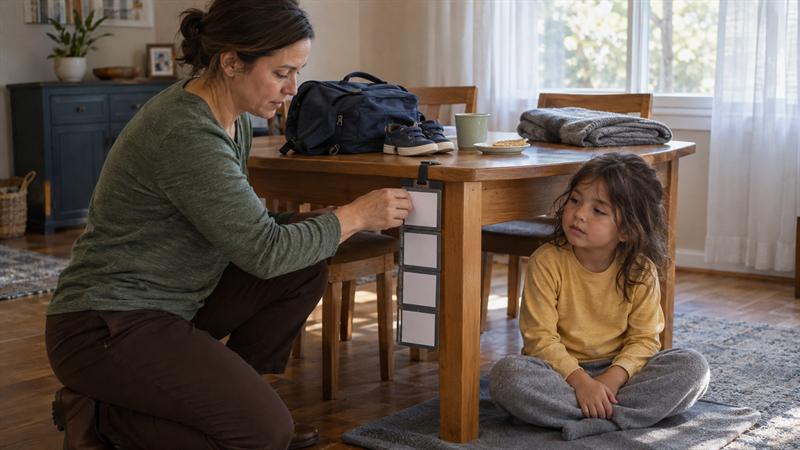
For many families, the hard part is not deciding whether home-based ABA sounds helpful. The hard part is figuring out whether it will work in a real household with school pickup, meals, siblings, changing routines, and limited time. At Strive ABA Consultants LLC, this is where planning matters most. Home-based ABA planning usually goes more smoothly when families look at routine fit first and scheduling second.
That order matters because in-home ABA logistics often start to break down when services are placed into the only open time slot instead of the most workable one. A child who is worn out after school, a rotating caregiver schedule, or a home that gets busy at the same time every evening can lead to missed sessions, rushed handoffs, and less consistency.
Is Home-Based ABA the Right Fit for Your Family’s Routine?
Home-based ABA is not just a setting choice. It is also a routine-fit decision. Families usually make better decisions when they ask, “Can this work in our actual day?” instead of “Would this be nice to have at home?”
A common pattern is choosing home-based care because home feels more comfortable, then finding that the most stressful part of the day is also the only time available. This is often where problems start. If the routine is already overloaded, adding therapy into that same stretch can lead to resistance, cancellations, or inconsistent follow-through.
What families are usually trying to solve at this stage
Most families are trying to solve practical problems, not abstract ones. They want support that fits daily life and does not add more disruption than the household can manage.
- Keeping routines more consistent at home
- Getting support around transitions and everyday expectations
- Reducing stress around scheduling and coordination
- Finding a format that can be sustained
Signs a home-based setup may be workable
Home-based care is often more workable when a few basic pieces are already in place.
- There is a fairly predictable session window
- A caregiver can reliably manage handoff or communication
- The child has at least one part of the day that is not overloaded
- The home has a usable space, even without a dedicated therapy room
Signs logistics may need extra planning
Families do not need perfect routines, but they do need to notice where stress is already building. If these patterns are present, planning may need to be more deliberate from the start.
- Frequent routine changes
- After-school fatigue
- Rotating caregivers
- Limited space or heavy household traffic
- Competing appointments or transportation strain
If you are still deciding between formats, this comparison of ABA service settings can help clarify how in-home, center-based, and school-based support differ.
What to Plan Before Home-Based ABA Starts
Before services begin, families need a routine map, not just a calendar opening. Planning usually goes better when the child’s actual day is the starting point. That means looking at school, naps, meals, transitions, activities, sibling routines, and who is available at different times.
A session time can look workable until the first few weeks reveal a hidden problem. The child may be hungry, tired from the ride home, in the middle of a difficult transition, or handed off between adults who are not sharing the same information. When that happens, the issue is rarely motivation alone. It is often a planning mismatch.
Scheduling around school, naps, meals, and transitions
Timing matters more than simply finding an empty slot. A child may technically be available after school, but that does not always mean the child is ready for one more demand during the most transition-heavy part of the day.
After-school scheduling often gets harder when families do not account for decompression time, snacks, bathroom routines, or transportation delays. If the child is already low on energy by the start of the session, that can lead to lower participation and more stress around getting started.
- Look at when the child is most regulated, not just when adults are free
- Notice whether meals or naps are too close to the session window
- Pay attention to transitions that already tend to be difficult
Choosing a workable session window
The most practical session window is often the one that can stay consistent. It does not need to be perfect. It needs to be repeatable.
A common mistake is building the schedule around the best-case version of the week. That can fall apart quickly. Planning should reflect the week that usually happens, including school events, traffic, handoffs, and household patterns that repeat.
Deciding who will be available during sessions
Someone needs to handle greeting, handoff, and key updates. That does not always mean one caregiver needs to sit through every part of every session. It means the communication role needs to be clear.
This often gets harder when households rely on multiple adults but no one is fully sure who is sharing what. If one caregiver knows the child had a hard school day and another adult handles pickup without passing that along, the session starts with missing context. That can lead to confusion that could have been avoided.
How to Think About Space, Setup, and Everyday Distractions
Families do not need a perfect therapy room. They need a usable environment. Those are not the same thing.
Many households assume home-based care will not work because the home is busy, small, shared, or imperfect. In practice, the bigger issue is often whether the environment is predictable enough to support a session without constant interruption.
Does therapy need a dedicated room?
No. A dedicated room can help, but it is not necessary for many families. What matters more is whether there is a predictable place or routine that supports focus for at least part of the session.
A small apartment, shared living room, or dining area can still be workable if the timing is stable and the biggest distractions are planned for. What often causes problems is not the lack of a separate room. It is a setup where screens stay on, people move in and out constantly, or no one knows where the session is supposed to happen.
Managing siblings, visitors, noise, and screen distractions
Home-based sessions happen inside real family life. That means siblings, visitors, pets, televisions, devices, and background noise need to be considered early, not after they start disrupting sessions.
Sibling dynamics can be easy to underestimate at first. Families may focus on the child receiving services and not explain the new routine to brothers or sisters until conflict starts. That can lead to interruptions, frustration, and attention-seeking during session time. Articles like ABA sibling support for routines and changes can help families think through that piece ahead of time.
- Plan where siblings will be during the first part of the session
- Reduce screen distractions when possible
- Let other caregivers know what session time is expected to look like
Using the home environment without expecting perfection
One advantage of home-based support is that routines at home are real. That can give useful context for transitions, communication, and day-to-day expectations. But realistic does not mean completely unstructured.
The most stable home-based setups usually have a simple rhythm the child can recognize. That might be a snack, a brief transition cue, a familiar session space, and a consistent handoff. Small structure often does more than a perfect-looking environment.
- If these signs are showing up, the setup may need to change:
- The child is starting every session already tired, upset, or overloaded
- Different caregivers are giving different updates or expectations
- Siblings, screens, or traffic through the home interrupt many sessions
- The schedule keeps changing because the original time never really fit
When those patterns repeat, it usually means the routine needs a clearer structure before inconsistency becomes the norm.
Caregiver Communication: What Matters Most
Caregiver communication does not need to be constant. It needs to be useful. The goal is to share the information that changes how a session is likely to go.
A common pattern is either too little communication or too much of the wrong kind. When families say nothing about a rough night, a difficult school day, or a major routine change, important context can be missed. When communication turns into a long stream of details with no clear focus, the important patterns can get buried.
What updates families should expect to share
The most helpful updates are usually the ones that affect transitions, participation, or expectations during the session.
- Sleep changes
- School events or difficult days
- Changes in routine
- Illness or stressors
- Who will be present during the session
Families who want a simple structure for this can use a one-page ABA support plan to keep the most important details clear across home, school, and caregivers.
How to share routine changes that affect sessions
Brief updates are usually enough. A short note that says the child slept poorly, had a difficult bus ride, or will be with a different caregiver gives useful context without turning communication into a full report.
The point is not to document everything. The point is to share what changes the session. If the routine changed in a way that affects transitions, energy, or participation, that information matters.
Keeping communication useful rather than overwhelming
Communication works better when it stays focused on patterns. If the same transition is hard several times a week, that is useful. If after-school fatigue keeps showing up before sessions, that is useful.
This often gets harder when everyone shares bits of information in different places and no one is sure what matters most. Families often do better with one simple approach, one handoff point, and one clear understanding of what needs to be shared.
Common Home-Based ABA Logistics Challenges
Most home-based ABA problems do not start as major problems. They start as small mismatches that repeat. A schedule that never really fit, a handoff that keeps changing, a child who is already depleted, or a home routine that becomes too crowded at the same hour every week can eventually lead to inconsistency.
For families balancing local access concerns, school demands, and service coordination, this guide to ABA therapy logistics and access in Oak Forest, Merrillville, and Chicago gives added context on how service format and practical access often intersect.
Inconsistent attendance and changing routines
Inconsistent attendance is often treated like a motivation problem when it is really a logistics problem. If routines keep changing, sessions are scheduled at the hardest time of day, or adults are constantly improvising handoff, consistency often drops.
This is where problems can build over time. Once missed sessions become normal, it often gets harder to rebuild rhythm, expectations, and follow-through.
Child fatigue after school or other appointments
Fatigue after school is one of the more common reasons a home-based plan looks good at first and struggles later. A child who has already managed school demands, transportation, and transitions may have less capacity left by late afternoon.
If that pattern keeps repeating, the issue is often not that home-based support is wrong. The issue may be that the timing is wrong. Ignoring that pattern can lead to more resistance and less productive sessions.
Space limits, transportation issues, and family scheduling strain
Practical access affects whether services are sustainable. Limited space, hard-to-coordinate caregiver schedules, and transportation strain can all affect how consistently a plan holds together.
At Strive ABA Consultants LLC, this part of planning matters because access is not separate from care. It is part of care. When families are also navigating evaluations or reevaluations, timing and preparation often matter even more. Resources like what to bring to an ABA evaluation or reevaluation can help reduce avoidable delays and confusion.
Questions to Ask Before Starting Home-Based ABA
Families often make better decisions when they ask planning questions before services start instead of after problems repeat. The right questions can show where the routine is strong, where it is fragile, and what needs to be clarified before the first session.
Questions about scheduling and caregiver role
- What session times are realistic for the child, not just available on the calendar?
- Who needs to be present at the start or end of the session?
- What happens when routines change that week?
- How will important updates be shared?
Questions about coordination across home, school, and other caregivers
- How will consistency be maintained across settings?
- What if grandparents, sitters, or multiple households are involved?
- What information needs to be shared between environments?
When support moves across environments, consistency often depends on clear handoff systems. This guide to keeping ABA consistent across home, center, and school settings is a useful next read for that issue.
Questions about evaluation, reevaluation, and next steps
- Does the family already have the documentation needed to move forward?
- When is an evaluation or reevaluation part of the planning process?
- How do next steps change if the child’s needs or routine have changed?
If these questions are ignored, families can end up solving the same problem later under more stress. Clear answers early often help prevent repeated resets.
When a Family May Need More Than One Support Format
Home-based ABA is not always the best standalone fit. Sometimes the most practical plan includes support across more than one setting because different environments create different demands.
The important point is not to force one format to do everything. It is to notice where support works, where it breaks down, and what setup creates the most consistent follow-through.
When home-based therapy works best with other settings
Some needs are easier to address in home routines. Others may become clearer in school, community, or structured group settings. Routine fit also changes over time. What works during one season of family life may stop working when school demands, transportation, or household schedules shift.
How consistency can be supported across environments
Consistency often improves when expectations are shared, handoffs are clear, and routine supports are simple enough for different adults to use. The more complicated the system becomes, the more likely it is to break when the week gets busy.
- Shared expectations
- Simple communication tools
- Coordinated routine support
Key Takeaways
- Home-based ABA planning often works best when families start with routine fit, not just calendar availability.
- Common breakdowns can come from poor timing, unclear caregiver roles, and repeated disruptions at home.
- A dedicated therapy room is not required, but a predictable setup and manageable environment are usually helpful.
- Useful caregiver communication is specific and focused on what changes the session.
- If inconsistency keeps showing up, the problem is often in the logistics, not just in motivation.
- Some families need more than one support format to keep support more consistent across settings.
Conclusion
The real problem with home-based ABA is not that families lack commitment. It is that many plans are built around convenience instead of routine reality. When the schedule does not fit the child’s actual day, when caregiver communication is unclear, or when household disruptions are left unplanned, the same issues can keep repeating and consistency often breaks down.
If that is not addressed early, families can end up with missed sessions, more stress at transition times, and less confidence in a plan that may have been workable with better structure. Strive ABA Consultants LLC is a practical next step for families who need help making home-based support fit real routines, caregiver communication, and service planning. That can matter even more when evaluations, reevaluations, access concerns, or support across settings are already part of the picture.
How Strive ABA Consultants LLC Approaches Home-Based Planning
Strive ABA Consultants LLC approaches home-based planning by looking at where support actually holds together and where it breaks down. That includes routines, transitions, caregiver handoffs, communication, and the practical barriers that interfere with consistency.
This is useful when families are trying to sort out whether the issue is the setting itself or the logistics around it. It also matters when evaluations or reevaluations are part of the next step, because planning is often easier when the family has a clearer picture of what is happening at home, what keeps changing, and what support needs to be more consistent. When those patterns are already showing up, moving forward with a clearer plan is often the practical next step.
FAQ
How do families prepare for home-based ABA before sessions begin?
Families usually prepare best by mapping the child’s real day instead of looking for any empty slot on the calendar. School hours, meals, naps, transportation, sibling routines, and transition-heavy parts of the day matter because they affect whether a session is workable or stressful. A child who is technically home at a certain time is not automatically ready for therapy at that time. The difference between “available” and “ready” is what shapes whether the plan holds up.
Does a parent or caregiver need to be home during in-home ABA?
A caregiver usually needs to be reliably involved in handoff, updates, and routine coordination, even if that does not mean sitting through every minute of every session. What matters most is that the communication role is clear. For example, if one adult handles pickup and another adult is home at session start, both need the same understanding of what changed that day. The biggest issue is not how many adults are involved. It is whether key information gets passed along consistently.
Do you need a dedicated therapy room for home-based ABA?
No. A dedicated room can help, but it is not what makes home-based care workable. A consistent corner of a living room or dining area often works better than a separate room that is rarely used the same way. What matters most is predictability, manageable distractions, and a session rhythm the child can recognize. Families often overestimate the space requirement and underestimate the value of a simple, repeatable setup.
What if a child is too tired after school for home-based ABA?
If a child is consistently too tired after school, the schedule is often the problem before the setting is. After-school fatigue tends to build when the day already includes school demands, transportation, transitions, and other appointments. If that pattern shows up repeatedly, the child is not refusing support in a vacuum. The session window is colliding with a difficult part of the day. That often means timing needs to change or the routine around session start needs more structure.
What should caregivers communicate to an ABA team between sessions?
The most useful updates are the ones that change how the session is likely to go. Poor sleep, a difficult school day, illness, routine changes, and a different adult being present all matter because they affect transitions and participation. A short update with the right detail is usually more useful than a long recap of everything that happened. What matters most is relevance. If the information changes expectations for the session, it should be shared.
Can home-based ABA work if routines change often?
Yes, but frequent routine changes usually mean the planning needs to be tighter. A family with rotating caregivers, shared households, or shifting weekly obligations needs stronger handoff systems and clearer communication than a family with a fixed routine. The deciding factor is not whether life is perfectly stable. It is whether the family can create enough predictability for the child, the caregivers, and the schedule to stay usable over time.