
At Strive ABA Consultants LLC, families and school teams often need help with this exact challenge. The hardest parts of the day are not always the biggest events. More often, they are the repeated routine moments where directions get lost, transitions break down, and the child does not have a clear way to understand what is expected.
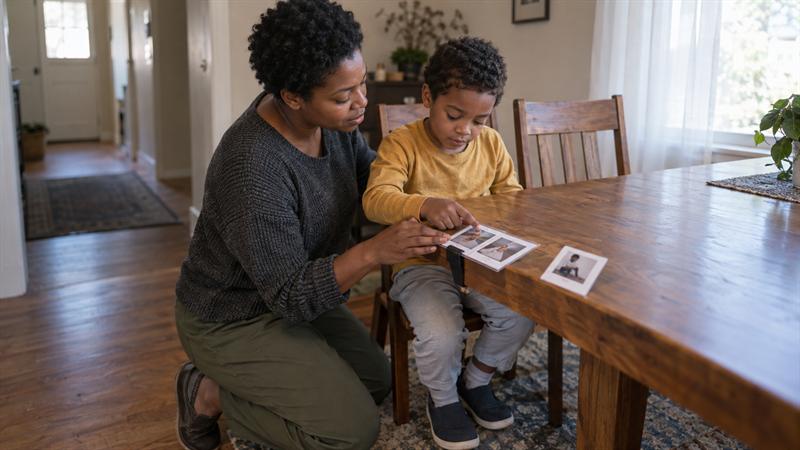
Visual supports in ABA are tools that make expectations, communication, and routines easier to see. Instead of relying only on spoken reminders, they give the child something concrete to follow during everyday tasks.
What Are Visual Supports in ABA?
Visual supports in ABA are tools used to make routines, expectations, choices, and communication clearer. They turn spoken information into something more stable, which can help when verbal directions move too fast or get lost during busy parts of the day.
- Visual schedules
- First-then boards
- Choice boards
- Break cards
- Visual timers
- Finished cues
These supports are not limited to therapy sessions. They can be used at home, at school, during transitions, and in community routines where the same challenges keep coming up.
Not every child needs the same support. A child who does not know what comes next may need a different tool than a child who knows the routine but cannot say “help” or “all done” in the moment.
Why Visual Supports Help During Everyday Routines
Spoken directions disappear quickly. Many families notice this during rushed mornings, homework time, cleanup, and getting out the door. Adults repeat the same cue several times, the child gets more frustrated, and the routine turns into a daily struggle.
Visual supports help because they keep the information available. The child does not have to rely only on hearing, remembering, and processing language while also trying to shift activities, manage emotions, or complete a task.
Sometimes adults read the moment as refusal or ignoring directions when the real issue is that the routine is not clear enough yet. This tends to show up more when the routine has multiple steps, changes often, or depends on fast verbal prompting.
Visual supports are especially helpful for:
- Transitions between activities
- Multi-step routines
- Waiting and stopping
- Asking for help or a break
- Reducing repeated verbal reminders
Common Types of Visual Supports Used in ABA
Visual schedules
A visual schedule shows the order of activities or steps in a routine. It fits best when the problem is sequencing, transitions, or uncertainty about what comes next.
Examples include a morning routine, school arrival steps, or a bedtime sequence. The value is not the picture itself. The value is that the child can see the routine instead of trying to hold it in memory while moving through it.
First-then boards and step-by-step task visuals
A first-then board narrows the focus to one immediate expectation and what happens after. This is often more useful than a full schedule when the challenge is one specific transition or task.
For example, “first shoes, then outside” is clearer than a full page of routine steps when the problem is getting through that one sticking point. A common mistake is giving a child a full-day schedule when only one part of the day actually needs support.
Communication cues and choice boards
These supports help a child express wants, needs, preferences, or simple messages such as “help,” “all done,” or “I want this.” They are most useful when the barrier is communication rather than knowing the sequence of the routine.
For many families, this is where the breakdown starts. The child may understand the task, but if there is no clear way to ask for help, reject something appropriately, or make a choice, frustration can build quickly. In some cases, supports discussed in AAC and ABA across home and school overlap with these visual communication tools.
Break cards and calm-down supports
A break card gives a child a clear way to request a pause before frustration turns into a bigger problem. It is not simply a way to leave any task at any time. It needs to be taught clearly and used consistently.
This type of support often fits when a child starts to escalate during demands, long tasks, or routines that require sustained effort. If the child has no clear way to pause, the routine can turn into avoidance, crying, shutdown, or conflict.
Timers, transition warnings, and finished cues
These supports help with stopping, waiting, and moving on. A visual timer can show how long something will last. A finished cue can show that a task is done. A transition warning can make the shift from one activity to another less abrupt.
These are small tools, but they address a common problem. Many routine struggles are not about the task itself. They often start when the child cannot tell how long something will last or when it will end.
When to Use a Visual Schedule vs. a Communication Cue vs. a Break Support
The best way to choose a visual support is to ask one direct question: what is breaking down in this moment?
- If the child struggles with what comes next, a schedule may help.
- If the child struggles to express a want, need, or choice, a communication cue may help.
- If the child struggles to keep going without escalating, a break support may help.
Generic advice tends to fall short here. One child may use all three supports, but not for the same reason. The schedule helps with sequencing. The communication cue helps with expression. The break support helps reduce frustration within the routine.
Signs a child may need clearer routine expectations
- Repeated difficulty with transitions
- Frequent verbal reminders that do not stick
- Confusion during multi-step tasks
- Resistance when the order of activities changes
If you are seeing these patterns, the issue is not always motivation first. The routine may still be too verbal, too abstract, or too fast to follow reliably.
Signs a child may need support expressing needs
- Meltdowns around help, waiting, or choice-making
- Trouble expressing “all done,” “help,” or preferences in the moment
If a child has the routine information but still breaks down when something becomes hard, communication may be the missing piece. This can result in behavior that looks sudden to adults, even though the difficulty may have started earlier when the child had no clear way to respond.
Signs a child may need a break support
- Escalation before or during demands
- Difficulty finishing tasks without a planned pause
- Need for a clearer way to request space or regulation time
If you are seeing these signs, the child may need a taught way to pause before frustration takes over. Waiting until the routine is already unraveling can make the break less useful and the moment harder to redirect.
If these patterns are showing up across home, school, or multiple caregivers, it may be time to make the support plan more consistent.
- The same routine breaks down even with reminders
- The child does better in one setting than another
- Adults are using different language or different expectations
- Problem moments are becoming part of the daily routine
When those signs are present, the issue is likely no longer just a rough day. The support system usually needs to be made clearer and more consistent.
Examples of Visual Supports for Everyday Routines
Morning routine
A short visual sequence for bathroom, getting dressed, breakfast, backpack, and shoes can reduce the constant cycle of repeating directions. Many families find this works better than verbal prompting alone because the child can return to the same visual each time instead of depending on repeated reminders.
Mealtime
Visuals at mealtime can support choices, waiting, asking for more, or showing “all done.” If the child becomes upset at the table, the real problem is often not mealtime itself. It may be that expectations and communication are not clear enough in that setting.
Homework or table tasks
A first-then board, finished cue, or simple work-break sequence can reduce negotiation and help the child see a clear path through the task. This connects closely to how adults prompt and step back over time, which is explained further in Prompting in ABA and when support is faded.
Getting ready for school
A visual checklist and transition warning can make school mornings less reactive. This can become even more effective when home and school are using shared expectations, which is why ABA home-school communication for shared goals matters in day-to-day practice.
Bedtime
Bedtime routines often improve when the steps are predictable and the ending is clear. A finished cue can matter here because uncertainty may keep routines going longer and lead to more back-and-forth between the child and adult.
Community outings
Short visual supports can help with errands, waiting, transitions, and break requests outside the home. Families sometimes focus on visuals inside the house, even though community routines are often where predictability drops the most.
How to Introduce Visual Supports Without Creating More Frustration
The most practical approach is to start with one routine that regularly breaks down. Do not begin with a full-day system if the real issue is one repeated transition.
- Start with one routine, not the whole day
- Choose a visual the child can understand quickly
- Use the same language each time
- Teach the support directly instead of expecting instant use
- Simplify if the child is ignoring or avoiding it
This is where adults often overcomplicate the process. They add too many visuals, change them too fast, or introduce them only after frustration starts. That can lead to poor follow-through and make it look like the support did not work when it was never introduced clearly enough to begin with.
Teaching the child how to use the support matters just as much as choosing the support. In many cases, the same prompting and fading principles used in ABA apply here, especially during the first stage of learning the routine.
How Visual Supports Are Faded as Independence Grows
Visual supports are not meant to stay in the same format forever. As the child becomes more familiar with the routine, the support often changes.
That does not mean removing it too quickly. Families often see this go wrong when a support seems to be working, gets pulled away too soon, and the routine starts falling apart again because the child was still relying on that structure.
Fading usually looks like this:
- Moving from a full routine strip to a shorter checklist
- Using the visual for only the hardest part of the routine
- Reducing adult pointing or verbal reminders
- Checking the visual less often as the child completes more independently
The goal is not to remove support as fast as possible. The goal is to reduce support in a way that keeps the routine stable. If the child needs repeated adult help as soon as the visual is reduced, the support was likely faded too fast.
Common Mistakes With Visual Supports
- Using too many visuals at once
- Choosing a support that does not match the actual problem
- Expecting the visual to work without teaching it
- Changing systems too often
- Using different responses across adults and settings
These mistakes often lead to the same result: adults stop trusting the support, the child stops responding to it, and the routine stays difficult. The problem is not always the visual itself. More often, it is poor matching, timing, or consistency.
When multiple caregivers are involved, inconsistency can quickly reduce the value of a good support. That is one reason articles like how to share ABA routine supports with grandparents, sitters, and other caregivers can be useful in day-to-day practice.
Coordinating Visual Supports Across Home, School, and Other Caregivers
Visual supports often work better when the adults around the child respond in similar ways. The materials do not have to look identical in every setting, but the meaning needs to stay consistent.
For example, if a break card means “short pause, then return,” that should not turn into a completely different routine in each setting. If adults respond differently every time, the child gets mixed information and the support loses clarity.
A simple shared plan helps. A strong option is a short written guide that explains:
- Which visual is being used
- What it means
- When it should be offered
- How adults should respond
This is where a one-page ABA support plan for home, school, and caregivers becomes useful. It helps keep the support practical and consistent instead of leaving each adult to guess.
When Families May Want More Guidance
If the same routines keep breaking down even after supports are tried, that may mean the issue is larger than the visual itself. The child may need clearer communication supports, a different routine structure, or a more complete understanding of what is driving the pattern.
If communication, learning, or daily functioning needs have shifted over time, a new evaluation or reevaluation may help clarify what type of support fits best. At Strive ABA Consultants LLC, that kind of guidance is part of helping families move from repeated frustration to a more workable plan.
Key Takeaways
- Visual supports in ABA work best when they match the actual barrier in the routine.
- Use a schedule for sequencing, a communication cue for expression, and a break support for pausing before frustration escalates.
- Start with one routine and one support instead of building a large system all at once.
- Teach the support directly and fade it gradually as independence grows.
- Keep expectations consistent across home, school, and caregivers.
Conclusion
The real problem is usually not simply that a child is refusing to participate. Daily routines often break down when expectations are too verbal, communication is unclear, or there is no structured way to move through difficult moments. If that is not addressed well, the same stress points can repeat every day and become harder to untangle over time.
Strive ABA Consultants LLC can help families make those routines clearer, more consistent, and easier to carry across settings. When the same transition, task, or communication breakdown keeps showing up, the answer is usually not more reminders. It is a better-matched support plan that fits how the child actually learns and responds.
Company Approach
At Strive ABA Consultants LLC, the approach is grounded in helping families and caregivers understand what is actually breaking down in a routine before adding more tools. That often leads to simpler, more targeted supports and better follow-through across home, school, and other caregivers.
This matters because visual supports are not helpful just because they exist. They help when they are matched well, used consistently, and built into the routines that are already causing stress. That is the difference between adding another chart to the wall and building support that fits daily life.
FAQ
Can visual supports in ABA be used at home even if therapy happens somewhere else?
Yes. Visual supports are often most useful in the places where routines actually break down, including home, school, the car, and community settings. They are not limited to therapy sessions because the need for clarity follows the child across environments.
For example, a first-then board used during therapy can also help with “first pajamas, then story” at home. What matters is not where the support started. What matters is whether it helps the child understand and move through the routine more independently.
What is the difference between a visual schedule and a first-then board?
A visual schedule shows a larger sequence of steps or activities. A first-then board focuses on one immediate expectation and what happens after it.
That difference matters because many children do better when the visual is narrowed to the exact sticking point. A morning schedule might show several steps. A first-then board might only show “first shoes, then outside.” If the breakdown is happening in one transition, the shorter support is usually the better fit.
How do families know if a child needs a break card or a communication cue instead of a schedule?
The answer depends on what is breaking down in the moment. If the child does not know what comes next, a schedule is usually the right tool. If the child knows the task but cannot clearly say “help,” “all done,” or make a choice, a communication cue is the better match. If the child starts to escalate and needs a functional way to pause, a break card fits that problem more directly.
A helpful distinction is this: schedules support sequencing, communication cues support expression, and break supports support regulation within the task. When the wrong tool is used, adults usually end up adding more prompting instead of solving the actual barrier.
Do visual supports only help children who are nonverbal?
No. Visual supports also help children who use spoken language. They are not only communication replacements. They also support memory, predictability, transitions, and task completion.
For example, a child may be fully verbal and still struggle with a rushed school morning or a multi-step bedtime routine. In that case, the visual is not replacing speech. It is reducing overload and making the routine easier to follow.
What should families do if a child ignores a visual schedule?
If a child ignores a visual schedule, the first question is whether the support was taught clearly and matched to the right problem. A schedule is often ignored when it is too long, too abstract, or introduced only after frustration has already started.
For example, if the problem is just one hard transition, a full-day schedule is usually too broad. A first-then board may work better because it targets the exact moment that keeps breaking down. Ignoring the visual usually means the support needs to be simplified, taught more directly, or matched more closely to the routine.
How can schools and caregivers use the same visual supports more consistently?
Consistency improves when adults agree on what the support means and how they will respond to it. The materials do not have to be identical everywhere, but the message and adult response need to stay stable.
For example, if a break card is used at school and at home, both settings should have a similar understanding of when it can be used and what happens next. If one adult treats it as a short reset and another ignores it or changes the whole routine, the support becomes confusing. What matters most is shared language, predictable follow-through, and a support simple enough to work across settings.