

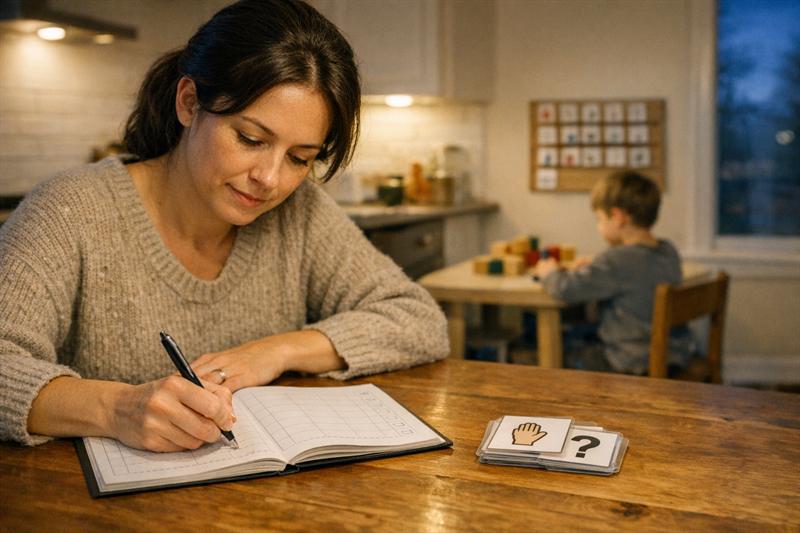
A child may ask for help easily at home but not use the same skill in class. They may follow a familiar routine during ABA therapy yet struggle when the school day moves quickly, peers are present, or expectations change. These differences do not mean anyone is doing something wrong. They can show where a skill is established and where more support is needed.
At Strive ABA Consultants LLC, families can view ABA home-school communication as a way to connect meaningful routines, not as another task that adds pressure. The goal is to share useful information so ABA goals at home and school stay practical, respectful, and focused on the child’s participation.
Why ABA Goals Can Look Different at Home and School
ABA goals can look different across environments because the environments are different. Home may involve familiar adults, fewer demands, and more time to respond. School can include group routines, peer interactions, classroom noise, transitions, changing staff, and expectations that shift throughout the day.
This is where communication problems can start. A parent may hear that a child struggled with a school transition while the same transition seems manageable at home. If adults treat those reports as competing versions of the truth, they can miss the more useful question: what changed about the routine, support, or expectation?
Different Settings Create Different Demands
A child may need to use the same skill with different people, materials, instructions, and routines before the skill becomes reliable across daily life. This process is called generalization. It refers to using a learned skill with different people, in different places, or during different routines.
For example, asking for help at a kitchen table with a parent is different from asking for help during independent work in a classroom. The child may be managing more noise, a longer wait, a different adult, or uncertainty about how to get attention. Those details can help adults identify where support is needed.
For a closer look at why learned skills may appear in one setting before another, read ABA generalization for parents and how skills transfer.
Different Reports Are Useful Information, Not a Contradiction
Home and school observations can both be accurate. A common pattern is that a child uses a skill when a routine is predictable and adult support is immediate, then has more difficulty when there are peers, time limits, or several steps to manage.
- Different adults may use different prompts or language.
- Communication tools may be available in one setting and less accessible in another.
- School routines may require more waiting, group participation, or flexibility.
- Transitions may happen faster or with less warning.
- Peer activity may add demands to a routine.
When reports differ, the next step is not to decide who is right. Identify what the child was asked to do, what support was available, and what helped them participate. That gives the team a clearer direction than broad statements such as “school was hard today.”
Start With the Few ABA Goals That Matter Across Both Settings
Parents do not need to send teachers every goal in an ABA treatment plan. Sharing too many goals at once can make it harder for the school team to identify what matters during the day. A practical approach is to choose one to three functional priorities that affect participation in both settings.
When too many goals are shared, follow-through may become inconsistent. The child may then receive mixed support across settings, and it becomes harder to tell whether a strategy is helping. A smaller focus creates clearer communication and more useful feedback.
Choose Functional Goals, Not Every Treatment Goal
Functional goals can help a child communicate, participate in routines, transition, learn, connect with others, or build independence. These goals matter because they show up in daily life, not only during a therapy activity.
- Asking for help using words, gestures, visuals, or a communication device
- Moving from one activity to another with a familiar support
- Following a simple routine such as unpacking a backpack or cleaning up
- Waiting briefly for a preferred item, activity, or adult response
- Participating in a group activity with appropriate support
- Using a coping or communication strategy when a task becomes difficult
A useful shared goal is specific enough that adults can recognize it during a routine. “Improve communication” is broad. “Use a visual or verbal request for help during work tasks” gives home, school, and ABA teams something concrete to notice and discuss.
Identify the Routines Where the Goal Matters Most
Once a priority is chosen, connect it to one home routine and one school routine. This turns a general ABA goal into something adults can recognize and support each day.
- Shared goal: Asking for help
- At home: Requesting help during homework, dressing, or a difficult game
- At school: Requesting help during independent work, centers, or group assignments
- Support to discuss: A visual cue, a familiar phrase, access to a communication device, or a short wait before adult assistance
The school team determines what is appropriate and workable in the classroom. ABA providers can offer context about individualized goals, while parents can explain where a routine is going well, where it is difficult, and what support appears useful.
Agree on What Progress Looks Like
Clear descriptions prevent vague updates from becoming the entire story. Parents and educators do not need to run a formal assessment to communicate well, but they do need language that describes what was observed.
- Less useful: “She had a hard time communicating today.”
- More useful: “She pointed to the visual schedule before lunch and accepted a two-minute wait.”
- Less useful: “He refused to transition.”
- More useful: “When cleanup started, he stayed at the table for several minutes. A countdown and first-then reminder helped him put away two items and move to the next activity.”
This level of detail helps adults identify progress, barriers, and possible adjustments. Parents are sharing observations, not replacing formal school documentation or clinical data collection.
What Parents Can Share With Teachers and the ABA Team
The most helpful updates are brief, relevant, and tied to the child’s current priorities. Long summaries of every therapy session do not always improve coordination. Specific information about routines, communication, and repeated patterns is often easier for teams to use.
A common mistake is sharing an interpretation instead of an observation. Saying a child “did not want to listen” gives the team limited information. Describing the routine, the child’s response, and what helped creates a clearer starting point.
Useful Updates to Share
- A major routine change, difficult transition, illness, or disrupted sleep that could affect participation
- A communication method that worked well, such as a visual, gesture, device, or specific phrase
- A new word, self-advocacy attempt, or independent skill observed at home
- A repeated pattern connected to a routine, described in observable terms
- A calming support that appeared helpful, such as a break, countdown, visual schedule, or reduced language
- A new interest or motivating activity that may support engagement
Families can decide what personal or health-related information is appropriate to share. A useful standard is simple: does this detail help the school understand a current support need, routine change, or participation barrier? If not, it may not belong in a routine update.
What to Keep Concise or Discuss Privately
Teachers generally do not need every detail from ABA sessions, especially when the information does not affect the school day. They also should not be expected to carry out a full clinical treatment plan without appropriate collaboration and agreement.
- Keep speculation about why behavior happened out of routine updates.
- Use private school channels for sensitive family circumstances.
- Do not ask classroom staff to duplicate therapy procedures without discussing what is feasible in the educational setting.
- Do not treat one challenging day as proof that a broader plan has failed.
Direct communication between an ABA provider and school staff may require written authorization. This can protect the child’s information and help keep conversations focused on details that support coordination.
Sample Language for Clear, Respectful Updates
Short, neutral updates are often easier for school staff to use. They also reduce the risk that adults begin working from assumptions instead of what was observed.
- “We are practicing asking for help at home. This week, she used her visual card during homework when she got stuck. Is there a school routine where that same support would be useful to discuss?”
- “Mornings have been harder after a recent routine change. A short visual countdown before leaving home has helped. Please let us know if transitions into class look different this week.”
- “Yesterday, he became upset when cleanup started. A first-then reminder and a brief pause helped him return to the routine. We are tracking whether this happens during other transitions too.”
- “Could we set up a brief check-in about how he is using his communication device during independent work? We want to understand what is working in both settings.”
Build a Home-School Communication Routine That Is Realistic
Effective communication does not require a detailed report every day. A system that is too demanding may stop working for adults with limited time, and important patterns can be missed. The practical choice is the smallest routine that still gives the team useful information.
A detailed plan can look helpful at the start, then become another incomplete task during busy school mornings, appointments, transportation changes, and competing responsibilities. A short, focused update is more likely to continue long enough to reveal a pattern.
Choose the Right Communication Frequency
- Daily notes: May be helpful during a major transition, new routine, active safety concern, or significant plan change.
- Weekly summaries: May work well for stable goals, routine progress updates, and sharing patterns without creating constant back-and-forth.
- Scheduled meetings: May be useful when a concern repeats, goals need to change, or the team needs to clarify who is responsible for follow-up.
For many stable goals, a short weekly summary is a practical choice. Daily communication is generally best reserved for information that will affect support that day. If urgent concerns arise, families should use the school’s established safety and communication process rather than wait for a routine update.
Use a Simple Home-School Communication Log
A useful log is brief enough to complete and specific enough to guide a conversation. It should support communication, not become a second set of clinical or school records.
- Date or routine: When and where did the situation happen?
- Shared goal: What skill or routine is being discussed?
- Observation: What did the child do or communicate?
- Helpful support: What appeared to help?
- Follow-up question: What does the parent or team need to know next?
For example, a parent might write: “Tuesday morning, transition to school. Shared goal: moving between routines. He used the visual countdown, walked to the car after two reminders, and asked for his headphones. Question: are headphones helpful during the walk into class too?”
Families who want a simple way to notice patterns without turning home life into a data-collection exercise can use these parent-friendly methods for tracking ABA progress at home.
Prevent Communication From Becoming Another Burden
Keep the system short. Focus on one priority at a time, use the school’s preferred communication channel, and avoid expecting every adult to write a detailed update after every interaction.
If a parent misses an update, the plan has not failed. The larger concern is a communication system that requires more time than the family or school team can consistently give. Simplifying the process helps preserve the information that matters most.
How to Talk About Behavior Without Guessing the Cause
Behavior updates are most helpful when they describe what happened instead of assigning intent. Labels such as “defiant,” “manipulative,” or “uncooperative” can shift attention away from the routine, communication need, or support gap that the team needs to understand.
If behavior is described only as a problem, adults may respond with more correction and less information gathering. That can lead to inconsistent responses across settings and make the pattern harder to understand.
Use Observable Details Instead of Labels
Describe what the child did, what was happening at the time, and what support was offered. This gives the ABA team and school staff information they can use without assuming why the behavior occurred.
- Instead of: “He was being defiant.”
- Try: “When the worksheet was presented, he pushed it away, said ‘no,’ and moved under the table.”
- Instead of: “She had a bad day.”
- Try: “She cried during two transitions and needed extra time before joining the next activity.”
Respectful, observable language keeps the focus on the child’s experience and the support needed next. It also makes it easier to see whether the same pattern occurs during similar routines.
Share What Happened Before, What Happened, and What Helped
A simple before-during-after format gives structure to an update without asking parents to determine why a behavior occurred.
- Before: What was happening immediately before the concern?
- During: What did the child do or communicate?
- After: What happened next, and what support appeared helpful?
For example: “Before cleanup, the schedule changed unexpectedly. During the transition, he cried, pushed materials away, and moved under the table. After a visual countdown and brief break, he returned and put away two items.”
This type of report helps the team identify questions worth exploring. It does not prove why the behavior occurred. Understanding the factors related to a pattern generally requires individualized review and should not be based on one event or one adult’s report.
Know When a Pattern Needs a Team Conversation
A team conversation may be helpful when the same concern keeps appearing and begins to affect participation, learning, safety, or daily routines. Without a shared plan, adults may begin responding in different ways, making coordination more difficult.
- The child repeatedly struggles with the same transition, task, or communication demand.
- There is a sudden change in participation, communication, or behavior.
- Safety concerns involve elopement, aggression, self-injury, or significant distress.
- Home, school, and therapy reports remain very different over time.
- The child’s communication system, routine, or support needs have changed.
If the same school concern keeps appearing, it may need a coordinated response rather than another isolated update.
- Your child uses a skill at home but not during the school routine where it matters.
- Teachers and caregivers describe the same transition or communication barrier week after week.
- Adults are using different prompts, visuals, or expectations without a shared understanding.
- The child is showing more distress, avoidance, or unsafe behavior during a repeated routine.
These patterns can mean the team needs to clarify the shared goal, the setting-specific supports, and the next follow-up step.
When a Child Uses a Skill at Home but Not at School
When a child uses a skill at home but not at school, the issue is not necessarily that the child “knows it” in one place and “does not know it” in another. A more useful explanation is that the skill has not yet become reliable under the different demands of the school environment.
Expecting identical performance everywhere can lead to more prompting, more frustration, and less opportunity to understand what the child needs in that routine.
Questions That Help Identify What Is Different
- Who is asking or prompting the child?
- Is the child responding to spoken language, visuals, gestures, or a communication device?
- Is the routine predictable, or does it move quickly?
- Are peers present?
- Is there more noise, waiting, group instruction, or competing demands?
- Does the child have access to familiar materials or a preferred support?
- Is the expectation truly the same across settings, or does it look different in practice?
These questions do not identify one cause. They help adults compare the conditions around the skill. Once those differences are clearer, the team has a better basis for deciding what support should be practiced, adjusted, or discussed.
Support Generalization Without Expecting Identical Performance
Generalization may require practice across people, locations, materials, and routines. A child may first use a skill with a parent, then with a therapist, then with a teacher, and later during a busy group activity. Each step can add a new demand.
Parents can share what works at home. ABA clinicians can explain how the goal is being taught and monitored. Educators can determine what is practical and appropriate in the classroom. Strong coordination does not mean every adult uses the same wording or form. It means adults understand the shared purpose of the support.
For school-specific guidance that avoids conflicting approaches, see how to support ABA therapy at school without conflicting strategies.
Keep Communication Collaborative, Appropriate, and Private
Collaboration is easier when each person understands their role. Parents should not be expected to manage every decision between school and ABA services. Teachers should not be asked to become ABA therapists. ABA providers should not assume that a classroom can duplicate a clinical setting.
Role confusion is where coordination can break down. When adults try to solve the same problem independently, the child may receive inconsistent support and the family may carry more of the communication burden.
Understand Releases of Information
Schools and ABA providers may have separate privacy processes. Written permission may be needed before an ABA provider and school team can directly exchange information about a child.
A release of information can define who can communicate, what information is relevant, and why the communication is taking place. Families can ask both organizations about their process before expecting direct provider-school coordination.
Respect the Roles of Parents, Schools, and ABA Providers
- Parents: Share priorities, observations, family context, and questions about routines that matter at home and school.
- School teams: Determine educational supports, classroom procedures, accommodations, and IEP-related services.
- ABA providers: Support individualized treatment goals, guide caregivers, review progress, and collaborate when authorized.
Alignment does not require identical strategies in every setting. It requires adults to avoid working at cross-purposes. When everyone understands the functional goal and the child’s current support needs, communication becomes more useful and less repetitive.
When to Request a Meeting
Consider requesting a meeting when a shared goal is not improving across settings, a new transition is causing repeated difficulty, or the adults involved do not have a clear follow-up plan. A meeting is not necessary for every update. It may be useful when brief communication is no longer enough to resolve confusion or coordinate support.
Families managing several providers, school services, and daily caregivers can use this guide to coordinating an ABA, school, and caregiver team to clarify roles and prepare for a more focused discussion.
A Parent Checklist for ABA Goals at Home and School
- Choose one to three ABA goals that matter in both home and school routines.
- Describe what the goal looks like in observable terms.
- Identify where the skill is easiest and where it is hardest.
- Share useful communication methods, supports, and routine changes.
- Use neutral updates instead of assumptions about why behavior occurred.
- Choose a communication method and frequency the team can maintain.
- Ask about consent procedures before requesting direct school-provider communication.
- Request a check-in when a repeated pattern affects participation, safety, or progress.
- Review priorities as routines, communication needs, and goals change.
This checklist keeps the focus on the child’s participation in daily life. A long list of updates does not necessarily create alignment. A short list of shared priorities and useful observations is easier for a team to use.
Key Takeaways
- ABA home-school communication is most useful when it centers on a few meaningful, shared goals.
- Different performance at home and school can provide useful context about routines, prompts, expectations, and support needs.
- Parents do not need to coordinate every detail. Clear observations and focused questions are often more useful than lengthy reports.
- Behavior updates should describe what happened before, during, and after a concern without assigning intent or cause.
- Direct communication between school and ABA providers may require written authorization.
- A sustainable weekly or routine-based communication system is often more effective than a detailed plan that is difficult to maintain.
Conclusion: Small, Specific Updates Can Support Shared ABA Goals
Home and school do not need to look the same for communication to be useful. Differences between settings can offer important information about routines, expectations, prompts, and available supports. When those differences are explored instead of treated as contradictions, adults are better positioned to coordinate around the child’s needs.
Start with one current ABA goal. Identify where it matters at home, where it matters at school, and what adults need to notice about the child’s communication, participation, or support needs. That creates a practical next step instead of leaving families to manage disconnected updates.
Strive ABA Consultants LLC offers autism evaluations and reevaluations for families seeking additional diagnostic information. Families can discuss school concerns, developmental history, and observed patterns across settings as part of conversations about evaluation needs and next steps.
How Strive ABA Consultants LLC Approaches Home-School Coordination
Strive ABA Consultants LLC approaches coordination by looking at the routines where a child needs a skill, not only whether the skill appears during a session. A child’s ability to communicate, transition, request help, or participate can be shaped by the setting, the people involved, and the supports available at that moment.
Useful conversations begin with specific observations. What was the routine? What did the child do? What communication or support was available? What helped the child re-engage? This approach gives families and care teams a clearer picture than broad labels or disconnected updates.
Families also need plans that fit daily life. Transportation needs, school schedules, appointments, and caregiver responsibilities can make complicated communication systems difficult to maintain. A focused process that identifies the most important shared goal is usually more practical over time.
Frequently Asked Questions About ABA Home-School Communication
What should parents tell teachers about their child’s ABA goals?
Parents can share one to three functional goals that affect daily routines, along with the child’s communication methods, useful supports, and recurring observations. For example, a parent might explain that asking for help is a current priority during homework at home and independent work at school. This gives the teacher a clear focus without expecting the classroom to duplicate every ABA target.
Why does my child use ABA skills at home but not at school?
Skills can look different across settings because school adds different people, routines, peer demands, noise, waiting, and expectations. A child who requests help from a parent during a quiet activity may need more support to request help during a busy classroom task. The difference can show where generalization needs attention, not that the child has lost the skill.
How often should parents communicate with teachers about ABA progress?
For stable goals, a short weekly update is often practical. Daily communication may be better reserved for major transitions, significant routine changes, active safety concerns, or information that will affect support that day. The best system is one that stays consistent long enough to reveal meaningful patterns.
Can an ABA provider talk directly with my child’s school?
Direct communication can be useful when adults need to align around a shared goal, repeated pattern, or major transition. Written authorization may be needed because schools and ABA providers can have separate privacy processes. The important detail is defining what information should be shared and how it will support the child’s current routines.
How should parents report challenging behavior to an ABA team?
Describe what happened before the behavior, what the child did in observable terms, what happened afterward, and what support helped. For example, “Before cleanup, the schedule changed. He cried, pushed materials away, and moved under the table. A visual countdown and brief break helped him return.” This gives the team useful context without assuming why the behavior occurred.
What is the best home-school communication tool for ABA goals?
The best tool is one the family and school team can use consistently, such as a communication notebook, secure school message, brief weekly email, visual log, or scheduled check-in. A simple format that tracks the routine, shared goal, observation, helpful support, and follow-up question is often more useful than a detailed daily report. The tool should guide conversation, not replace formal school or clinical records.