

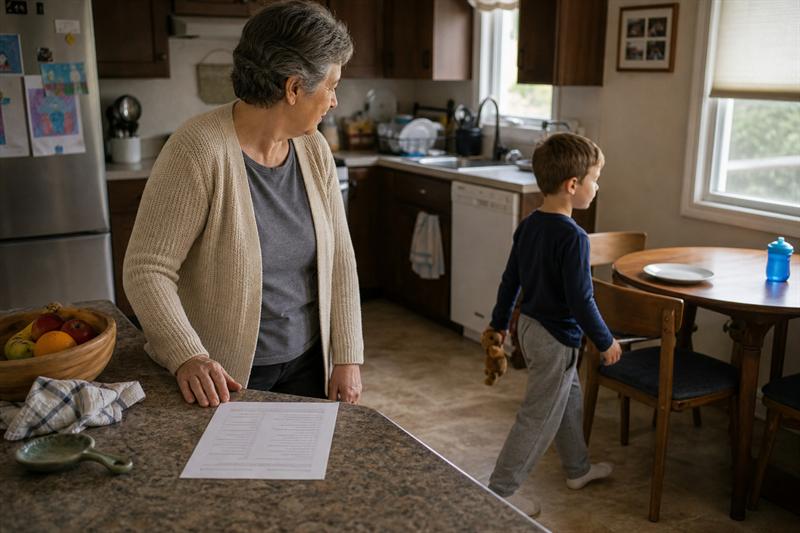
Families often find that supports working well at home are not clearly shared with the adults who help during work hours, evenings, school breaks, or family visits. Without a clear handoff, transitions can feel rushed, communication tools may be missed, and caregivers can feel unsure about how to respond.
A simple caregiver handoff gives trusted adults practical information for familiar routines. It should explain how the child communicates, which routines need the most support, what helps before frustration builds, and when the caregiver should contact a parent.
Why Caregiver Support for ABA Goals Matters Between Sessions
Caregiver support for ABA goals means helping trusted adults use familiar supports during everyday routines. Children move through many settings outside scheduled ABA sessions, including homes, cars, stores, grandparents’ houses, after-school care, and community activities.
In ABA, generalization refers to using skills and supports with different people, in different places, and during different routines. A child who asks a parent for help may still need familiar communication supports when a sitter prepares a snack or a grandparent handles pickup.
- Using the child’s established communication system during meals or play
- Giving a familiar warning before a transition or change in plans
- Following a routine the child already knows rather than introducing new expectations
Consistency does not mean every adult must speak or respond in exactly the same way. It means the child has access to familiar supports that help them communicate, understand what comes next, and participate in daily routines. Families can learn more about this connection in what happens between ABA sessions.
Start With the Caregiver’s Real Role and the Routines They Handle
The most useful handoff matches the information to the caregiver’s actual responsibilities. A grandparent providing weekly after-school care needs different guidance than a sitter covering dinner and bedtime or a relative taking the child to an appointment.
This is where problems can begin: parents try to explain everything at once. The caregiver leaves with too much information, struggles to remember what matters most, and has no clear plan when a routine becomes difficult. A short guide for two or three predictable routines is usually more useful than a long list of goals.
Match Information to the Visit, Not the Entire Treatment Plan
A caregiver does not need every detail of an ABA plan. They need the details that apply to the time they will spend with the child.
- Dinner and bedtime care: Share meal preferences, communication supports, transition steps, the bedtime sequence, and relevant safety information.
- After-school care: Focus on pickup, snack, decompression time, homework or play expectations, and the transition to a parent’s return.
- Community outings: Share transportation needs, waiting supports, communication tools, supervision requirements, and what to do if plans change.
- Occasional family visits: Keep the handoff simple. Start with how the child communicates, one preferred activity, and the routines most likely to come up.
Share only what the caregiver will realistically use. Giving a sitter detailed information about goals that will not arise during their visit can create confusion rather than consistency.
Choose Two or Three Routines Most Likely to Need Support
Choose the routines where uncertainty is most likely to build. For many families, those moments include arrival, meals, ending a preferred activity, getting into or out of the car, self-care, pickup, and bedtime.
If a caregiver remembers only three things, those points should help the child through the most important parts of the visit. Specific instructions are easier to use in the moment than broad reminders about being consistent.
- What helps when it is time to stop one activity and begin another?
- How does the child ask for help, food, a break, or a preferred item?
- What routine is most important to keep familiar during this visit?
Decide Who the Caregiver Should Contact When Questions Come Up
Every handoff should identify the parent or guardian as the contact for everyday questions. Caregivers should know the difference between a routine that is difficult and a situation that requires the parent’s input or immediate safety action.
Include current emergency contacts and any established safety instructions that apply to the child. Informal caregivers should not be expected to make treatment decisions, create a new behavior plan, or manage serious safety concerns alone. Clear contact instructions reduce the need for caregivers to guess.
What to Include in a Simple ABA Caregiver Handoff
A useful caregiver handoff can fit on one page or in a phone note. It should describe what the caregiver can observe and do, using plain language instead of clinical terms.
Caregivers are more likely to use a plan when it explains what to do before a difficult moment begins. A reminder to “be consistent” offers little direction during a rushed transition. Clear steps give caregivers a practical response to use.
- How the child communicates wants, needs, discomfort, and requests for help
- What helps with transitions and changes in plans
- Preferred activities, interests, and appropriate choices
- Familiar support for meals, play, and self-care routines
- Relevant safety information and when to contact a parent
How Your Child Communicates Wants, Needs, and Discomfort
Start with communication. A caregiver needs to know whether the child uses spoken words, gestures, signs, pointing, pictures, written communication, visuals, or an AAC device to express needs and preferences.
Include where communication tools are kept and how the child commonly asks for help, a break, food, a favorite item, or a change. For example: “Keep the communication device on the kitchen table during snack. Offer two choices and wait for a response.”
AAC devices, visual supports, and other established communication systems should remain available. They are not optional behavior tools or rewards. They are part of how a child may express choices, discomfort, and needs during everyday care.
What Helps With Transitions and Changes in Plans
Transitions are often one of the first areas where caregivers need clear guidance. A child may do well with a warning before leaving the park, a visual reminder before dinner, a first-then statement, a familiar transition item, a limited choice, or extra time to finish a task.
Share supports the child already knows and finds helpful. Introducing a new strategy during a stressful moment can make the routine harder because both the caregiver and child are trying to adjust at the same time.
If a plan changes, such as a delayed pickup or canceled outing, the caregiver should explain the change simply and use familiar supports when available. Changes can be harder when adults wait until the last minute to announce a new plan and then expect the child to switch activities immediately.
Preferred Activities and Offering Choices
Caregivers benefit from knowing what the child enjoys right now. A favorite toy, activity, song, snack, or topic can help the caregiver connect and offer a familiar option during a difficult part of the day.
Simple choices can also reduce uncertainty. Instead of asking a broad question such as “What do you want to do?” a caregiver might ask, “Do you want to color or build blocks?” or “Do you want the blue cup or the green cup?”
The goal is not to control every decision. It is to make the routine easier to understand and give the child a clear way to participate. Preferred activities should be used in ways that fit the child’s established supports, not suddenly withheld to force cooperation.
Supports for Meals, Play, and Self-Care Routines
Share the order of routines the child already recognizes. A caregiver may need to know that snack comes after shoes are put away, that a visual reminder helps with cleanup, or that a child prefers a specific cup, utensil, or place at the table.
For play, include a few activities the child enjoys and any helpful expectations that are already familiar. For self-care, keep guidance focused on the established routine, the child’s privacy, and the level of help that is appropriate for that child.
Detailed toileting or behavior-treatment instructions do not belong in a general caregiver handoff unless the caregiver has already been prepared for that responsibility. The priority is dignity, safety, and a routine the child recognizes.
Safety Information and When to Contact a Parent
Safety information should be current, easy to find, and specific to the setting. Depending on the child’s needs, this may include supervision expectations, allergies, transportation precautions, concerns about leaving supervision unexpectedly, emergency contacts, and instructions provided by the appropriate professional.
Caregivers need a clear distinction between a routine challenge and an urgent situation. If a concern moves beyond the agreed plan, the caregiver should contact the parent. If there is an immediate safety risk, the established emergency plan should be followed.
How to Explain ABA Supports Without Overwhelming Grandparents or Sitters
Most grandparents and sitters want to help. They may also worry about making a mistake, being corrected, or being asked to manage more than they can handle.
The best approach is respectful and practical. Explain what helps the child during a specific routine, then give the caregiver a chance to ask questions before they are responsible for that routine alone.
Use Plain Language and Show, Rather Than Lecture
Caregivers are more likely to use instructions consistently when they can picture exactly what to do. Replace broad clinical language with a short action they can remember.
- Instead of: “Support transitions consistently.”
- Try: “Give a five-minute warning before tablet time ends, then show the dinner picture.”
- Instead of: “Encourage functional communication.”
- Try: “Keep the device nearby and give time for a response when she wants something.”
A brief demonstration can also help. Showing a grandparent how a visual schedule is used before the next visit is generally more practical than giving a technical explanation they may not remember during a busy evening.
Describe What to Do Before Describing What to Avoid
Start with what helps. Tell the caregiver how to offer choices, give a warning, keep communication supports nearby, and allow time for a response.
This creates a more useful handoff than a long list of “do not” instructions. Safety boundaries should still be direct, but most daily guidance is easier to follow when the caregiver knows what action to take first.
Invite Questions and Respect the Caregiver’s Capacity
Ask caregivers what would help them feel prepared. Some adults are comfortable managing a familiar bedtime routine but not a community outing, transportation, or a significant change in plans.
Starting with shorter visits or routines the caregiver already knows is often the most practical choice. Families may rely on grandparents, relatives, and sitters because of work schedules, transportation needs, appointments, and changing routines. A handoff is more likely to work when it respects what that caregiver can realistically do.
Examples of Routine-Specific Caregiver Guidance
The examples below are planning tools, not individualized treatment instructions. They work best when they reflect supports the child already uses and understands.
Example: Moving From Playtime to Dinner
“Please give a five-minute warning before dinner. Show the dinner picture, then offer a choice between the blue cup and green cup. If he needs more time, let him finish the current step before moving to the table.”
This gives the caregiver a clear sequence: prepare the child, show what happens next, and offer a manageable choice. It can help avoid abruptly ending a preferred activity and then repeating demands while the child is upset.
Example: Supporting a Child Who Uses Words, Gestures, Visuals, or AAC
“Her device stays with her during snack and play. If she points or reaches, offer the device or two choices and wait. She may use the device to ask for more, different, help, or break.”
The important distinction is that the caregiver is supporting communication, not testing it. Waiting for a response gives the child time to use the system they already know.
Example: Handling a Change in the Usual Plan
“If pickup is late, let him know with the same picture or phrase used at home. Offer the usual waiting activity. If he becomes more upset than usual or you are unsure what to do, call the parent.”
Changes in plans can be harder when the caregiver gives no warning or tries to invent a new response in the moment. Familiar wording and a familiar alternative can give the child a clearer path through the change.
Example: Sharing a Useful Update After the Visit
A caregiver does not need to collect formal treatment data. A brief update is enough: what routine went smoothly, what was difficult, what happened just before the difficult moment, and what appeared to help.
For example, “Snack went well after I showed the visual. Cleanup was harder when we skipped the warning.” That detail gives parents useful information about the routine without turning the caregiver into a therapist.
What Caregivers Should Not Be Asked to Do
Grandparents, sitters, and relatives can be important supports, but they should not be asked to take on a clinician’s role. Asking too much can leave caregivers anxious, inconsistent, or less willing to provide care again.
- They should not be expected to provide ABA therapy or create new treatment goals.
- They should not be asked to change a behavior plan or introduce unfamiliar techniques.
- They should not be expected to handle serious safety concerns alone.
- They should not be judged for failing to replicate a therapy session at home.
A calm response, access to communication supports, and a familiar routine are generally more valuable than perfect implementation. When the same issue appears across several visits, that pattern can be brought into parent training or discussed with the professional overseeing the child’s support.
Use Parent Training to Refine Caregiver Support
Parent training can turn a broad goal into a more realistic home routine. It can help families identify which caregiver situations matter most, practice clear wording, and decide what belongs on a one-page handoff.
Families often find it easier to clarify caregiver communication when they bring specific examples rather than a general concern. “Grandma is unsure what to do when the car ride ends” gives a clearer starting point than “She needs more help.”
Bring details such as what happened before the difficult moment, what the caregiver tried, what the child communicated, and what seemed helpful. Families can explore this process further in parent training in ABA therapy and in this guide to preparing other caregivers to support ABA goals at home and in daily routines.
When Caregiver Support Needs More Than a Quick Conversation
A short handoff may no longer be enough when the same routine keeps breaking down across caregivers. If grandparents, sitters, or relatives are repeatedly unsure how to respond, the child may receive mixed messages during important routines, and the situation can become more difficult over time.
- Different caregivers use conflicting responses to the same transition or request.
- The child loses access to familiar communication tools outside the home.
- Visits regularly end in distress, missed routines, or early calls for pickup.
- Caregivers avoid certain activities because they do not feel prepared to handle them.
If these patterns are showing up, the family may need a clearer caregiver plan and coordinated guidance. Addressing the issue early can reduce stress for the child, caregiver, and parent.
How Strive ABA Consultants LLC Approaches Caregiver Coordination
Strive ABA Consultants LLC approaches caregiver coordination by focusing on the routines that shape a child’s actual week. The useful question is not whether every caregiver knows every goal. It is whether the adults responsible for a routine know how the child communicates, what support is already familiar, and what to do when the routine changes.
This approach helps families avoid an all-or-nothing expectation. A sitter does not need the same information as a school team, and a grandparent does not need to deliver therapy to be a meaningful part of a child’s support system.
When a child’s needs or routines change over time, families may benefit from revisiting the caregiver plan with the professionals involved in the child’s support. Consistent guidance is more practical when it reflects the child’s current strengths, communication needs, routines, and family priorities.
Key Takeaways
- Caregiver support for ABA goals should be short, routine-specific, and based on supports the child already knows.
- Start with communication preferences, transition support, choices, and safety information.
- Grandparents, sitters, and relatives do not need to become therapists to support everyday routines.
- Caregivers should share simple observations, not formal treatment data.
- Repeated problems across caregivers can signal that the family needs a clearer, more coordinated plan.
FAQ
What should I tell a babysitter about my child’s ABA goals?
Tell a babysitter what they need for the routines they will actually handle: how your child communicates, what helps with transitions, preferred activities or choices, relevant safety information, and when to contact you. They do not need the full treatment plan.
For a dinner-and-bedtime visit, a useful handoff might cover snack choices, a five-minute warning before cleanup, the bedtime sequence, and where the child’s communication device is kept. A sitter taking the child on an outing needs different details, such as transportation, waiting, and supervision supports.
How can grandparents support ABA goals without being therapists?
Grandparents can support ABA goals by using familiar communication tools, following routines that already work, offering clear choices, and sharing simple observations after the visit. Their role is to help the child experience predictable support with another trusted adult.
For example, a grandparent who provides after-school care may use the child’s visual schedule, offer a snack choice, and give a warning before leaving the park. This carries familiar routines into a relationship that matters to the child without asking the grandparent to deliver therapy.
How do I explain ABA strategies to family members who are unsure about them?
Use plain language that describes what to do in a specific moment. Avoid leading with clinical terms or a long explanation of ABA.
“Give a five-minute warning before tablet time ends and show the dinner picture” is easier to use than “support transitions consistently.” Caregivers need instructions they can remember while managing an active routine, not language that sounds correct but gives them no action to take.
What should caregivers do when a child has difficulty with a transition?
Caregivers should use the supports the child already knows, such as a warning, visual, first-then statement, familiar item, limited choice, or extra time. The first goal is to make the change understandable, not to rush the child through it.
Before leaving a preferred activity, for example, the caregiver can give a warning, show what comes next, and offer a small choice related to the next routine. If the situation goes beyond the established plan or the caregiver’s comfort level, the caregiver should contact the parent rather than create a new strategy in the moment.
Should a caregiver use my child’s AAC device or visual schedule?
Yes. A caregiver should keep the child’s established AAC device, visual schedule, signs, pictures, or other communication supports available during the routines they share.
The caregiver does not need specialized training to make the tool available and allow time for a response. During snack, for example, they can offer two choices and let the child use the communication system they already recognize. These supports are part of communication access, not optional extras.
When should I discuss caregiver challenges during parent training?
Discuss caregiver challenges during parent training when the same routine becomes difficult across visits, a caregiver does not understand the child’s communication, or a schedule change has made the current handoff ineffective. Repeated patterns generally matter more than a single imperfect visit.
A useful detail might be: “Pickup is smooth, but getting out of the car is difficult every time.” That identifies the routine needing support. It also prevents families from treating the entire caregiver relationship as the problem when the issue is one predictable transition.
Conclusion
The real problem is not that grandparents, sitters, or relatives care too little. It is that they are sometimes asked to support important routines without clear, usable information. When that gap is ignored, caregivers may guess, routines can become inconsistent, communication supports may be missed, and parents can carry more stress each time care is shared.
Strive ABA Consultants LLC can be a practical next step for families who need clearer coordination around daily routines, caregiver communication, and changing support needs. A focused caregiver plan helps trusted adults understand what matters most, gives parents a clearer way to share what works, and keeps familiar supports connected to the child’s everyday life.