

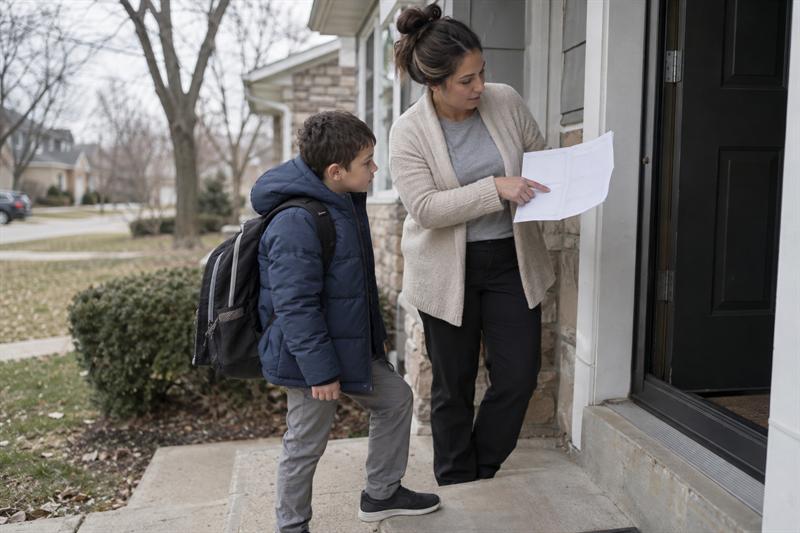
At Strive ABA Consultants LLC, a common starting point is a family that knows the day is not going smoothly, but the hard parts are spread across too many moments to describe clearly. Mornings can feel rushed, after-school transitions may fall apart, public outings can become draining, and school reports may not match what happens at home.
An ABA routines map helps bring that into focus. Instead of treating the whole day as the problem, it helps identify which routines are breaking down, what those routines require, and where support may need to be targeted first.
What an ABA routines map is
An ABA routines map is a planning tool that organizes the day by repeatable routines and shows where support is consistently needed. It helps identify the routines that may deserve closer attention for goal planning, caregiver coordination, or further evaluation.
The value is not in making a longer list of concerns. It is in narrowing broad stress into specific, observable routines that can be addressed more clearly. Once that happens, planning is often easier to understand and easier to use.
If routine mapping leads into formal planning, a resource like what an ABA treatment plan should include can help connect those routines to next-step goals.
The difference between a routine chart and a support map
A routine chart shows what happens during the day. A support map shows where the child may need help, what the routine demands, and what conditions may make that routine easier or harder.
That difference matters. A chart might say “bedtime,” but a support map can show whether the breakdown starts when play ends, when the child is expected to follow several steps, when communication gets harder, or when prompting has to increase. That is the point where a broad concern becomes specific enough for goal planning.
Why routine-based planning matters in ABA
Many daily challenges are tied to predictable routines rather than isolated behaviors. When those routines are not identified clearly, support can become too broad and goals may stay vague.
Routine-based planning helps focus attention on the part of the day that is having the biggest effect on daily life. It can also make it easier for caregivers, schools, and providers to talk about the same issue in the same way instead of describing disconnected moments.
Families are sometimes told a child needs help with “independence” or “transitions,” but those labels are still too broad to guide daily support. Planning usually gets clearer when the team can name the actual routine, such as school arrival, after-school decompression, mealtime cleanup, or waiting during errands. For families looking at how independence develops across stages, real examples by age can help put those routine targets into context.
Signs a routine may need support
- Repeated stress at the same point in the day: the routine breaks down in a predictable place rather than at random.
- Difficulty starting, completing, or shifting tasks: the child gets stuck before, during, or between steps.
- Heavy reliance on prompts: the routine only works when an adult gives repeated reminders or direct help.
- Communication breakdowns under demand: frustration may rise when the child needs to ask for help, tolerate waiting, or respond quickly.
- Ripple effects on the rest of the day: one routine can disrupt learning, family functioning, participation, or access to other activities.
Families sometimes focus on the visible behavior, but the clearer pattern sits inside the routine itself. When the same routine keeps creating stress, avoidance, or loss of independence, it often means the support target has not been defined clearly enough.
How to map the day across home, school, and community settings
The most useful routine maps are simple. They do not try to explain everything at once. They identify the day’s main routines, note where the breakdown happens, and look for patterns across settings.
Step 1: List the main routines
Break the day into repeatable routines instead of broad time blocks. “Morning” is too vague. “Getting dressed and leaving the house” is much more useful. “School” is too broad. “Arrival, unpacking, and entering class” is clearer.
Examples might include morning prep, school arrival, after-school transition, mealtime, homework, bedtime, errands, or waiting in public spaces. For families trying to understand routines outside the home, community participation in ABA shows how outings and errands can reveal support needs that are easy to miss.
Step 2: Note what happens before, during, and after the difficulty
Once the routine is named, look at what happens right before the problem, during the difficult moment, and right after it. In plain language, this means asking: what is the child being asked to do, what seems to trigger the breakdown, and what happens next?
For example, a hard after-school routine may start when a preferred activity ends, build when several directions are given too quickly, and settle only after the demands are removed. That gives a much clearer picture than simply writing “meltdown after school.”
This can become harder when adults move straight to consequences without identifying the routine demand. If the demand is unclear, the support usually stays unclear too.
Step 3: Look for patterns across settings
After a few routines are mapped, the next step is to look for repeated demands. A child may struggle with transitions at home, waiting at school, and errands in the community, but the shared issue may be rapid changes in expectation, delayed access, or communication under pressure.
This is where routine mapping becomes more than note-taking. Home and school may describe different problems, but the underlying demand can still be similar. When that happens, the goal does not need to be built around two unrelated incidents. It is often more useful to build around the repeated pattern. For shared planning across settings, ABA home-school communication for shared goals can help families organize those observations.
Step 4: Identify what the child can already do independently
A good routines map does not only track breakdowns. It also shows where the child is already successful, where prompts are fading, and which steps are done independently.
This matters because planning can go off track when the whole routine is treated as a weakness. If the child already completes the first half of a routine with little support, the target may be the transition into the final steps, not the entire routine.
How to identify ABA target routines for goal planning
Not every difficult routine should become a goal first. The best target routine is usually the one that happens often, affects daily life in a meaningful way, and is clear enough to support consistently.
This is where many families get stuck. Everything feels important, so the plan can become too broad. Once that happens, progress is harder to track and support may become less consistent.
Which routines happen often?
Frequent routines usually matter more than isolated events because they create more opportunities to practice skills and apply support. A short routine that happens every school day may shape the entire day more than a larger issue that happens once in a while.
If mornings collapse every day, that can affect transitions, learning readiness, caregiver stress, and the rest of the schedule. High-frequency routines often reveal a clear starting point.
Which routines affect safety, learning, or family functioning?
Some routines should move up the list because of their impact. If a child runs off during errands, cannot transition safely at arrival or dismissal, or regularly becomes stuck in a routine that derails the rest of the evening, that routine is affecting participation and functioning in a direct way.
If high-impact routines are not addressed well, families may start avoiding settings, reducing expectations, or relying on constant adult management just to get through the day.
Which routines are realistic to improve first?
The most stressful routine is not always the best first goal. A more practical first target is often a routine with a clear sequence, repeatable expectations, and support that can be used consistently.
Teams sometimes choose the hardest routine first because it feels urgent, but that can lead to frustration if the routine is too broad or too unstable. A smaller routine with strong carryover may create a better foundation.
If you are seeing the same routine break down across multiple weeks, across more than one setting, or with increasing adult support, that usually means the issue needs more than informal trial and error.
- The child needs repeated prompts for steps they used to do more independently
- The same demand causes stress at home and school, even if it looks different in each place
- One routine is starting to disrupt the rest of the day
- Caregivers are changing expectations just to avoid the breakdown
When those signs are showing up together, clearer mapping and more structured planning are usually needed.
Common routine categories to evaluate
Routine mapping works best when the day is organized by setting. That makes it easier to see whether a challenge is specific to one environment or follows the same demand across several places.
Home routines
Common home routines include morning prep, after-school transitions, mealtime, bathing, dressing, bedtime, and simple household participation. These routines tend to show where independence is developing and where adult support may still be carrying too much of the routine.
Home routines can become more stressful late in the day, especially when transitions stack up and the child is already tired or overstimulated. For a closer look at that part of the day, life skills goals for the after-school-to-evening routine offers useful examples.
School routines
School routines may include arrival, unpacking, group transitions, classroom directions, lunch, recess shifts, and dismissal. Even when a skill looks similar to one at home, the routine itself can be very different because pace, prompting, noise level, and social expectations all change.
This is where families and schools sometimes seem out of sync. A child may manage a similar task at home but struggle at school because the school version may require faster responding, less individual support, and more tolerance for group movement.
Community routines
Community routines often include entering stores, waiting, staying with the group, moving through public spaces, restaurant routines, and handling transitions during errands. These routines usually place heavier demands on flexibility, communication, waiting, and safety.
When community routines consistently fall apart, families often start limiting outings. That can lead to fewer practice opportunities, less participation, and more dependence on adults in public settings.
Why the same child may struggle in one routine but not another
The routine changes, even when the skill sounds the same. A child may follow directions well at home but struggle at school because the school routine may move faster, include more distractions, and offer fewer prompts.
Different routines also change the level of sensory input, communication load, and social pressure. A child who manages a familiar bedtime sequence may still struggle during a store trip because waiting, noise, transitions, and unpredictable changes are all higher.
This is where many misunderstandings begin. Inconsistent performance does not automatically mean the skill is absent or that one report is wrong. It often means the routine is placing different demands on the child, and those demands need to be mapped accurately.
When routine mapping points to the need for an evaluation or reevaluation
Routine mapping can point toward an evaluation or reevaluation when the same support breakdown shows up across several settings, when routines that used to work are becoming harder, or when the pattern is broad enough that the child’s needs are no longer clear.
At Strive ABA Consultants LLC, autism evaluations and reevaluations can help when routine problems are no longer isolated. If home, school, and community routines are all showing strain, or if caregivers are increasing support without understanding why, a clearer assessment may be a practical next step.
This usually matters most when the issue is not just one difficult moment. It is a pattern of repeated breakdowns, changing support needs, or inconsistent functioning across settings that can be hard to make sense of without a closer look.
How to use your routines map in conversations with providers and schools
Bring two or three priority routines, not a long list of every concern. The clearest conversations often happen when families can describe the routine, the demand within it, the point where support breaks down, and what has already been tried.
That level of detail changes the quality of planning. Instead of saying “transitions are hard,” a family can explain that the breakdown starts when preferred activities end, prompts increase, and the child is expected to move quickly into a multi-step task.
This is also where mapped routines help different adults work from the same starting point. If the goal is to build shared support across settings, a simple planning tool like a one-page ABA support plan can make those routines easier to communicate and follow.
Key Takeaways
- An ABA routines map shows where daily support consistently breaks down across home, school, and community settings.
- The best target routine is usually the one with the strongest daily impact, not automatically the hardest one.
- Repeated problems across settings often point to a shared demand such as transitions, waiting, communication pressure, or multi-step tasks.
- When routines that used to work are getting harder, or when several settings are affected at once, evaluation or reevaluation may become more important.
- Clear routine mapping can lead to better goal planning, better communication, and more realistic next steps.
Conclusion
The main problem is not just that a child is having hard moments during the day. It is that support often stays too broad for too long, so families and schools keep reacting to visible problems instead of identifying the routine where the breakdown starts.
If that pattern is not addressed clearly, routines may become more dependent on adult prompting, more stressful across settings, and harder to explain in planning meetings. Families may start avoiding certain situations, lowering expectations, or carrying the routine for the child just to keep things moving.
Strive ABA Consultants LLC can be a practical next step when those patterns are showing up and the routine targets are no longer clear. Through autism evaluations and reevaluations, the team helps families make sense of cross-setting support needs so planning can move from scattered concerns to specific, useful direction.
How Strive ABA Consultants LLC approaches this problem
Strive ABA Consultants LLC approaches routine problems by looking for the pattern beneath the stressful moment. Instead of treating each hard part of the day as a separate issue, the focus is on identifying which routines repeat, what those routines demand, and where support breaks down across settings.
This matters because a child can appear successful in one place and still struggle significantly in another. When that happens, the issue is often tied to pace, predictability, communication demands, prompting, or environmental load. That is the kind of pattern routine mapping is meant to reveal.
For families trying to understand what comes next after clearer assessment and planning, what happens after an ABA assessment can help connect the process from recommendations to implementation.
FAQ
What is an ABA routines map?
An ABA routines map is a way to organize the day by repeatable routines and identify where support consistently breaks down. It focuses on the routine itself, what the child is being asked to do, and what conditions make that routine harder or easier.
For example, “morning routine” is too broad to guide planning well. A useful routines map would show whether the problem starts with getting dressed, moving away from a preferred activity, tolerating time pressure, or completing several steps without repeated prompts. That distinction changes what the team targets.
How do you identify target routines for ABA goals?
Target routines are usually the ones that happen often, affect daily life in a meaningful way, and can be described clearly enough for consistent support. The strongest first target is rarely “everything that is hard.” It is the routine that gives the clearest and most useful place to start.
A daily after-school routine that disrupts the whole evening is often a better first target than a less frequent but dramatic outing problem. What matters most is frequency, impact, and whether support can be applied in a repeatable way.
What routines should families track at home, school, and in the community?
Families should track routines that repeat regularly and create stress, delays, or dependence on adults. At home, that may include mornings, mealtime, homework, bathing, dressing, and bedtime. At school, it may include arrival, transitions, group directions, lunch, or dismissal. In the community, it often includes errands, waiting, entering public spaces, and moving between locations.
The useful distinction is that broad categories like “school” or “evenings” are usually too vague. Smaller units such as “unpacking at arrival” or “transitioning from snack to homework” reveal much more about what the routine is demanding.
Why does a child struggle with a routine in one setting but not another?
A child may struggle in one setting but not another because the routine places different demands on the same skill. One setting may be quieter, slower, more predictable, or more supported by adult prompts.
For example, getting ready at home may go smoothly because the sequence is familiar and support is immediate. School arrival may be harder because the same child is managing noise, peer movement, time pressure, and fewer direct prompts all at once. The skill has not necessarily disappeared. The routine has changed.
When should routine challenges lead to an evaluation or reevaluation?
Routine challenges should lead to an evaluation or reevaluation when difficulties are showing up across multiple settings, when support needs are changing, or when adults are increasing help without understanding why the routine is getting harder.
The important distinction is whether the problem is isolated or broad. One difficult routine can sometimes be addressed through focused planning. Several routines breaking down across home, school, and community usually means the support picture is no longer clear enough to leave informal.
Should every difficult routine become an ABA goal?
No. A routine can be difficult without being the best first goal. Some routines are too broad, too infrequent, or too inconsistent to serve as a strong starting point.
The better question is which routine creates the most meaningful daily impact and gives the clearest path for support. A brief morning routine that breaks down every day may be a more useful first goal than a large weekend problem that happens only occasionally. That shift often leads to better focus and more usable data.