
What community participation means in ABA
ABA community participation means helping a child use important skills in everyday public settings, not just during therapy or at home. The key issue is not whether a skill exists in one place. The real question is whether that skill holds up when the environment becomes louder, less predictable, and harder to navigate.
At Strive ABA Consultants LLC, this is viewed as a practical part of independence. A child who can request help in a quiet room but cannot do it in a checkout line, a waiting room, or a parking lot may still face a real access problem. That gap can affect family routines, safety, and how much the child is able to participate in daily life.
- It focuses on using skills in real settings like stores, restaurants, parks, and appointments.
- It targets everyday community skills such as waiting, following simple plans, communicating needs, and transitioning between activities.
- It connects closely to independence because participation is where progress becomes visible outside structured sessions.
Families who want a broader view of how support fits into daily routines can also explore how ABA therapy fits into a busy family schedule.
How it differs from social skills training or clinic-only goals
Community participation is broader than social skills training. Social interaction may be one part of it, but community settings also involve waiting, handling changes, moving safely through public spaces, and communicating under stress.
Clinic-only goals usually happen in more controlled conditions. A child may look successful in a structured setting, then struggle when the task includes background noise, longer delays, unfamiliar adults, or an unexpected transition. This is where confusion often starts. Families may hear that the child “knows the skill,” when the bigger issue is that the skill is not yet working across settings.
Community participation is about access to everyday life. That makes it different from isolated performance.
Why families ask about community-based ABA support
Families usually start asking about community-based ABA support when basic outings become repeated stress points. The issue is not that every outing goes badly. It is that the same parts of outings keep falling apart in predictable ways.
Many families recognize this when a child has trouble waiting in line, leaving a preferred place, tolerating noise, staying close in public, or asking for help when something changes. Those breakdowns can lead to shorter outings, more avoidance, and fewer chances to build independence.
Once families start planning around what might go wrong, the problem is already affecting participation.
Why public settings often reveal different challenges
Public settings place more demands on a child than home does. There are more transitions, more distractions, more delay, and less control over what happens next. That can expose weak spots that are easy to miss in familiar environments.
A child who follows directions at home may struggle in a crowded store because the task is no longer just “follow directions.” Now it also includes staying regulated, shifting attention, tolerating waiting, and handling several demands at once. What looks like refusal in public may actually be tied to communication, flexibility, or the unpredictability of the setting.
If that distinction is missed, support can get aimed at the wrong problem. Then outings stay hard because the reason for the breakdown was never addressed.
Skills that may be targeted during community participation goals
Community participation goals work best when they are specific, observable, and tied to a real setting. Vague goals like “behave better in public” do not help much because they do not explain what the child actually needs to do differently.
A stronger approach is to identify the exact skills that make outings more workable for the child and more sustainable for the family.
- Requesting help or a break
- Following a short plan during errands
- Waiting for short periods
- Transitioning away from preferred items or places
- Responding to stop, wait, or come here cues
- Staying with a caregiver in public spaces
- Tolerating small changes in routine
- Participating in simple shared activities
These goals often overlap with broader daily-living progress. For a related look at independence-building routines, see life skills training for children: building independence through everyday routines.
Communication skills in public settings
Communication becomes more important in public because needs change quickly and support is less predictable. A child may need to ask for help, request a break, respond to a short direction, make a simple choice, or show discomfort before frustration builds.
This often gets harder when adults expect the child to simply tolerate the setting without a reliable way to communicate through it. If a child cannot clearly ask for help in a noisy or fast-moving environment, the breakdown may show up as escalation instead.
Waiting, transitions, and flexibility
Many outing problems trace back to these three areas. Waiting in line, moving from one location to another, ending a preferred activity, and handling a change in plan all require more than patience. They require tolerance for delayed access and enough flexibility to keep going when the routine shifts.
Families sometimes focus on the final behavior, such as dropping to the floor or refusing to leave, when the earlier breakdown actually started during a transition cue or a delayed item. That matters because the earlier point in the routine is usually where support needs to change.
Safety and awareness in public spaces
Safety goals in the community are practical and direct. They can include staying near a caregiver, responding to stop or wait cues, walking safely through entrances and parking lots, and pausing when the group changes direction.
These goals matter because public settings leave less room for delayed responses. If safety skills are weak, families may start avoiding settings altogether. That can limit practice, increase stress, and slow independence.
Social participation in shared environments
Some community goals involve social participation, but that is only one part of the picture. Shared environments may require turn-taking, tolerating proximity to others, joining a brief group routine, or using a simple greeting when it fits the moment.
What often gets misunderstood is that a child can need community support even when peer interaction is not the main issue. Public participation often breaks down because of transitions, waiting, or regulation long before it becomes a social problem.
What community-based support can look like in real life
Community-based support should be structured, not random. The point is not to place a child in hard situations and hope they improve. The point is to identify the part of the outing that breaks down, teach the skills around it, and build consistency over time.
In practice, progress often comes from planning what happens before the outing, targeting a few functional goals during it, and reviewing what helped afterward.
Families sometimes try to work on too much at once. Then the outing becomes a test instead of a teaching opportunity. That can lead to frustration and less follow-through.
Stores and errands
A short errand may include entering the store calmly, staying with the group, helping find one or two items, waiting briefly at checkout, and leaving without conflict. Each of those steps can be a separate skill target.
This matters because “grocery store problems” are rarely one problem. They are usually a chain of smaller breakdowns. When the chain is understood, support can become much more focused.
Restaurants and waiting areas
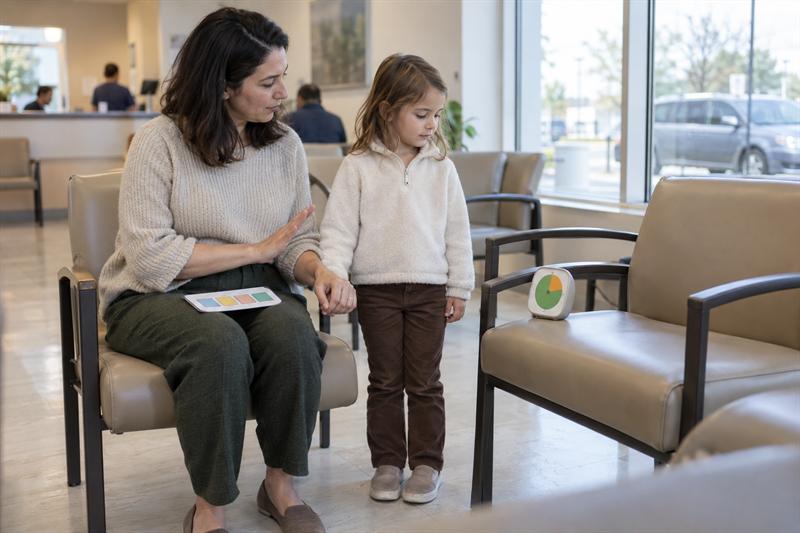
Restaurants and waiting rooms combine sitting, delay, noise, and unpredictable timing. A child may need support with staying seated for a short period, making a request, tolerating a wait, or using a break strategy before frustration builds.
This often gets harder when a child is expected to handle a long wait before learning how to succeed in a short one. Small, structured success points are generally more helpful than expecting full tolerance right away.
Parks, recreation, and community activities
Parks and activity settings are less structured, which changes the demands. A child may need help moving between activities, following a safety boundary, joining a group routine, or leaving when the activity ends.
A common pattern is strong participation during the preferred part of the outing, followed by a sharp drop when it is time to shift or leave. That usually means the main goal is not the activity itself. The main goal is often the transition around it.
Transportation and arrival routines
Transportation affects community participation more than many families expect. Getting ready to leave, tolerating the trip, entering a building, and knowing what happens next all shape how the outing starts.
This is where problems often begin. If the transition into the outing is rushed or unclear, the rest of the routine may become harder. At Strive ABA Consultants LLC, access matters because support is generally most helpful when families can use it consistently.
How ABA supports generalization outside home and school
Generalization means a skill carries over from one setting to another. Without generalization, a child may show a skill in one place and have difficulty using it where it matters most.
Many families notice this with communication, waiting, and transitions. A child may look successful in therapy because the routine is predictable. Then the same skill may fall apart in a store because the timing, people, and distractions are different. That does not mean the original teaching failed. It means the skill may still need to be built across settings.
Families who want a better understanding of how support changes over time can read prompting in ABA and when support is faded.
Building from structured support to greater independence
Independence usually builds in stages. Support starts with clear expectations, repeated practice, and the right level of help. Then that help is reduced as the child becomes more consistent in the actual setting.
If that process is rushed, the child may end up being tested instead of supported. That can lead to inconsistent performance and confusion about whether the goal is realistic. A stronger process starts with enough structure for success and reduces support only when the skill is stable.
How providers choose community participation goals
The best community participation goals come from real family routines, not generic checklists. If a family is struggling to complete errands, attend appointments, eat out briefly, or manage simple outings without repeated disruption, those are usually the starting points that matter most.
The goal is not to choose the most advanced target. The goal is to choose the target that improves access, safety, and daily functioning first.
If the wrong goal is chosen, families may spend time on skills that do not change much in real life. That can slow progress and weaken trust in the process.
Starting with safety, access, and family priorities
Strong goals start with the routines the family already needs. That may be grocery trips, medical visits, short meals out, neighborhood walks, or picking up siblings. These are the places where support has to work.
Families sometimes try to target broad independence before basic access is stable. In practice, safety and routine participation often need to come first. Once those hold up, broader goals may become much more realistic.
If outings keep breaking down in the same way, direct support may be worth considering.
- Your child can do the skill at home but loses it in stores, restaurants, or appointments.
- The hardest part is consistently waiting, leaving, or handling an unexpected change.
- Safety becomes harder during transitions, parking lots, or crowded spaces.
- Your family is starting to avoid outings because the routine feels too unpredictable.
When these signs show up repeatedly, community participation goals may need more direct attention.
Matching goals to readiness rather than age alone
Readiness depends on the child’s current communication, transition tolerance, safety needs, and how much support is required in the setting. Age matters less than the actual demands of the routine.
For one child, readiness may mean working on entering a building and staying with the group. For another, it may mean completing a short errand with limited prompts. The key is that the goal should fit the child’s current pattern, not an outside expectation.
Signs a child may benefit from support in community settings
Families usually notice the need for support through repeated patterns. The signs are not random, and they should not be brushed aside when they show up in the same settings again and again.
- Waiting leads to fast frustration or refusal
- Leaving a preferred place turns into a repeated struggle
- Public noise or movement quickly disrupts participation
- Communication drops when the setting becomes busy
- Transitions in and out of the outing are the hardest part
- Safety becomes less reliable outside familiar routines
If these patterns are ignored, families often respond by shrinking the child’s world. Outings may become shorter, fewer, or more restricted. That can protect the short term, but it may also delay the long-term independence the family is trying to build.
When families are also trying to understand whether support needs have changed, it helps to know which ABA appointment is next: consultation, assessment, reevaluation, or first session.
How community participation connects to broader independence goals
Community participation is not separate from independence. It is one of the clearest ways independence shows up in real life. A child who can move through public routines more safely and with less disruption may have more access to daily experiences that matter.
This is also where broader life skills become visible. Communication, transitions, self-regulation, and following routines all come together in community settings. If those pieces do not work together outside the home, independence may stay limited.
For older children and teens, families may also want to read ABA support for adolescents: building independence, routines, and community participation.
Why this matters as children get older
Community demands usually grow with age. Families expect more flexibility, more participation in shared routines, and more tolerance for transitions across settings. When those skills do not grow with the child, the gap can become more obvious.
This may lead to bigger limitations later. Routines may stay narrow, dependence may stay high, and common age-based expectations may become harder to reach. That is why community participation should not be treated as an extra goal after everything else is finished. It is part of building functional independence.
Key Takeaways
- ABA community participation focuses on using skills in real public settings, not just showing them in structured sessions.
- Outing difficulties often break down around communication, waiting, transitions, flexibility, and safety.
- When a child does well at home but struggles in public, the issue is often generalization, not lack of ability.
- Strong community goals are chosen around family routines, access, and readiness, not age alone.
- If repeated outing problems are ignored, families may start avoiding the very situations that support independence.
Our approach at Strive ABA Consultants LLC
At Strive ABA Consultants LLC, community participation is approached as a practical access issue, not just a behavior issue. The focus stays on the parts of daily life that keep breaking down for families, whether that is errands, appointments, transitions into public settings, or leaving preferred places without escalation.
This matters because generic support can miss the actual bottleneck. A child does not need a broad label for the problem. The routine needs to be broken down clearly enough to show where support is needed and how that support can be faded over time.
Strive ABA Consultants LLC also understands that access affects follow-through. Transportation logistics, scheduling, and the ability to maintain support consistently shape whether progress in community settings holds up in everyday life. When an evaluation or reevaluation is part of clarifying current needs, those services can help define what kind of support makes the most practical sense next.
FAQ
Can ABA help with behavior during errands or public outings?
Yes. ABA can help with the specific skills that affect how a child functions during errands or outings, including waiting, following a simple plan, asking for help, and transitioning out of a preferred place.
For example, a grocery trip usually breaks down in steps, not all at once. A child may enter the store well, then struggle at checkout or when it is time to leave. That distinction matters because it shows where the real support target is, rather than treating the entire outing as one problem.
What are examples of community participation goals in ABA?
Examples include staying with a caregiver in a store, waiting briefly in line, responding to stop or wait cues, asking for a break, transitioning out of a preferred setting, or following a short errand routine. These goals are strongest when they are tied to the places the family actually uses every week.
A useful distinction is that good community goals are not chosen because they sound developmentally appropriate. They are chosen because they remove barriers to daily participation.
Why does a child do well at home but struggle in public?
Because public settings place more demands on the same skill. Home is more predictable. Public spaces add delay, distractions, noise, movement, and unfamiliar expectations.
That usually means the skill has not generalized yet. A child who waits calmly at home may still struggle in a crowded line because the setting changes what the skill requires.
How do ABA providers decide if a child is ready for community-based goals?
Readiness is based on function, safety, and the level of support the child needs now, not age alone. Providers look at how the child handles transitions, communicates basic needs, responds to safety directions, and tolerates short routines outside familiar spaces.
One child may be ready for a short store trip with support. Another may first need goals around leaving the house, entering a building, or responding to wait cues. What changes the decision is whether the child’s current skill pattern matches the demand of the setting.
Is community participation the same as social skills training?
No. Social skills may be part of community participation, but community participation is broader. It includes communication, safety, waiting, flexibility, and transitions in real public settings.
For instance, a child may greet others appropriately and still have major difficulty leaving a park or waiting during an appointment. In that case, the problem is not mainly social. The problem is how the child manages the demands around the setting.
How can families support community participation between therapy sessions?
Families usually get better results by practicing one part of a routine at a time instead of trying to make an entire outing successful all at once. A shorter errand with one clear target, like waiting briefly or asking for help, is often more useful than testing a full outing under pressure.
What matters most is repetition in the exact type of situation that keeps breaking down. That is what helps a skill become usable in real life, not just familiar in theory.
Conclusion
The real problem behind community participation is not that a child lacks ability everywhere. The problem is that public settings expose the exact places where a skill is not yet stable, and those breakdowns often lead families to avoid outings, shorten routines, and lower expectations over time.
If this is not addressed well, the pattern can become more limiting over time. Waiting problems can become community access problems. Transition problems can become routine avoidance problems. Safety concerns can narrow what the family is able to do together.
Strive ABA Consultants LLC is a practical next step for families who need structured support around the routines that keep breaking down in real life. That can include helping clarify current needs through autism evaluations and reevaluations when appropriate, and helping families move toward support that fits daily life, access needs, and long-term independence more realistically.