

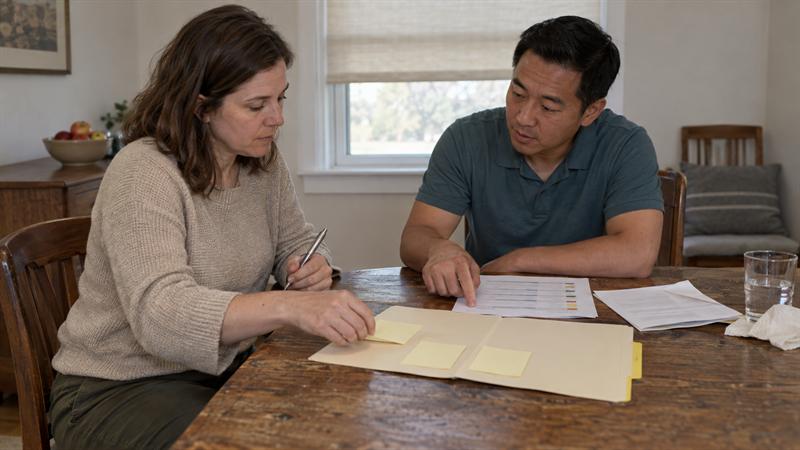
At Strive ABA Consultants LLC, families often need help coordinating support across home, therapy, school, and other daily settings. A meeting can sound productive while still falling short where it matters most: no one is fully clear on the goals, who is responsible for what, or how progress should look outside the therapy setting.
This guide explains what an ABA care team meeting should do, who may be involved, what questions help most, and what follow-up should happen before the conversation starts to fade. When a meeting is not structured well, confusion tends to grow between sessions instead of getting resolved.
What an ABA care team meeting is and why it matters
An ABA care team meeting is a structured conversation used to align caregivers, ABA providers, and sometimes school or other service providers around the same priorities. The goal is not just to hear updates. The goal is to decide what matters most right now, how support should look across settings, and what each person is expected to do next.
These meetings often happen around progress reviews, routine changes, school coordination, new concerns at home, or transition planning. Problems usually start when the meeting has no clear purpose. Families may hear useful pieces of information, but the pieces do not connect into a workable plan.
A productive meeting should lead to:
- clear priorities
- shared understanding of current goals
- defined responsibilities
- specific next steps and follow-up
When that structure is missing, the same concerns may keep coming up from one meeting to the next. If you want a better baseline for what goals and planning should include, this plain-language guide to what an ABA treatment plan should include can help connect meeting decisions to the larger care plan.
Who may be involved in an ABA care team meeting
Caregivers and family members
Caregivers bring important day-to-day context. They may see what happens during mornings, after-school transitions, meals, bedtime, outings, sibling routines, and the moments when support breaks down. That information matters because progress inside therapy becomes more meaningful when it carries over into daily life.
Families sometimes arrive with too much information and no clear way to organize it. A few specific examples are usually more useful than a long general summary. If home routines are part of the challenge, planning for home-based ABA with routine fit and caregiver communication in mind offers helpful context.
BCBA, RBT, and supervising providers
The BCBA typically leads treatment oversight, goal development, and plan adjustments. The RBT may contribute session-level observations, especially when the discussion involves how a skill is being practiced, what prompts are working, or where progress seems to stall.
Role confusion is one of the most common reasons meetings lose momentum. Families may be told that the team is aligned, but they are not sure who is making decisions, who is carrying them out, and who is checking whether the plan is actually working. That can lead to delayed follow-up and uneven communication. For a clearer breakdown, see BCBA, RBT, and the roles on your child’s ABA team.
School staff and outside providers when relevant
Teachers, case managers, speech therapists, occupational therapists, or other providers may be included when goals overlap across settings. Not every meeting needs every stakeholder. The right group depends on the issue being discussed.
Home, school, and clinic may all describe the same child differently. That does not automatically mean one setting is wrong. It may mean the team needs to compare triggers, expectations, supports, and demands across environments. When school coordination is a major part of the issue, this school ABA planning meeting agenda can help narrow the discussion.
How to prepare before the meeting
What updates to gather from home
Bring a short list of recent changes and examples from daily routines. The goal is not to document every moment. The goal is to show what is happening often enough, clearly enough, or urgently enough that the team needs to respond.
- changes in communication
- transition difficulties
- sleep or eating changes
- toileting concerns
- safety issues
- community outing challenges
- new behavior patterns
This usually gets harder when families try to summarize everything from memory during the meeting. A few specific examples almost always create a better discussion than broad phrases like “things have been hard lately.”
What documents or progress notes to review
Review the current treatment plan, recent progress updates, notes from prior meetings, and any school or outside therapy communication that overlaps with the concern. If the meeting includes goal changes, these documents can help keep the discussion anchored to what was already decided.
This is also where families may start to notice whether the current plan still fits the child’s daily life. If goals sound appropriate on paper but do not connect to routines, transitions, or real participation, that issue needs to be addressed directly.
How to choose your top priorities
Choose two or three priorities before the meeting starts. That usually keeps the conversation focused and makes it easier to leave with a workable plan.
A simple way to frame priorities is:
- The biggest challenge at home right now is…
- The skill that would make daily routines easier is…
- The question that still feels unclear is…
If you are seeing several concerns at once, start with the issue that affects safety, routine stability, or daily functioning most directly. Everything else can still be noted, but it should not take over the main decisions.
If these signs sound familiar, the meeting may need tighter structure:
- the same concerns come up repeatedly with no change in plan
- home and school describe very different patterns and no one is reconciling them
- families leave with updates but no assigned next steps
- goals are discussed, but no one can explain how they should look in daily life
When those patterns are present, clearer action is often needed before communication drifts further and consistency breaks down.
A simple ABA care team meeting agenda families can use
Start with strengths and recent changes
Begin with what is going well and what has changed since the last update. This keeps the discussion grounded and helps prevent the meeting from becoming problem-only. It also helps the team see whether new challenges are linked to changes in schedule, staffing, school demands, or routine transitions.
When teams skip context and jump straight into concerns, they may miss the reason the concern got worse in the first place.
Review goals, data, and daily functioning
Current goals should be reviewed in plain language, not just clinical terms. Families should understand what the data shows, what progress actually looks like, and whether the skill is appearing outside structured sessions.
This is where many meetings lose families. A chart or percentage is not enough on its own. The more important question is whether the child is using the skill during real routines, transitions, and interactions. If the answer is no, the team needs to look at what may be blocking carryover. For more help interpreting review language, this parent guide to ABA progress reports and data terms can support the discussion.
Clarify challenges, supports, and next steps
End the meeting by identifying barriers, clarifying supports, and assigning next steps. Each major point should lead to a decision: what will change, who will do it, and when the team will review the result.
This is where problems often become visible. If the team cannot name the next step clearly, the plan may still be too vague. That can lead to repeated confusion, inconsistent implementation, and frustration across settings.
Questions to ask an ABA team during the meeting
Questions about progress and goals
- Which goals are improving most right now?
- Which goals are harder to generalize outside sessions?
- How are current goals connected to daily routines at home or school?
- Are there goals that need to be adjusted?
These questions move the conversation beyond “progress is being made” and into whether the right goals are being targeted. A common misunderstanding is thinking that any progress equals meaningful progress. What matters more is whether the change affects daily functioning.
Questions about communication and supervision
- Who should families contact with day-to-day questions?
- How often is the BCBA reviewing progress directly?
- How are concerns shared between sessions and formal meetings?
- What should families expect if something changes quickly?
These questions help families understand how the team actually works, not just what the treatment plan says. If communication pathways are unclear, small concerns can turn into bigger coordination problems because no one is sure where updates should go or how decisions are being made. Families who need more detail here can review what BCBA supervision and communication should include.
Questions about home, school, and generalization
- What skills should we be seeing outside therapy?
- Are home and school seeing the same patterns?
- What strategies should stay consistent across settings?
- What should be handled differently in different environments?
If a skill only appears in one setting, that may mean the support is not transferring well yet. That does not always mean the goal is wrong. It may mean the team needs to look more closely at prompts, routines, environmental demands, or how the strategy is being used in different places.
Questions to ask when something feels unclear
- Can you walk me through what that looks like in a typical session?
- What change should we expect to notice first?
- How will we know if this plan is working?
- What happens if home and clinic observations do not match?
This is one of the most useful parts of the meeting because unclear language is where confusion usually starts. If a team cannot explain a strategy in plain terms or connect it to a visible outcome, the family may be left trying to support a plan they cannot fully understand.
How to handle common meeting challenges
When providers use too much clinical language
Ask for the term to be explained through a daily example. If “generalization” or “prompt fading” comes up, the question is not just what the word means. The real question is what that should look like during meals, transitions, schoolwork, or outings.
When jargon is left untranslated, families may leave without knowing what to watch for or what should change at home. That can lead to less consistency, not more.
When home and school concerns do not match
Different settings place different demands on a child. Behavior can look more manageable in one environment and much harder in another. The focus should be on what is different about the routine, support level, expectations, or transitions rather than deciding whose report is more accurate.
This is where teams can get stuck if they treat different observations like contradictions instead of useful information. The better question is what each setting reveals about triggers, stamina, communication supports, and timing.
When you leave without a clear plan
Before the meeting ends, the team should be able to state what was decided, who is responsible for each next step, and when the next review will happen. If that does not happen, follow-up may become uneven and families may be left chasing clarification afterward.
In practice, this is one of the clearest signs that the meeting structure needs work. A clear plan is the part that turns a discussion into coordinated support.
What follow-up should happen after the meeting
Notes, responsibilities, and timelines
Someone should capture the key decisions, the action items, and the timeline for review. That record helps keep the plan from shifting based on memory or different interpretations later.
Documentation is where consistency either holds or breaks. If decisions are not written down clearly, teams may slide back into informal updates and disconnected follow-through.
When to schedule the next check-in
The next check-in depends on the concern. A routine goal review may not need a rapid follow-up, but a change affecting safety, transitions, school functioning, or major routine disruption often needs a shorter review window.
If a team makes a significant adjustment and waits too long to revisit it, the family may be left managing uncertainty without enough support. That delay can make it harder to tell whether the new plan is helping or whether another change is needed.
When it may be time to ask about updated evaluation or reevaluation information
Updated evaluation or reevaluation information may be useful when the current plan no longer fits what everyone is seeing. This can come up when functioning has changed significantly, service eligibility questions are affecting planning, or earlier information no longer explains the present concerns well enough.
At Strive ABA Consultants LLC, autism evals and reevals are part of the bigger planning picture when clearer information is needed to guide next steps. If the team keeps circling the same questions without reaching usable decisions, outdated assessment information may be part of the problem. Families preparing for that stage may find this practical family checklist for an ABA evaluation or reevaluation useful.
Key takeaways for families
- An ABA care team meeting should lead to a clearer plan, not just more information.
- The right questions focus on daily functioning, not just therapy language or data points.
- Role confusion, unclear priorities, and weak follow-up are common reasons these meetings fall short.
- If support is not carrying across home, school, and therapy, the meeting needs to address that directly.
- When documentation and accountability are missing, consistency may start to break down.
Conclusion
The real problem in many ABA care team meetings is not lack of effort. It is lack of structure. When roles are unclear, questions stay too general, and follow-up is weak, the same concerns may keep resurfacing and families may be left doing more of the coordination work themselves.
If that pattern is not addressed, support can become less consistent across settings and decisions may get delayed when they should be getting clearer. Strive ABA Consultants LLC can be a practical next step for families who need stronger coordination, clearer planning, and a more usable path forward through autism evals, reevals, and ABA-related support decisions.
How Strive ABA Consultants LLC approaches this problem
Strive ABA Consultants LLC approaches care coordination as a planning problem, not just a communication problem. A meeting works best when the right people are focused on the right issue, using clear language, and leaving with decisions that can actually be carried into daily routines.
This is why the team pays close attention to patterns that tend to break support down: goals that sound disconnected from daily life, school and home reports that are never reconciled, and follow-up that relies too heavily on memory instead of documentation. When those patterns are present, families often need more than reassurance. They need a clearer structure for decision-making.
That approach also shapes when autism evals and reevals become important. If the current picture no longer explains the support needs clearly enough, better coordination may start with better information.
FAQ
What is an ABA care team meeting?
An ABA care team meeting is a structured conversation where caregivers and relevant providers review how support is going, what concerns have come up, and what should happen next. The purpose is to align the plan across the people involved, not just exchange updates.
For example, a meeting might review progress on communication goals, discuss a new challenge during transitions, or sort out why home and school are reporting different patterns. The important distinction is that a useful meeting ends with decisions. A meeting that only produces general discussion may lead to the same issues repeating later.
Who should attend an ABA team meeting?
The core participants are usually the caregiver and the BCBA because they are central to treatment oversight and day-to-day decision-making. Depending on the issue, an RBT, teacher, case manager, or outside provider may also need to be included.
The deciding factor is relevance. If the problem is mostly about home routines, a smaller group is often more effective. If the concern affects school participation or overlapping therapy goals, broader input matters because each setting is seeing a different part of the problem.
What questions should parents ask during an ABA meeting?
The strongest questions focus on whether goals are meaningful in daily life, how progress is being measured, and what the team does when a plan is not carrying over across settings. Questions like “Which goals are improving most?” and “What should we be seeing at home if this plan is working?” are usually more useful than broad questions about whether progress exists.
Questions about communication matter too. Families should understand who handles day-to-day updates, how concerns are escalated, and how quickly the team responds when something changes. That helps show whether the team is set up to act on information, not just collect it.
How do you prepare for an ABA care team meeting?
Preparation works best when it stays concrete. Bring a short list of recent examples from home, review current goals, and decide on two or three top priorities before the meeting starts.
A common mistake is arriving with a general sense that things are not working but no way to organize the concern. Specific examples make the conversation more useful because they show where support is breaking down, when it happens, and what needs to be clarified first.
What should happen after an ABA team meeting?
After the meeting, the family should know what was decided, who is responsible for each next step, and when the team will review progress again. That written follow-up is what helps keep the plan from becoming vague once everyone returns to separate settings.
The key difference is between a recap and a plan. A recap repeats what was discussed. A plan names what changes next. Without that distinction, the meeting may add conversation without improving coordination.
When should a family ask about a new autism evaluation or reevaluation?
A family should ask about updated evaluation or reevaluation information when the current support plan no longer matches what everyone is seeing. This often comes up after meaningful changes in functioning, service questions tied to updated documentation, or long gaps since earlier assessment information was gathered.
The important point is that updated evaluation information is not just administrative. It helps when the team is trying to make decisions with an outdated picture of current needs. When planning keeps stalling around the same unanswered questions, that may mean the foundation needs to be updated first.