

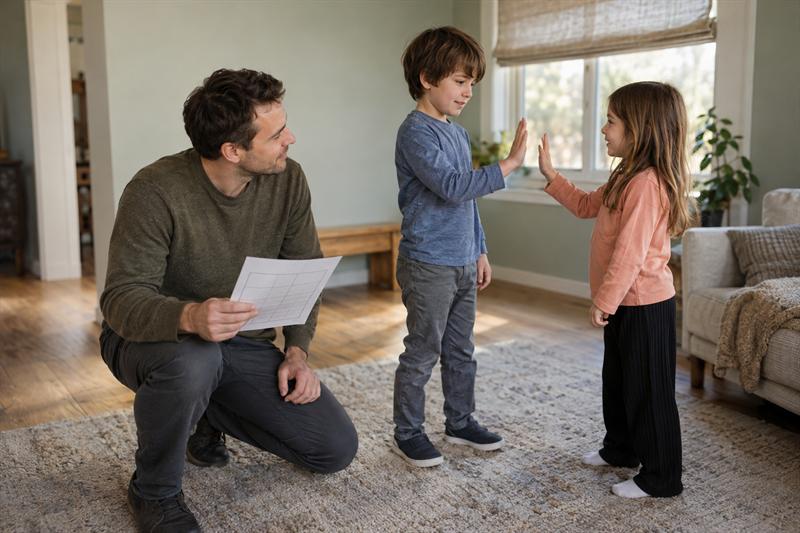
What Families Really Want to Know: Is the Group Helping?
Most families are not really asking whether a child enjoys the group. They are asking whether the group is building skills that carry into daily life. That is usually the question that matters most.
Social skills group progress can be harder to judge than progress in one-to-one teaching because the goal is not just completing a task. The goal is using a social skill with other people, in changing situations, with less help over time. That is often where uncertainty begins.
A good session is not the same as meaningful progress. A child can participate, stay regulated, and follow along with adult support while still not using the target skill independently. Families commonly run into this when updates sound positive, but daily life still looks much the same at home, school, or in the community.
Early progress also tends to look smaller than many families expect. It may show up first as less resistance, better tolerance for turn-taking, or more consistent responding to peers. That still matters. But if those changes do not build toward independence and carryover, progress can level off.
If you are still deciding whether the group itself is a good fit, this practical checklist for evaluating a social skills group can help separate fit questions from progress questions.
What Social Skills Group Progress Usually Looks Like
Early signs of progress
- More willingness to join group activities instead of avoiding or withdrawing
- Better tolerance for waiting, sharing space, or taking turns
- More responsiveness to peer or adult cues
- Slightly less prompting needed to participate
These changes can matter because they are often early signs that a child is becoming more available for learning in a group setting. One problem is that families may hear these signs described as success without much explanation of what should come next. If the child still depends on the same prompts week after week, the group may not be moving far enough.
Mid-stage signs of progress
Mid-stage progress may look more active and more functional. A child may initiate more often with peers, respond more appropriately during conversation or play, handle small changes more flexibly, and need fewer reminders for expected social behavior.
This is where the difference between participation and growth becomes easier to see. If a child is joining, responding, and recovering more independently than before, that generally suggests the skill is strengthening. If the child still needs the same cues, the same setup, and the same adult support each time, progress may be staying too narrow.
Signs skills are carrying over outside the group
- Uses the same target skills with siblings, classmates, cousins, or familiar adults
- Handles small social challenges with less adult help
- Shows more flexibility during outings, errands, or structured peer activities
- Teachers, caregivers, or family members notice similar changes in other settings
This is often one of the strongest signs that the group is helping. A skill that only appears in a structured session is usually still in the teaching phase. A skill that starts showing up in daily life is becoming more useful.
This is also where progress can be overestimated. If families only hear what happened in session, they may miss the bigger question: does the child use the skill anywhere else? If not, the next step is often figuring out why the skill is not carrying over yet.
For a deeper look at how skills should transfer beyond sessions, see how to plan skill carryover from ABA sessions to home, school, and community and community participation in ABA.
A Family Checklist for Reviewing Social Skills Group Progress
Use this checklist to review whether the group appears to be building meaningful social skills or mainly producing positive-looking sessions.
Are the goals specific and observable?
Goals should be concrete. Greeting a peer, asking to join, taking turns, responding to a question, or tolerating losing a game are all easier to evaluate than a broad goal like “improve social skills.”
When goals stay vague, reporting often stays vague too. That can leave families with a lot of effort and very little clarity about what has actually changed.
Is the child using the skill with less prompting?
Progress should move from more support to less support. If the child still needs the same reminders, cues, or adult setup every time, the skill may not yet be becoming independent.
This is a common sticking point in group services. People notice participation, but fewer stop to ask whether support is fading. If support is not fading, the child may not yet be using the skill on their own.
Is progress showing up with different people and in different places?
Social skills have to travel. If the child only uses the target behavior with the same therapist, the same peers, or the same activity, that skill may still be too tied to the session.
If you are seeing the skill with siblings, teachers, after-school staff, or during errands and outings, that generally suggests the skill is becoming more functional. If you are not, carryover may still need work.
Are families getting understandable updates?
Useful updates explain what skill was targeted, how it improved, how often it happened, and what still needs support. “Had a good group” is not enough. “Initiated with one peer twice with one verbal prompt” is much more useful.
A common pattern is that families get positive summaries without enough detail to judge real movement. That can leave them guessing, and guessing can delay good decisions.
Do examples match the goals being worked on?
The examples should line up directly with the stated goals. If the goal is joining peer play, the update should describe joining peer play. If the update only mentions behavior, attention, or mood, the report may be drifting away from the target.
This can become more of a problem when goals are broad and data are not translated clearly for families. If the examples do not match the goals, progress is harder to interpret with confidence.
If you want a clearer framework for interpreting provider language, this parent guide to ABA progress reports and data terms can help.
Questions to Ask During Progress Reviews
Families do not need clinical jargon to ask strong questions. They need questions that bring the conversation back to specific skills and observable change.
- What exact skill is being measured right now? This keeps the conversation tied to one observable target instead of broad impressions.
- How often is the skill happening independently? This shows whether the child is improving or mainly responding to support.
- What support or prompting is still needed? If prompting stays high, independence is still limited.
- Where is the child doing this well, and where is it still hard? This reveals whether progress is carrying over or staying stuck in one setting.
- What would you expect to see next if progress continues? A thoughtful answer should describe the next practical step.
- What changes would you consider if progress has slowed? This shows whether the plan is active and responsive or simply repeating itself.
The point of these questions is not to make the meeting harder. It is to find out whether the skill is moving toward independent use. If the answers stay broad, the plan may need closer review.
If you are seeing these signs, a closer review is often warranted:
- Session updates sound positive, but you cannot name the exact skill that improved
- The child does well in group, but not at home, school, or in the community
- Prompting stays about the same from one review period to the next
- Goals sound broad, and examples do not match the stated target
When those patterns show up together, the issue is often not patience alone. The current support plan may need clarification, adjustment, or stronger carryover.
Signs the Group May Need Adjustment
Progress is only visible in the therapy room
If the skill only appears during group, carryover is still limited. That does not necessarily mean the group has failed, but it does mean the current approach is not reaching daily life yet.
If ignored, this can create a false sense of progress. The child may look successful in session, while the same real-world social difficulties continue outside it.
Goals are too broad or updates are too vague
Families need enough detail to understand what is being taught and what is changing. “More engaged today” or “had positive peer interactions” can sound reassuring, but they do not tell you whether a target skill is becoming more independent.
A more useful update sounds like this: “Asked to join a game once with a gesture prompt and responded to two peer questions without an adult model.” That kind of reporting lets families track change over time. Broad praise does not.
The group fit or support level may not match current needs
Sometimes the problem is not effort. It is fit. Peer match, group size, pacing, or missing prerequisite skills can all slow progress.
If you are seeing a child participate but not grow, that may mean the current setup is not enough on its own. That can lead to time passing without fully addressing the support gap underneath the plateau.
When Social Skills Group Support May Need to Be Paired With Other Services
When individual ABA may help build missing prerequisite skills
Some children may need more direct support with communication, emotional regulation, flexibility, or following group routines before group progress becomes more visible. In those cases, the group is not necessarily the wrong service. It just may not be enough by itself.
If a child struggles to respond without heavy prompting, recover after social mistakes, or stay with the flow of the activity, group learning may stay limited. Building those prerequisite skills more directly is often a practical next step.
When an updated evaluation or reevaluation may help clarify next steps
If the goals no longer match the child’s current needs, progress review can get muddy quickly. This often happens when the child has changed, but the support plan has not changed with them.
At Strive ABA Consultants LLC, autism evaluations and reevaluations may help families clarify what support makes sense now, what skills still need direct teaching, and whether the current plan is targeting the right areas. That can matter when a group appears active but the results remain hard to verify.
Key Takeaways for Families
- Progress should be tied to specific skills, not just positive impressions.
- Less prompting and more independence are generally stronger signs than attendance alone.
- Carryover into home, school, and community settings is one of the clearest signs that a group is working.
- Clear updates should explain what changed, how often it happened, and what still needs support.
- If progress is unclear, the issue is often goals, reporting, fit, or missing prerequisite skills, not just time.
Conclusion: Focus on Meaningful Change, Not Just Attendance
The real question is not whether a child shows up, participates, or enjoys the group. It is whether social skills are becoming more independent, more consistent, and more visible in everyday life. If that is not happening, families can spend a long time in a plan that sounds positive without producing enough functional change.
When this is not addressed clearly, the same pattern can continue: vague updates, limited carryover, and no clear explanation for why progress feels stuck. That is when stronger review and clearer direction become important.
Strive ABA Consultants LLC may be a practical next step for families who need help sorting out whether current support is working, what is not translating outside sessions, and whether an evaluation or reevaluation is needed to clarify the right path forward. When the question is not just “Is my child attending?” but “Is this actually helping?”, that kind of clarity can make next steps easier to see.
How Strive ABA Consultants LLC Approaches This Question
Strive ABA Consultants LLC approaches progress review by focusing on what is actually usable in daily life. That means not stopping at whether a child can do something during a structured session, but looking at whether the skill holds up across settings, people, and routines.
Many families find this hard to sort out on their own because session feedback can sound encouraging while daily life still feels unchanged. A common pattern is that the child is learning pieces of the skill, but the support plan has not been adjusted enough to move those skills into real situations.
That is why clarity around goals, prompting, and carryover matters so much. When those pieces are reviewed carefully, families can get a clearer picture of whether a group is working as intended or whether another layer of support is likely needed.
FAQ
How long does it take to see progress in a social skills group?
Progress usually shows up in stages, not all at once. Early gains often look like better tolerance, more willingness to join, or less prompting before more noticeable social changes appear.
For example, a child may not start initiating with peers right away, but may begin waiting more calmly, staying engaged longer, or responding more consistently during play. Those smaller changes matter because they often come before broader independence. What matters most is whether support is fading and whether the skill is spreading into other settings.
What are signs a social skills group is working at home?
The clearest sign is that the same target skill starts showing up outside the group. That might look like taking turns more easily with a sibling, responding more appropriately during family conversation, or handling small frustrations with less adult help.
The important distinction is that the exact activity does not need to match the session. If the group is teaching waiting, progress at home may show up during a game, a shared snack, or getting ready to leave the house. What matters is that the underlying skill is starting to hold up in real life.
What should parents ask for in a social skills group progress report?
Parents should ask for the specific skill being targeted, how often it is happening independently, what prompting is still needed, and whether the skill is showing up outside the group. Those details make the report usable.
There is a big difference between “had good peer interaction” and “responded to two peer questions without an adult model.” One is a general impression. The other is actual progress information. If the report does not help you picture what changed, it is not detailed enough.
Can a child enjoy a social skills group without making real progress?
Yes. Enjoyment is a positive sign, but it is not the same as growth. A child can enjoy the routine, activities, or people in the group and still need the same level of prompting for the same skills.
This commonly gets misunderstood because comfort can make sessions look successful. Real progress means the child is becoming more independent, more consistent, or more flexible with the target skill. Enjoyment helps, but it does not replace that standard.
What if social skills group progress seems limited?
Limited progress usually points to a specific problem, not just a need for more time. The issue is often broad goals, weak carryover, poor fit, or missing prerequisite skills that are making group learning harder.
If the skill appears in session but nowhere else, the issue is usually carryover. If the child still needs heavy prompting during the group itself, the issue is more likely support level or readiness. The pattern matters because the right next step depends on where progress is breaking down.
Is participation the same as progress in a social skills group?
No. Participation means the child is involved in some way. Progress means the skill is becoming more independent and more usable.
A child who joins a game after several prompts is participating. A child who starts joining with fewer prompts, responds more naturally to peers, or uses the same skill during school or home routines is progressing. That distinction changes how families should judge whether the group is actually working.