

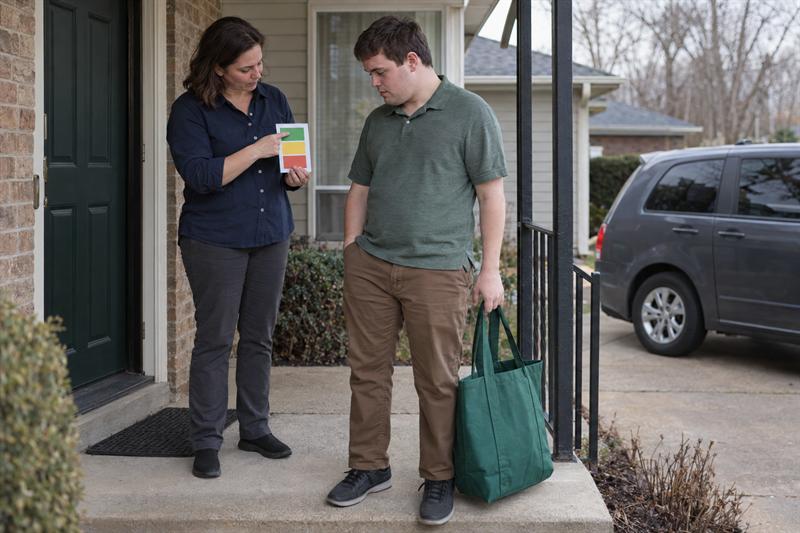
At Strive ABA Consultants LLC, this pattern can come up in everyday support planning: an adult manages parts of an outing, but the routine still breaks down around transitions, waiting, timing, or unclear expectations. Over time, that can lead to fewer outings, more stress, and less confidence for everyone involved.
Community participation usually works better when it is built like a routine, not approached like a one-time event. For families and staff, that means looking at what happens before leaving, during the activity, and right after it ends.
What community routines mean for adults with IDD
Community routines are the repeated, everyday activities that help an adult participate in life outside the home in a manageable way. That can include errands, transportation, coffee stops, meals out, recreation, appointments, volunteering, or other familiar local activities.
The goal is not simply getting out of the house. The goal is building routines that feel clear, repeatable, and useful in real life. A broader overview of how routines fit into support planning can be found in supporting an individual with an intellectual or developmental disability: routines, community, and support planning.
The difference between occasional outings and real routine participation
An occasional outing is not the same as routine participation. A single successful restaurant visit or store trip does not automatically mean the person can repeat that experience with the same level of success next week.
A common pattern is focusing on whether the outing happened at all, when the more useful question is whether it can happen consistently with less stress over time. Repeated visits to familiar places are often more useful for understanding what support actually helps.
Why predictable community routines often support confidence and engagement
Predictable routines can make expectations clearer. When the setting, sequence, and support are familiar, the adult may have fewer moving parts to sort through at once.
That can support smoother transitions, clearer communication, and less strain around waiting or changes in pace. Predictability does not mean rigidity. It means the routine has enough structure to stay understandable when the environment gets busy.
Common challenges that can make community participation harder
Many community routine problems do not start at the destination. They start earlier in the sequence. Common trouble points include getting ready, rushed transportation, unclear expectations, or wait times that are hard to manage with the current support plan.
That is why broad advice about getting “more community exposure” is usually not enough. Families and teams need to know where the routine is actually breaking down. For a related look at structured support in everyday settings, see community participation in ABA: structured support for outings, errands, and everyday social settings.
Transitions, waiting, unfamiliar settings, and changes in plans
Transitions are one of the biggest pressure points. Leaving one activity, entering a new setting, waiting in line, or adjusting to a delay can create more friction than the main activity itself.
In routine planning, the outing may look simple on paper, but the transition into it is often where stress starts to build. If that part is ignored, the same pattern may repeat and the routine can start to feel harder each time it comes up.
Communication, sensory, and pacing differences
Community settings place several demands on the person at once. There may be noise, background movement, new people, unclear social expectations, waiting, and pressure to move faster than the person is comfortable with.
This can get harder when support is too verbal, too rushed, or inconsistent from one helper to another. If the adult seems able to participate in one calm setting but not another, that may point to a need for changes in the environment, pacing, or support approach.
How to choose the right routines to build first
The best first routines are not always the most ambitious ones. They are the ones that matter in daily life, happen often enough to repeat, and can be supported without turning the whole week upside down.
When teams start with routines that are too complex, the result is often frustration, inconsistent follow-through, and less participation overall. Starting smaller can create a clearer path forward.
Start with meaningful, repeated activities
Weekly grocery trips, a regular coffee stop, a standing recreation activity, or a routine pharmacy pickup are often better starting points than special outings. They happen often, the sequence becomes familiar, and everyone has more chances to notice what works.
That repetition matters. It gives the adult more opportunity to learn the flow of the routine without starting from scratch every time.
Match routines to current skills, preferences, and support needs
A good routine has to be workable, not just important. If the setting involves long waits, crowded spaces, difficult transportation, or too many back-to-back demands, it is generally not the best place to start.
A common mistake is choosing the ideal routine instead of the manageable one. In practice, a shorter, simpler, more consistent routine is often more effective than a larger goal that keeps falling apart.
A practical way to build adult community routines
A useful approach is to break the routine into three parts: before the outing, during the outing, and after the outing. This is where general community participation advice often falls short. The destination is only one part of the routine.
At Strive ABA Consultants LLC, this can be an important shift in support planning: once the team stops treating the outing as one big block and starts looking at each phase separately, the barrier may become easier to spot.
Before the outing: preparation, expectations, and supports
Before leaving, the adult should have a clear sense of where they are going, what is likely to happen, and what support is available if the routine gets difficult. That does not require a long explanation. It often works better when the steps are short, familiar, and easy to follow.
Preparation also includes thinking through timing, transportation, wait periods, and the transition back home. Visual tools can help when they are simple and consistent. For more on this, see visual supports in ABA: schedules, communication cues, and break supports for everyday routines.
- Review the basic sequence before leaving
- Clarify how long the routine is likely to take
- Plan for waiting, breaks, and transition points
- Bring communication or visual supports if they are already part of the person’s routine
During the outing: prompts, pacing, and flexibility
During the outing, support should stay clear and steady. Too much prompting can increase stress because the person is processing the environment and the extra language at the same time.
A practical approach is simple cues, realistic pacing, and enough flexibility to respond to what is happening in the moment. If support only works when everything goes smoothly, the routine may still need more structure.
After the outing: review, reinforcement, and next-step planning
After the outing, the team should look at what actually happened, not just whether the trip was labeled a success or failure. If the hardest point was getting into the car, waiting in line, or ending the outing, that detail matters more than the overall impression.
A common pattern is changing too many things at once after a hard outing. That can make it harder to tell what the real barrier was. A cleaner approach is to adjust one part of the routine before the next outing and then look at whether that change helped.
If the same routine keeps breaking down at the same point, it is usually time to adjust the plan.
- The adult becomes distressed at the same transition each time
- Different staff or caregivers handle the routine in different ways
- The outing happens, but recovery afterward takes a long time
- Families start avoiding the routine instead of adjusting it
When those signs show up together, the issue is often not motivation. The routine may need clearer structure and more consistent support.
Examples of everyday community routines for adults with IDD
The best examples are the ones that come up in ordinary life. Everyday routines give the adult a chance to build familiarity, practice communication, and move through the same steps often enough for support to become more efficient.
What matters is not whether the activity looks impressive. What matters is whether the adult can participate with more clarity and less strain over time.
Grocery trips, pharmacy stops, and simple errands
Short errands work well because they are frequent and structured. The person can practice moving through predictable steps such as bringing a list, entering the store, locating items, waiting, paying, and leaving.
If the routine breaks down, the barrier is usually easier to identify. That can make errands a practical starting point for broader community participation.
Coffee shops, restaurants, and recreation
These settings bring in more sensory and social demands. Ordering, waiting for food or drinks, finding a seat, and tolerating background noise all add pressure to the routine.
This is where problems can get harder when the outing is too long or the environment is too crowded for the current support level. A shorter visit in a quieter setting is often more manageable than pushing through a routine that is too demanding.
Appointments, transportation, and volunteer activities
These routines matter because they connect to health access, daily life, and meaningful participation. They also involve more waiting, schedule changes, and coordination.
A common pattern is focusing heavily on the appointment or activity while overlooking the transportation sequence. In practice, arrival, check-in, waiting, and leaving are often the parts that most affect whether the routine works.
Tools that can make routines more manageable
Supports help when they make the routine clearer and easier to repeat. They are less helpful when they are too complicated, introduced too late, or used differently by every adult involved.
One challenge teams run into is having a good tool but not using it the same way across caregivers or settings. Once that happens, the tool may stop supporting the routine and start adding confusion.
Visual supports, checklists, and communication cues
Simple tools usually work best. A short checklist, a brief written sequence, a picture cue, or a familiar phrase can make a routine easier to follow without adding extra pressure.
The key is matching the support to how the adult already communicates. If communication needs are part of the challenge during outings, AAC and ABA in community settings: keeping communication supports accessible during outings offers a useful next layer of guidance.
Break planning, waiting strategies, and transition supports
Waiting needs its own plan. So do breaks. If the team assumes the adult will manage once they are already in line or already overwhelmed, the routine often breaks down at the same point every time.
Transition supports matter at the beginning, middle, and end of the outing. That is where a lot of routine stress starts, especially when the adult is being asked to move quickly from one demand to the next.
How families and staff can stay consistent without being rigid
Consistency matters most when several people support the same routine. The adult should not have to relearn expectations every time a different caregiver, staff member, or family member is involved.
That does not mean everyone has to sound identical. It means the structure, cues, and follow-through stay recognizable. A related strategy appears in how to build a caregiver consistency plan for ABA support, especially for teams trying to reduce mixed messages across helpers.
Shared language, shared expectations, shared follow-through
When support is working, teams often share a few core practices: the same short cue before a transition, the same order of steps, and the same response when a predictable problem starts. That can keep the routine stable even when different people are involved.
When this is missing, problems usually show up quickly. One person gives too much help, another gives too little, and the adult may end up dealing with the effects of that inconsistency.
When to adjust the routine instead of pushing through
If the same routine keeps failing, the answer is not always to push harder. A better next step is often to reduce the demand, shorten the outing, change the time, or simplify the sequence.
This is where support planning becomes practical. Flexibility helps when it is purposeful. Constantly changing the routine with no clear reason usually makes it less predictable, not more supportive.
When more structured support may help
Some community routine problems improve with better planning and consistency. Others keep showing up across different settings, even when the team makes thoughtful adjustments. That may mean the support needs are broader than the routine itself.
When that happens, the next step is not guessing. It is getting clearer about what the adult needs across communication, transitions, pacing, and everyday participation.
Signs a routine needs more planning or professional input
If routines remain highly stressful despite preparation, if breakdowns happen in multiple community settings, or if support needs are still unclear, the issue often goes beyond a single outing problem.
That is an important distinction. Repeated difficulty across settings may point to a planning gap, a consistency gap, or a need for a more thorough review of what support is missing.
How behavior-informed support strategies may fit into broader planning
Behavior-informed support strategies can help teams understand what may be contributing to the problem and where the routine needs to change. That is especially relevant when the same issue keeps showing up during transitions, waiting, or communication-heavy tasks.
In some cases, families may also be trying to clarify broader developmental needs. When that is true, autism evaluations or reevaluations may be part of the larger planning picture, especially if the current support approach is based on incomplete information.
Key Takeaways
- Community routines often work best when they are repeated, meaningful, and supported across the full sequence, not just at the destination.
- Many breakdowns happen around transitions, waiting, pacing, or inconsistent support.
- Shorter, familiar routines often support better participation than bigger outings that keep failing.
- When the same problem shows up across settings, the routine usually needs clearer structure or more formal support planning.
Conclusion
The real problem is rarely that the adult cannot participate in community outings at all. More often, the routine has too many unclear steps, too much demand in the wrong place, or too little consistency from the people supporting it.
If that is not addressed, community participation may keep shrinking. Families may avoid outings, staff may rely on workarounds, and the adult may get fewer chances to build familiarity and independence in everyday settings.
Strive ABA Consultants LLC can be a practical next step when community routines keep breaking down and the current support plan is not giving families or teams enough clarity. The work starts by identifying where the routine breaks down, what pattern is repeating, and what support may need to change so participation becomes more manageable and consistent.
Company Approach
At Strive ABA Consultants LLC, the focus is not on making community participation sound simple. The focus is on identifying where the routine actually breaks down and building support around that point. That approach matters because a grocery trip, appointment, or restaurant visit often becomes difficult for a reason that repeats.
A common pattern is that families and staff know the goal, but they do not yet have a clear map of the routine. Once the pressure point is identified, support can become more specific, communication can become clearer, and the next step may be easier to act on. When broader developmental needs are still being clarified, Strive ABA Consultants LLC also offers autism evaluations and reevaluations that can support more informed planning.
FAQ
Can adults with IDD benefit from community routines even if outings have been difficult before?
Yes. A hard outing usually means the routine needs to be simplified or better supported, not abandoned. For example, if a full grocery trip falls apart every time, a shorter stop for one or two items may give a clearer starting point and make the real barrier easier to spot.
What matters most is whether the routine can be repeated with less stress over time. A difficult outing does not rule out community participation. It usually shows that the sequence is too demanding in its current form.
What are the best first community routines to start with for an adult with intellectual or developmental disabilities?
The best first routines are usually the ones that happen regularly, matter in daily life, and have a clear structure. Grocery trips, coffee stops, pharmacy pickups, and recurring recreation activities often work better than rare special events.
The reason is simple: repetition gives the adult more chances to learn the sequence and gives the support team more chances to stay consistent. A routine does not need to be big to be effective. It needs to be repeatable.
How can families and staff support the same routine without making it feel too rigid?
The goal is shared structure, not identical delivery. Families and staff should use the same basic cues, the same sequence, and the same response to predictable problems, even if their tone or style is a little different.
For example, everyone might use the same brief reminder before leaving and the same steps for entering a store. That keeps the routine familiar. Rigidity starts when the plan cannot bend at all. Useful consistency keeps the structure stable while allowing changes in pace or breaks when needed.
What should be changed when a community routine keeps breaking down at the same point?
The first thing to change is the specific part of the sequence where the problem keeps showing up. If the routine breaks down during waiting, the issue is probably not the full outing. It is the waiting demand.
That distinction matters because it changes the next step. Instead of dropping the routine, the team can shorten the wait, change the time of day, add a clearer transition cue, or reduce the number of steps before the next outing. Changing one part at a time usually gives the clearest answer.
Do visual supports help adults with IDD in community settings?
They can help a great deal when they match the person’s communication style and the routine itself. A short checklist, a written sequence, or a simple picture cue often makes the outing easier to understand without adding extra demands.
The main mistake is making the support too complicated. If the visual tool is longer than the routine or used differently by every helper, it may stop being useful. The best supports are simple, familiar, and easy to use in the moment.
When should a family seek more structured support for adult community participation?
More structured support is usually needed when the same difficulty keeps showing up across multiple outings or settings, even after the routine has been simplified. If errands, appointments, and recreational outings all break down in similar ways, the issue is probably bigger than one location.
That often points to a broader planning problem, unclear support needs, or inconsistent implementation across helpers. The important takeaway is that repeated difficulty across settings is a pattern, not a one-off event.