

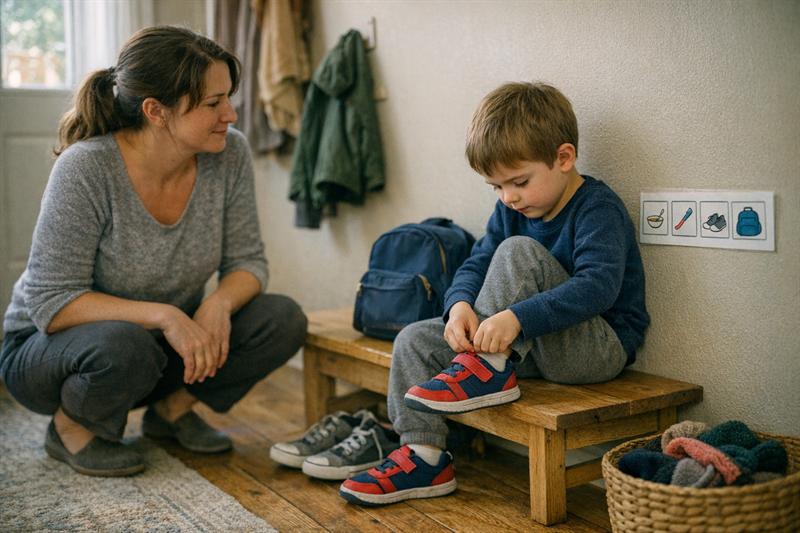
Quick Answer: Life skills training for children helps turn difficult daily routines into practical, repeatable skills that support greater independence at home, school, and in the community. The challenge is not simply that a child needs reminders. A skill may work in one setting but break down when the routine, caregiver, environment, or expectations change.
At Strive ABA Consultants LLC, life skills support is centered on meaningful participation rather than checking off a generic list of tasks. The process can help families identify which routines create the most stress, what support a child currently needs, and how to build skills that fit everyday life.
What Is Life Skills Training for Children?
Life skills training for children is individualized support that helps a child participate more independently in everyday routines. These skills can include self-care, communication, home participation, transitions, safety-related routines, and community activities.
For children with autism, ABA-based life skills support may include structured teaching, practice during natural routines, visual supports, communication tools, and caregiver collaboration. The goal is not to make every child complete tasks in the same way. It is to help the child take meaningful steps toward greater independence in routines that matter to them and their family.
- Completing part of a dressing or hygiene routine
- Asking for help, a break, or a preferred item
- Following a familiar morning, mealtime, or bedtime routine
- Putting belongings away or preparing for an outing
- Participating in school and community routines with appropriate support
Practicing a task during therapy is different from using that skill independently in daily life. For a broader look at functional skills, read how ABA therapy supports daily living skills beyond behavior reduction.
What Independence Skills Can Life Skills Training Support?
Independence skills training should focus on routines that improve participation, communication, comfort, and safety. A child does not need to master every skill listed below. The right goals depend on what is relevant to the child’s life now.
Self-Care and Personal Routines
Self-care goals can include dressing, grooming, handwashing, eating routines, preparing for sleep, and toileting routines when they are part of the child’s support plan. A practical starting point is often one manageable part of a routine rather than the entire routine at once.
Adults may step in quickly because a routine is taking too long. That may keep the day moving in the moment, but it can reduce opportunities for the child to practice. A more useful next step is to identify one part of the routine where the child can participate with the right level of support.
Sensory preferences, motor needs, communication needs, and the environment can affect how a child completes personal routines. A child who tolerates handwashing at home may find the noise, lighting, soap, or hand dryer in a public restroom more difficult. A support plan should account for those differences.
Home and Family Participation
Life skills support also includes everyday participation at home. This may involve cleaning up after an activity, putting shoes or toys away, helping prepare for an outing, joining a mealtime routine, or using a visual schedule to move through the day.
These goals often work best when they fit into routines the family is already doing. A strategy may be hard to maintain when it adds a complicated new system to an already busy household. A useful plan should reduce friction instead of turning the home into a therapy setting.
Communication That Supports Independence
Communication is part of independence. A child benefits from having a reliable way to ask for help, make a choice, request a break, communicate discomfort, or respond to a safety-related direction.
Effective communication may involve speech, gestures, visuals, sign language, or AAC. The key question is whether the child has a functional way to communicate needs in the moment. When communication is not built into daily routines, frustration can increase because the child has fewer ways to participate or ask for support.
School and Community Routines
School and community skills may include managing transitions, packing a backpack, participating in group routines, waiting safely, navigating familiar public spaces, and following predictable routines outside the home. These skills may need direct practice in the environments where they will be used.
A child may complete a routine with one caregiver at home and need more support at school or in the community. That does not mean the child has failed. It may mean the skill has not yet generalized across settings, and the support plan needs to address those differences.
How ABA-Based Life Skills Training Is Planned
Effective life skills support starts with the child’s current routines, not a prewritten checklist. A BCBA may review the child’s strengths and needs, develop measurable goals, monitor progress, and supervise implementation within their professional role.
A goal may sound positive but still be too broad to guide daily practice. “Be more independent” does not explain what the child will do, where it will happen, what support is needed, or how progress will be recognized. Clear goals give families and providers a practical direction.
Start With Strengths, Routines, and a Clear Baseline
Planning often begins by looking at what the child already does independently, where support is needed, and which routines matter most to the family. A baseline is a clear picture of what happens during a task before new teaching strategies are added.
- What part of the routine does the child already complete?
- Where do prompts, frustration, or delays usually occur?
- Which people, settings, or materials make the task easier or harder?
- What outcome would make the routine more workable for the child and family?
If a routine repeatedly leads to stress, rushed transitions, or missed opportunities to participate, it may need a clearer support plan. Families who want to understand the assessment process can review what happens during an ABA assessment and how to prepare a child.
Break Everyday Routines Into Teachable Steps
Task analysis means breaking a routine into smaller, teachable steps. For handwashing, that might include turning on the water, wetting hands, getting soap, rubbing hands together, rinsing, turning off the water, and drying hands.
The purpose is not to over-script every part of a child’s day. It is to identify where a routine becomes difficult and make the next step clearer. Smaller steps can give the child a realistic way to participate instead of repeatedly facing a task that feels too large.
Use Supports That Fit the Child
Supports may include visual schedules, modeling, communication tools, environmental adjustments, prompts, and reinforcement. The right support depends on the child, the routine, and the setting.
For example, a visual sequence may make a morning routine easier to follow, while a communication support may help a child request assistance before frustration builds. Support should be selected around the child’s learning and communication needs, not only adult convenience.
Reduce Support Gradually and Review Progress
Prompting gives a child support while learning a step. Prompt fading means reducing that support gradually as the child becomes more able to complete the step with less help.
Progress is not limited to finishing an entire routine alone. It may look like needing fewer reminders, completing more steps, asking for help more clearly, or participating with less distress. If progress stalls, the next step is to review the goal, supports, and practice opportunities rather than repeating the same approach without adjustment.
Why a Skill May Not Carry Over From Therapy to Daily Life
A child may complete a skill in therapy but struggle at home because the setting, caregiver, materials, sensory demands, timing, and expectations are different. This is called generalization: using a skill across different people, places, and routines.
For example, a child may follow a handwashing routine in a familiar setting but struggle at school or in a public restroom. Different sinks, loud hand dryers, unfamiliar soap, limited time, or changed visual cues can interrupt the routine. If those differences are not addressed, the skill may remain dependent on one environment.
A skill that works in one predictable place may still need practice under changing everyday conditions before it becomes more reliable.
- Practice with more than one trusted adult
- Use the skill in different rooms or settings
- Prepare for changes in materials, timing, and expectations
- Continue practice after the first signs of success
Generalization is easier to build when it is considered early, rather than added only after a skill appears mastered. For more guidance, see the ABA generalization checklist for parents.
How Caregivers Can Support Independence at Home
Caregivers can support independence by choosing one meaningful routine and creating enough time for the child to participate. Trying to change several routines at once can make consistency harder.
- Choose a routine that affects daily life, such as getting ready, mealtime, or leaving the house.
- Wait long enough for the child to respond before stepping in.
- Use consistent language, visuals, or communication supports when they help.
- Offer choices when appropriate so the child has a way to participate.
- Share what works, what does not work, and what has changed with the child’s support team.
Caregivers do not need to recreate formal therapy sessions at home. Useful practice can happen during real routines, where the child will need the skill most.
If your child needs repeated adult help with the same daily routines, a more structured support plan may be helpful.
- The child completes a skill in one setting but not in others.
- Routines regularly end in frustration, avoidance, or rushed adult intervention.
- School, home, and caregiver expectations are inconsistent.
- The child has no reliable way to ask for help, a break, or a change.
When these patterns continue, the routine may need clearer goals, consistent support, and practice across real-life settings.
When an Autism Evaluation or Reevaluation May Be Helpful
Life skills needs can change as children grow, routines become more complex, and school or community expectations increase. A reevaluation may be helpful when current supports no longer fit, new concerns arise, or caregivers need updated information about the child’s strengths and needs.
Difficulty with one routine does not diagnose autism. An autism evaluation or reevaluation considers a broader developmental and clinical picture and may help guide next steps based on the individual child.
Strive ABA Consultants LLC offers autism evaluations and reevaluations for families seeking diagnostic clarification or updated clinical information. When daily challenges are increasing and the current plan no longer explains what support is needed, updated information may be a practical next step.
What to Look for in Life Skills Support
Families may benefit from looking beyond a provider’s promise to teach independence. An important question is whether the provider has a practical plan for helping skills work in the child’s real life.
- How are goals chosen based on the child’s routines and family priorities?
- How is progress measured beyond completing a task in a therapy setting?
- How will skills be practiced across home, school, and community environments?
- How are caregivers included without adding unrealistic demands to family life?
- How does the provider coordinate with approved members of the child’s support team?
- What support is available for scheduling, transportation, insurance questions, or financial-assistance pathways?
How Strive ABA Consultants LLC Approaches Life Skills Support
Strive ABA Consultants LLC’s life skills support is centered on the routines already shaping a child’s day. The approach may include identifying where participation breaks down, defining a meaningful next step, and planning for that skill to work beyond one structured setting.
Access can affect consistency. Transportation challenges and financial uncertainty may interrupt a family’s ability to follow through with recommended support. Strive ABA Consultants LLC can help families explore transportation resources and access-related partnership pathways when available. Availability, eligibility, and coverage depend on individual circumstances.
Key Takeaways
- Life skills training for children focuses on meaningful participation in daily routines.
- Effective goals reflect the child’s strengths, communication needs, support needs, and family priorities.
- A skill that works in one setting still needs generalization planning before it becomes reliable in daily life.
- Caregiver collaboration can help make independence goals practical instead of overwhelming.
- Updated evaluation information may help when a child’s needs, routines, or support requirements change.
Conclusion
The challenge is not that a child needs help with a routine. It is when the same barriers continue to interrupt participation at home, school, or in the community without a clear plan for what needs to change.
Without appropriate support, adults may continue stepping in, routines may remain stressful, and skills may stay tied to one setting or caregiver. Strive ABA Consultants LLC can be a next step for families who need clearer information about autism evaluations, reevaluations, and support needs affecting daily life.
Start by identifying the routine that creates the most strain and discussing what the child already does, where support breaks down, and what progress should look like in real settings. Continued practice can also matter after new skills emerge, including learning how to maintain skills after ABA therapy.
Frequently Asked Questions
What is life skills training for children?
Life skills training for children is individualized support that helps children participate more independently in everyday routines. It can address self-care, communication, home tasks, school routines, and community participation.
Useful goals are connected to the child’s actual life, such as getting ready, asking for help, cleaning up, or following a familiar routine. Families who are unsure which goals matter most can begin by identifying the routines that repeatedly require adult help.
What life skills can ABA therapy help with?
ABA-based life skills support can address self-care, communication, transitions, home participation, safety-related routines, and school or community skills. Goals vary based on the child’s strengths, needs, and daily environment.
Examples include handwashing, dressing, packing belongings, requesting a break, communicating a need for help, and participating in a familiar outing. An assessment can help clarify which routines should be prioritized first.
How are independence goals chosen for a child with autism?
Independence goals are chosen by looking at what the child already does, where support is needed, which routines matter most, and what affects safety, communication, comfort, or participation. Goals should be specific enough to guide daily practice.
A strong goal does not start with a generic milestone. It starts with a real routine that is creating stress or limiting participation, then breaks that routine into achievable next steps.
Why can my child do a skill in therapy but not at home?
A child may complete a skill in therapy but struggle at home because the people, environment, materials, cues, and sensory demands are different. The child may need practice using the skill across those changes.
This is often a generalization issue, not simply a lack of effort. Ask the support team how the skill will be practiced with different caregivers and in the places where the child needs it most.
How can parents help children become more independent at home?
Parents can support independence by choosing one meaningful routine, allowing time for the child to respond, and using supports that fit the child’s needs. Consistency is often more practical than adding too many new strategies at once.
Visual cues, communication tools, simple choices, and predictable steps can help when used appropriately. Share routine challenges with the child’s provider so home practice remains realistic and connected to current goals.
When should a child have an autism reevaluation?
A child may benefit from a reevaluation when needs change, new concerns arise, daily routines become more difficult, or updated clinical information would help guide support decisions. One difficult routine alone does not diagnose autism.
When a family is unsure why progress has stalled or whether current supports still fit, a reevaluation can provide a clearer picture of current strengths and needs. Strive ABA Consultants LLC offers autism reevaluations for families seeking updated clinical information.