

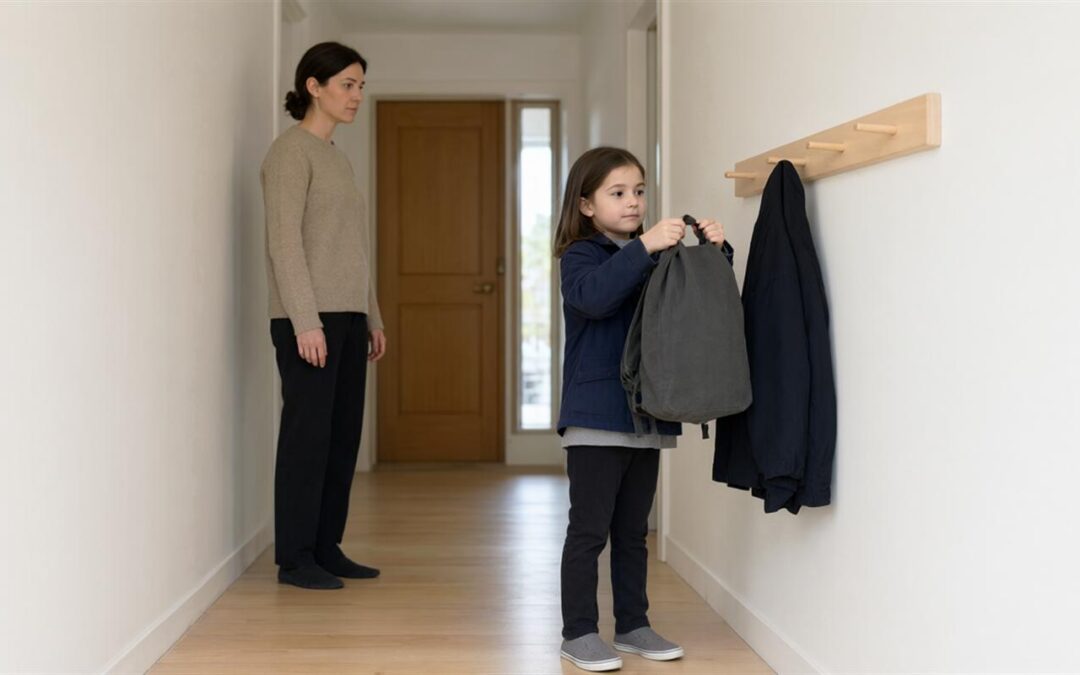
ABA carryover is usually discussed after something has already gone wrong: a skill that runs smoothly in the session room goes missing at the kitchen table, on the classroom carpet, or in the checkout line. By then the question is how to fix it. This guide takes the earlier position. Carryover is easier to design than to repair, and the design work happens in the planning conversation, when goals are written, settings are named, and an adult is identified who will prompt and then step back. What follows is a planning sequence for parents and caregivers rather than a list of activities to run at home.
Carryover Is a Planning Decision, Not a Repair Job
A goal can be met in the room where it was taught and still be absent from the rest of the week. That gap is not usually a sign that the teaching failed. It is a sign that the goal was written for one setting. A treatment plan names goals, the measure used for each goal, prompt levels, and review dates, and every one of those lines offers a place to include the second setting before the first session happens. The question worth settling early is not whether a child can do something, but where the plan expects the skill to appear and who is expected to notice when it does.
Planning costs less than repair. A goal rewritten after six months of thin data carries six months of practice that stayed in one room, and a family that has begun to believe the skill is not there at all. The planning version asks for one sentence per goal at the start, and that sentence decides what the next review will be able to show.
What to Ask the BCBA Before the Plan Is Finalized
A plan is easier to influence while it is still a draft than after it has been signed. The generalization strategies ABA teams write into plans are usually visible in a handful of specific lines: the setting named inside the goal, the prompt described in everyday words, the adult expected to deliver it, and the measure used somewhere other than the session room. When those lines are missing, the plan is not wrong so much as unfinished. Ask about them in the meeting where the document is discussed.
- Which settings will this goal be practiced in, and which of them appear on the plan itself?
- Who in each setting is expected to prompt, and what does that prompt sound like in plain words?
- How will progress be measured outside the session room, and by whom?
- Which goals are session-only, and what makes them different from the rest?
- When is the carryover line reviewed, and what would lead the team to change it?
A prompt level describes how much help a learner needed, from independent work through a spoken cue, a model, and physical guidance. Asking for the level in plain language matters more than it sounds, because two adults who each believe they are offering a little help can be offering very different amounts, and the child’s performance tends to follow whichever amount is actually given.
Where the ABA Carryover Line Belongs in the Treatment Plan
A written carryover line does one job. It names the goal, the setting where the skill is practiced, the adult expected to prompt, the prompt in everyday words, the measure used outside the session room, and the date the line is reviewed. That is six short entries sitting on the same page as the goal they belong to. The line is not a second goal, and it is not a substitute for parent training. It is the part of the document that says where the work continues and who is holding it. Families who want to see how those entries sit beside goals, measures, and review dates can read how a treatment plan names goals, measures, and review dates.
A goal can be written so that the setting is part of the goal itself. A line such as “requests a break during small-group work” carries its setting inside the sentence, while “requests a break” does not, and that difference decides what anyone will be able to measure in eight weeks. Much of ABA carryover comes down to this small piece of editing: a setting added to a goal line before the plan is final.
Choosing the Home Practice Slot
How to make ABA skills work at home is less a question of effort than of location. The slot that survives is usually a routine that already happens at the same time every day: the walk to the bus, the after-school snack, the last ten minutes before bed. A routine supplies the cue and the repetition without anyone scheduling a lesson. One slot is enough to begin. Three slots chosen in the first week is how a plan gets abandoned by the third.
A practice slot has three parts worth naming out loud: the cue that starts it, the moment inside it when the skill is genuinely needed, and the ending that tells the child the slot is finished. Practice that sits inside a routine also differs from practice at a table in who creates the opportunity. At a table the adult does; in a routine the routine does, which is the reason a skill learned in the second place tends to hold. How many repetitions count as enough is a question for the clinical team rather than a number in a guide, since the answer depends on the skill and on the learner.
What the Home Practice Record Needs to Hold
Four fields cover most of what a team needs. Which routine the slot belonged to. What happened at the moment the skill was needed. How much help was given. And what an adult would change next time. That is a note of a few lines, written once a day at most, and it takes less time than the meal it describes.
The record is not an incident report, not an evaluation, and not a funding document, and treating it as any of the three is how most notebooks stop in the second week. Its single job is to answer how to make ABA skills work at home across weeks rather than in one evening, and keeping a weekly caregiver log of prompts and carryover is the habit that makes the answer visible. Caregivers see the parts of the day a session does not reach, including mornings, bedtime, weekends, and errands, and that is exactly the information a clinician cannot collect without them.
Setting Up the School Layer Without Overloading a Teacher
The classroom ask has to be small enough to survive an ordinary school day. A teacher is responsible for a group, cannot run a session, and should not be asked to. What a teacher can hold is one goal at a time, a cue, a short wait, and a line of feedback written down before pickup. Everything beyond that has to be carried by the clinical team or left off the request.
A classroom holds one adult to many children, so the realistic ask is a cue and a note rather than a program. Build the request around a moment the room already has, such as lining up, circle time, or the transition to lunch, instead of a new routine the teacher would have to invent. Then settle who carries the note back to the team: the caregiver at pickup, a message on a fixed day, or the person who already speaks with the school. A note with no route to the team changes nothing, however carefully it is written.
Community Settings as the Check, Not the Curriculum
Community settings change the conditions of a routine faster than home or school: noise, a line, an unfamiliar adult, and a schedule the family does not control. That is why an outing is a poor place to introduce a skill and a good place to check one. Choose one recurring trip, the same store at the same point in the week, and let it act as the test rather than as a new teaching plan.
A usable trip does not need a score. It needs a way to notice: whether the skill appeared at all, what the conditions were, and what the adult had to do to get it. A difficult trip still carries information, because the demand that broke it is usually identifiable within a minute of getting home.
ABA Skill Transfer: The Signs the Plan Is Working
Three signals are worth trusting. The skill appears without the adult’s cue word. It appears with a different adult. It survives a hard week, one with a missed nap, a substitute teacher, or a schedule that changed without warning. Each says something the others do not: the first that the prompt has faded, the second that the teaching is not tied to a single person, the third that the skill holds when nobody has arranged the conditions.
What is not a signal is one good afternoon. Session data collected by the technician and reviewed by the supervising clinician is the place to check whether a good week is a trend or an accident, and the specific question worth asking is whether ABA skill transfer shows up in what was recorded outside the session room, not only in what happened inside it.
When the Written Line Is Not Enough
When a written line and a practice slot still are not producing transfer, the next step is a scheduled conversation rather than more hours at home. Bring three things: the record, the routine where practice happens, and a plain description of the setting. The purpose of the meeting is to decide which of three things changes, and there are only three: the prompt, the setting, or the goal itself.
That conversation is a plan review, a scheduled point at which goals, progress, and next steps are examined together. It is also where the generalization strategies ABA teams wrote into the plan get read against what actually happened in a kitchen and a classroom. Teams that can see the record usually name the change in one meeting, and preparing for an ABA plan review with questions and next-step notes is the difference between raising a concern and settling one.
Key Takeaways
- The setting belongs inside the goal line, not in a note added after the first disappointing week.
- A planning meeting is where a caregiver can still shape a goal; a review happens later and costs more.
- One routine carried consistently is worth more than three routines started in the same month.
- A teacher can hold a cue and a written line of feedback. A program is not a fair request.
- A community trip shows whether the plan travels. It does not teach the skill on its own.
Conclusion: Getting Support in Place
Families in Oak Forest, Illinois; Chicago, Illinois; and Merrillville, Indiana can plan this work with Strive ABA Consultants LLC, which provides ABA therapy, diagnostic evaluations for families who suspect a child may be on the autism spectrum, parent training and family support, counseling services, life skills training, social skills groups, and consulting for care programs. Insurance and financial assistance pathways exist, and eligibility is reviewed for each family rather than assumed. Transportation support is arranged as access help for families who need it and confirmed in advance, since availability depends on the distance and the week.
Bring the questions above to the first planning conversation, and bring the record to the review. A caregiver who can describe one routine, one setting, and one difficult moment gives the clinical team enough to write a line that travels. To begin, request a callback, make an appointment, or send a message.