

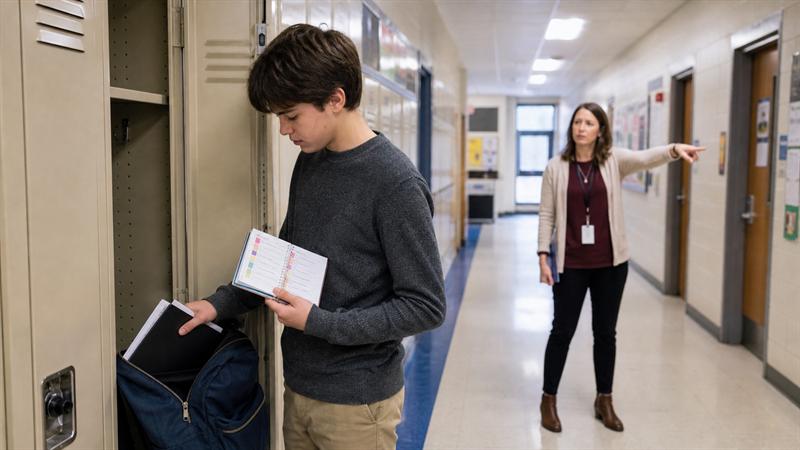
Moving to middle school or high school changes more than a student’s building. A day that once followed one classroom routine can become a series of transitions, assignments, peer interactions, digital systems, changing expectations, and decisions managed with less adult direction.
That is why ABA goals for adolescents should be reviewed as school demands change. Families may find that a student who built useful skills in a familiar setting has more difficulty using those skills across several teachers, classrooms, activities, and home routines. Earlier progress has not necessarily disappeared. The environment changed, and the support plan may need to change with it.
Why ABA Goals for Adolescents May Change During School Transitions
School transitions add more moving parts to a student’s day. When goals do not reflect those changes, difficulties with organization, communication, or transitions can affect assignments, family routines, and participation at school.
Reasons ABA goals may change during middle school and high school include:
- More classes, teachers, locations, and schedule changes
- Less direct adult prompting during the school day
- More responsibility for materials, assignments, devices, and personal belongings
- Social expectations that are less explicit and more dependent on the situation
- Greater need for privacy, choice, and self-advocacy
- New community, extracurricular, and transportation routines
Problems can arise when goals remain too broad or too connected to an earlier routine. A student may follow a visual schedule in one classroom but still need support using a planner across several classes. A teen may communicate well at home but need a practical way to ask a teacher for clarification or request a break during a crowded school event.
As explained in ABA Therapy by Age: How Treatment Changes from Early Childhood to Adolescence, treatment priorities can shift as routines, responsibilities, and environments change. The important question is not whether a teen is doing enough independently. It is whether current goals support the routines that matter now.
How Adolescent ABA Goals Differ From Earlier School-Age Goals
Adolescent goals are not simply elementary-school goals with higher expectations. They should reflect a different daily reality: more transitions, more personal responsibility, more privacy, and more opportunity for the teen’s preferences to shape the plan.
From Adult-Led Prompts to Practical Self-Management
Progress is not measured only by removing help. For many adolescents, practical independence means learning to use the right support at the right time. That could include checking a phone calendar, using a written checklist, reviewing a visual schedule, using a communication tool, or attending a planned check-in.
A common misunderstanding is that support tools prevent independence. In daily routines, tools can help a teen manage tasks with less direct adult prompting. When a teen uses a planner to get to the correct class, prepare materials, or remember an after-school commitment, that planner can be part of an effective self-management system.
From Broad Skills to Real-Life Routines
Goals such as “improve organization” or “increase social skills” are often too broad to guide daily support on their own. Strong goals identify the routine where the difficulty occurs and the outcome that would make that routine more manageable.
For example, organization might mean packing the right notebook before a class transition, locating a homework assignment on a digital platform, or preparing gym clothes and school materials the night before. When a goal is tied to a real routine, families and support teams can better identify what is getting in the way and what needs to change.
From Parent-Directed Planning to Greater Adolescent Input
As students get older, their preferences should have a more visible role in goal planning. That includes what they want more control over, which routines feel difficult, what support feels useful, and what should be handled with greater privacy.
Adolescent participation does not look the same for every person. Some teens can describe goals directly. Others may share preferences through written options, visual choices, AAC, behavior patterns, or conversations with people who know their communication style. The goal is to make room for the adolescent’s voice rather than assuming adults should define every priority.
ABA Goal Areas That May Become More Important in Middle School and High School
Not every autistic teen needs the same goals. These areas are examples of topics that can become more relevant as a school day becomes more complex. They should be considered in relation to the student’s routines, strengths, preferences, and support needs.
Managing Class Schedules and Transitions
Moving between classrooms, electives, lunch, assemblies, and changing schedules requires more than knowing where to walk. A student may need a reliable way to check what comes next, locate the correct space, and respond when a teacher, room, or routine changes.
Support can focus on using a preferred schedule system, preparing for planned changes, and knowing how to get help when an unexpected change occurs. Without a workable transition plan, the school day may involve missed directions, rushed movement, and added stress.
Organizing Materials, Assignments, and Personal Belongings
Middle and high school place more responsibility on students to manage notebooks, devices, homework, gym items, personal belongings, and activity materials. Problems can develop when a system is too complicated, inconsistent between settings, or designed around what adults prefer instead of what the student will use.
A practical goal focuses on the specific breakdown. That could mean checking a backpack against a short list before leaving home, identifying the next assignment step, or using a simple routine to organize materials at the end of the day.
Asking for Help and Communicating Needs
Self-advocacy becomes more important when students work with several teachers and face less predictable situations. A teen may need a clear way to ask for clarification, request additional time, communicate the need for a break, or explain that a routine has changed.
This support should fit the individual’s communication method. Spoken language is one option, but written messages, visual supports, AAC, scripts, or preplanned signals may be more useful for some students. If a student has the skill but cannot use it when the environment becomes busy or unfamiliar, the goal may need practice in the situations where it matters.
Navigating Peer Interactions and Social Boundaries
Adolescent social situations often involve less direct instruction and more unspoken expectations. Goals in this area can focus on safety, communication, consent, personal space, online boundaries, and participation in activities the teen values.
Social support should not be about making a student look like everyone else. It should help the teen understand choices, recognize boundaries, communicate preferences, and participate in relationships or activities in ways that are meaningful to them.
Responding to Unexpected Changes and Stressful Situations
Substitute teachers, altered schedules, group projects, crowded events, and transportation changes can disrupt routines quickly. This can become more difficult when a student has no clear plan for what to do next or no reliable way to communicate that support is needed.
Relevant goals can include identifying a preferred coping tool, using a communication strategy, following a simple backup routine, or knowing which trusted adult or support person to approach. The goal is not to remove every stressful situation. It is to build a workable response when the situation changes.
Building Daily Living and Personal Responsibility Skills
Daily living goals may become more important as adolescents take on more responsibilities at home and prepare for greater participation outside the home. Depending on the individual, this may include personal care routines, preparing simple meals, managing laundry, organizing belongings, or getting ready for the next day.
Privacy and dignity matter especially in this area. Goals involving hygiene, health routines, or personal responsibilities should be addressed in an age-appropriate way and should reflect what is useful to the teen and family, not a generic list of expected tasks.
Community Participation and Transportation Routines
As school and community involvement expand, teens may need support with clubs, recreation, appointments, errands, volunteer activities, pickup plans, or transportation changes. The practical skill is not simply getting somewhere. It is understanding the routine, communicating around changes, and knowing what to do if the plan shifts.
Transportation can also affect a family’s ability to maintain planned services. Strive ABA Consultants LLC offers transportation support and may be able to help eligible families explore access options in Oak Forest, Chicago, and Merrillville.
For broader guidance on routines, community participation, and practical independence, read ABA Support for Adolescents: Building Independence, Routines, and Community Participation.
What Meaningful ABA Goals for Adolescents Should Include
Meaningful ABA goals are specific enough to guide action and flexible enough to remain relevant as routines change. A goal that looks good on paper but does not help in the student’s real day may not address the concern that brought the family to the conversation.
A Clear Connection to Everyday Life
Goals should connect to routines the adolescent encounters regularly or considers important. Instead of focusing only on a broad category such as “organization,” identify the exact routine: arriving prepared for first period, keeping track of assignments, preparing for a preferred activity, or completing an evening routine with a useful level of support.
This distinction matters because a skill practiced in isolation does not always transfer to school, home, and community settings. The goal should reflect where the skill needs to work.
A Plan That Respects Preferences, Privacy, and Dignity
Age-appropriate planning includes how goals are discussed, who is involved, and how practice takes place. This is especially important for goals involving personal care, communication, social relationships, and private routines.
Adults can sometimes focus on making a routine easier for the system around the student while overlooking whether the goal is useful, respectful, or acceptable to the adolescent. A stronger approach considers both the practical need and the teen’s experience of the support.
Input From the Adolescent, Family, and Relevant Support Team Members
Families see the routines that happen before school, after school, and during weekends. School staff can identify patterns that appear during classes, transitions, or group activities. When ABA services are part of the plan, the care team can help translate those real-world observations into measurable, functional goals.
These perspectives do not need to compete. Each one provides information about a different part of the student’s day. The goal is to identify the routines causing the greatest difficulty and avoid creating overlapping plans that overwhelm the student.
Ongoing Review as Routines and Responsibilities Change
Goals need review because adolescent life does not stay still. A new grade, activity, schedule, teacher, transportation routine, or responsibility can make an old goal less relevant or reveal a new barrier.
Families may notice these changes before they show up clearly in a formal review. Mornings may become harder, missing assignments may increase, transitions may lead to more distress, or a teen may stop participating in an activity they previously enjoyed. When those patterns continue, it can be helpful to review the routine itself and update the support plan rather than expecting the student to keep working through a system that no longer fits.
For more context on practical, everyday independence, see How ABA Therapy Supports Independence in Daily Life: Real Examples by Age.
Questions Families Can Ask When Reviewing ABA Goals
A focused conversation is more useful than trying to solve every possible challenge at once. These questions can help families identify the routines that need attention now:
- Which new school routines take the most energy or create the most difficulty?
- What does the adolescent want to do with more choice or independence?
- What support helps the student communicate needs most effectively?
- Which goals matter most at home, at school, or in the community?
- Which skills need to work across settings, and where will different supports still be needed?
- How will progress be reviewed when school expectations change?
- How will the plan support privacy, dignity, and age-appropriate decision-making?
These questions can prevent a common problem: treating every challenge as equally urgent. A practical plan often starts with the routines that affect the student most often and create the biggest disruption when they break down.
Coordinating Home, School, and ABA Support Without Overloading the Student
Coordination works best when the plan is focused. Trying to address every school, home, and community skill at the same time can lead to too many demands, inconsistent follow-through, and less clarity about what is helping.
Start With the Routines That Have the Greatest Daily Impact
Choose one or two routines that affect the day repeatedly. This may be getting ready for school, moving between classes, managing homework, communicating needs, or preparing for an activity.
Starting small is not lowering expectations. It can help families and teams identify whether a strategy works before adding more demands. When a routine improves, the next priority may become easier to identify.
Use Consistent Tools and Language When Helpful
Planners, visual supports, checklists, communication methods, and simple routine language can be useful when they are used consistently. Consistency does not mean every setting has to look identical. A student may use one type of reminder at home and another at school while still working toward the same functional outcome.
What matters is that the system makes sense to the student and is practical for the adults supporting the routine. A tool that is too complicated or rarely available can become another task to manage rather than a support.
Review What Is Working in the Real Environment
Progress needs to be considered in the real setting, not only during practice. A routine that works during a calm session but does not work during a crowded hallway, an unexpected schedule change, or a busy evening at home may need further adjustment.
Families, schools, and ABA providers have different roles. Clear communication can help avoid conflicting strategies, but ABA services do not replace school-based supports or family decision-making. For a closer look at shared planning, read A Parent Guide to ABA Home-School Communication for Shared Goals.
When an Autism Evaluation or Reevaluation May Be Helpful
A transition to middle school or high school can bring new questions into focus. Families may want updated information about an adolescent’s current strengths, communication, behavior, or support needs when planning for a new stage of school and daily life.
An autism evaluation or reevaluation may be useful when updated information would help clarify the adolescent’s present needs or inform support planning. A new school year alone does not automatically mean an evaluation is needed or determine access to services.
The key distinction is between a temporary adjustment to a new routine and a need for updated information about the adolescent’s current profile and support needs. When concerns continue across routines or interfere with school, home, or community participation, families may benefit from a conversation about what information would be most helpful for next-step planning.
Support for Families Navigating Adolescent Transitions
Strive ABA Consultants LLC provides autism evaluations and reevaluations for families seeking updated information about current needs and next steps. For families navigating a major school transition, an evaluation or reevaluation may help inform goal setting and support planning.
The company also recognizes that access affects consistency. Transportation support may be available to help eligible families explore practical service options in Oak Forest, Chicago, and Merrillville, particularly when schedules, transportation, and family responsibilities are already under pressure.
Key Takeaways
- ABA goals for adolescents may change as school routines, responsibilities, and social expectations become more complex.
- Meaningful goals focus on real daily situations, not broad labels such as organization or independence.
- Independence can include using planners, visual systems, communication supports, and planned check-ins effectively.
- Privacy, dignity, self-advocacy, and adolescent input become increasingly important during middle school and high school.
- When problems continue across school, home, or community routines, goals and support planning may need review.
Conclusion: A Transition Is an Opportunity to Revisit What Matters Now
Middle school and high school bring more complex routines, expectations, and decisions. A student’s support plan may still be tied to earlier routines while the demands around them have changed. When that gap is not addressed, assignments, transitions, communication, and family routines can become harder to manage.
Strive ABA Consultants LLC can be a practical next step for families seeking updated information about an adolescent’s current needs through autism evaluations or reevaluations. Reviewing the routines that are breaking down now can provide a clearer foundation for meaningful goals, coordinated support, and a plan that fits the student’s daily life.
Frequently Asked Questions
What are common ABA goals for adolescents?
Common ABA goals for adolescents may include managing schedules, organizing school materials, communicating needs, asking for help, navigating social boundaries, building daily living routines, and participating in community activities. The most useful goal depends on which routine creates the greatest daily barrier.
For one student, organization may mean packing the correct materials before leaving for school. For another, it may mean checking a digital assignment system or preparing for an after-school activity. The important distinction is that meaningful goals are tied to real routines rather than a standard checklist of teen skills.
How should ABA goals change when a child starts middle school?
ABA goals may shift toward the parts of middle school that create new demands: multiple classrooms, changing teachers, assignments, lunch routines, digital tools, and less frequent adult prompting. The goal is to help the student manage the new environment with supports that are practical and usable.
For example, a goal may focus on checking a schedule before a class transition, using a preferred planner system, or communicating when instructions are unclear. The change is not about expecting the student to do everything alone. It is about making the right supports work in a more complicated school day.
Can ABA help autistic teens build independence without removing needed support?
Yes. Independence does not mean completing every task without help. It can mean using a support tool independently, asking for assistance clearly, following a routine with fewer repeated reminders, or making more decisions about daily activities.
A teen who uses a calendar to prepare for a schedule change is building self-management. Removing that tool simply to make the task look independent can create more difficulty, not more growth. Support should be judged by whether it helps the adolescent participate more effectively in daily life.
How can parents include their teenager in ABA goal planning?
Parents can include a teenager by asking about difficult routines, preferred activities, helpful supports, privacy concerns, and areas where the teen wants more control. The adolescent’s input may be shared through conversation, written choices, visual options, AAC, or other communication methods.
This matters because adults can focus on goals that make routines easier for the people around the teen without considering whether the goal is meaningful to the teen. Including the adolescent’s perspective helps separate a useful life skill from a goal that is only convenient for others.
What should parents ask an ABA provider before high school?
Parents should focus on the routines most likely to affect the student every day. Useful questions include which school changes are likely to create the most difficulty, how goals can support communication and self-advocacy, and how progress will be reviewed as responsibilities change.
It is also important to ask how the plan addresses privacy, dignity, and the student’s priorities. High school planning is generally more manageable when it starts with a small number of high-impact routines instead of trying to prepare for every possible future challenge at once.
When might an autism reevaluation be helpful for an adolescent?
An autism reevaluation may be helpful when a family needs updated information about an adolescent’s current strengths, needs, communication, behavior, or support planning. A school transition can make those questions more visible because the environment and expectations have changed.
The transition itself does not determine whether reevaluation is needed. The key factor is whether updated information would clarify current needs and guide planning. Persistent challenges across school, home, and community routines may be a reason to discuss whether a closer review of current supports would be useful.