

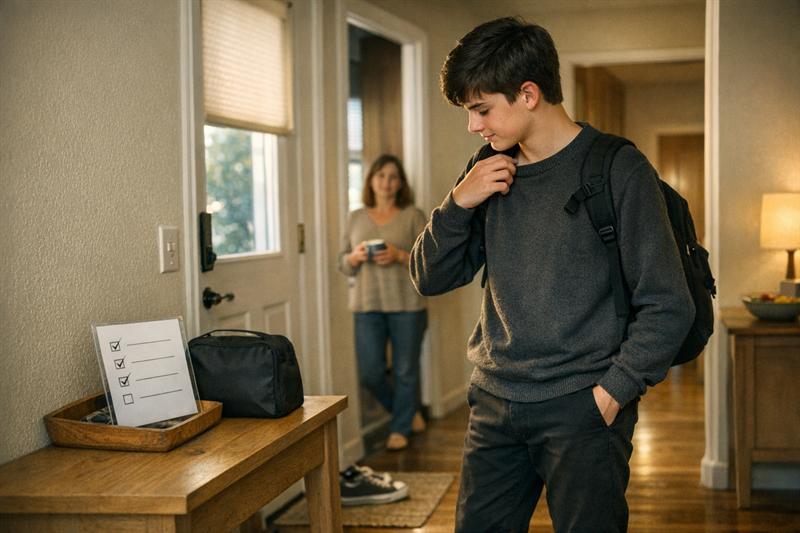
As children become teenagers, the support they need often changes. A routine that worked in elementary school may no longer fit changing class schedules, greater privacy needs, community activities, family responsibilities, or a teen’s desire for more control over daily choices.
At Strive ABA Consultants LLC, families may be looking for more than a general “independence” goal. They may need support with specific concerns, such as getting through a morning routine with fewer repeated prompts, communicating when plans change, making community outings more manageable, or building skills that carry into daily life.
How ABA Support Changes During Adolescence
ABA support for teens should reflect the teen’s life now. Early childhood goals often center on foundational communication, routines, play, and learning readiness. During adolescence, support may shift toward using skills across settings, managing more responsibilities, and participating in activities that matter to the individual.
Independence is not the same as doing everything alone. For many adolescents, meaningful independence means having more control, communicating needs, using helpful supports, and taking part in routines with fewer barriers.
Independence can look different for every adolescent:
- Making choices about preferred activities, clothing, meals, or routines
- Using spoken language, AAC, written supports, or gestures to request help
- Following a familiar schedule with fewer reminders
- Preparing needed items for school, appointments, or outings
- Using a checklist, phone reminder, or visual support effectively
- Participating in a preferred activity safely and comfortably
Families who want a broader view of changing goals can explore how ABA therapy changes from early childhood to adolescence. The important distinction is that adolescent goals should not come from a generic checklist. They should connect to the teen’s routines, interests, communication style, and daily environment.
What Can ABA Therapy for Adolescents Focus On?
ABA therapy for adolescents can address practical skills that affect everyday participation. The right focus depends on the teen’s strengths, preferences, support needs, communication methods, and the situations that matter most to the family.
Daily Routines and Self-Management
Daily living skills may include getting ready in the morning, managing hygiene routines, organizing personal belongings, preparing school materials, completing household tasks, or using reminders to stay on schedule. The goal is not to create a rigid routine that works only under ideal conditions. It is to build a routine that fits the teen’s actual day.
A teen may know the steps of a task but have difficulty when the order changes, time is limited, a needed item is missing, or several tasks must happen at once. When those barriers are not addressed, the routine can become dependent on repeated caregiver prompts, creating frustration for both the teen and family.
Daily living goals may include:
- Using a visual, written, or digital schedule
- Preparing clothing or materials the night before
- Managing a hygiene routine in a sequence that makes sense for the teen
- Completing laundry, room organization, or household responsibilities
- Preparing a simple meal or snack when appropriate
- Using a calendar, timer, checklist, or reminder system
For additional examples, see how life skills training builds independence through everyday routines. The most useful routine is not necessarily the most complicated one. It is the one that reduces a real barrier and helps the teen participate more successfully.
Communication, Self-Advocacy, and Problem-Solving
Communication goals during adolescence can help a teen express preferences, ask questions, set boundaries, request a break, or seek help when something changes. Effective communication does not require one specific way of speaking, making eye contact, or interacting with others.
Self-advocacy may include telling someone that instructions are unclear, requesting more time, communicating discomfort, or explaining what support is needed. A teen who can communicate “I need a break,” “Can you show me again?” or “That plan changed” may have more control at home, school, and in community settings.
Focusing only on whether a teen follows directions can overlook why a routine breaks down. If a teen cannot communicate confusion, discomfort, or a need for support, the same challenge may continue in unfamiliar or demanding situations.
Social Participation and Relationships
Social skills support for teens with autism should connect to relationships and activities the teen values. Some teens want help joining a club, talking with peers about a shared interest, handling disagreements, understanding boundaries, or participating in family gatherings with less stress.
Social participation does not mean teaching a teen to hide autistic traits or perform one “correct” social style. It means supporting communication, choices, and participation in ways that feel meaningful and safe to the individual.
Social participation may include:
- Starting or continuing a conversation about a preferred interest
- Taking turns during a game or shared activity
- Recognizing when a peer needs space
- Practicing boundaries and respectful disagreement
- Participating in a club, recreation program, volunteer setting, or family event
- Knowing how to leave an uncomfortable situation or ask for help
For some adolescents, structured peer practice is useful. For others, individual support in real routines is more relevant. Families can learn more about how social skills groups work in ABA and when they may be the right next step.
Community Access, Safety, and Navigation
Community participation means having meaningful opportunities to take part in everyday activities, communicate needs, make choices, and use supports in settings beyond home or school. Being physically present at an activity is not the same as being able to participate comfortably with needed support.
Community goals may involve shopping, ordering food, attending recreation activities, visiting the library, preparing for appointments, navigating familiar places, or knowing how to ask for help. Transportation, unfamiliar settings, sensory demands, long wait times, and communication barriers can all affect whether those activities feel manageable.
A teen may do well in a familiar setting and struggle when the environment changes. Without planned community practice, families may begin avoiding outings, reducing opportunities, or completing every step for the teen because it feels faster in the moment. Over time, that can limit opportunities to build skills where they are needed.
School, Vocational, and Transition-Related Routines
Transition planning does not mean every adolescent is expected to follow the same path after high school. Some teens may be preparing for work, volunteer activities, additional education, community programs, or greater responsibility at home. The practical focus is on routines and supports that help the teen participate in the next stage of life.
Transition-related goals may include organizing school materials, arriving prepared for an activity, following a schedule, communicating with instructors or supervisors, or managing a responsibility with appropriate support. School plans, educational decisions, and adult-service options vary widely, so useful planning starts with the teen’s current needs rather than assumptions about a future outcome.
How Meaningful Teen ABA Goals Are Identified
Meaningful adolescent ABA goals often start with real-life friction points, not broad labels such as “improve independence.” A useful goal identifies what is happening, where it happens, what gets in the way, and what successful participation would look like.
One practical way to identify priorities is to look at situations that repeat every week:
- Identify a routine that regularly breaks down or creates stress.
- Ask what the teen wants more control over or wants to do more easily.
- Look at what limits participation at home, school, or in the community.
- Identify the supports already helping and the barriers that keep the skill from carrying over.
- Choose a goal that is observable, useful, and connected to the teen’s daily life.
For example, “be more independent” is too vague to guide a plan. “Use a phone reminder and checklist to prepare for a weekly activity, including asking for help when an item is missing” gives the teen, family, and provider a clearer routine to work from.
Progress may stall when a goal looks appropriate on paper but does not matter to the teen or fit the family’s day. This can lead to limited follow-through outside sessions. A more practical approach is to connect goals to a real responsibility, a preferred activity, or a recurring stress point the teen and family recognize.
Building Routines That Work Beyond Therapy
Generalization means using a learned skill in different settings, with different people, and under different conditions. For adolescents, this may involve practicing a routine at home, school, and in community settings.
A teen may complete a task successfully in one structured environment and still have difficulty using that skill elsewhere. That does not automatically mean the teen is unwilling or unable. It may mean the routine has not been practiced across the conditions where it needs to work.
What helps skills carry over:
- Breaking complex routines into manageable steps
- Using visual, written, digital, or communication supports that fit the teen
- Practicing with more than one caregiver, staff member, or setting
- Planning for common changes, such as a different schedule or missing item
- Reviewing routines when fatigue, sensory demands, or family logistics affect performance
- Returning to key skills when responsibilities or environments change
If a teen can complete a routine only with one person, at one time, and in one location, the skill may not yet be dependable in daily life. This is why generalization should be planned rather than treated as an automatic outcome.
Community Participation Is More Than Being Present
Being present at a store, recreation program, appointment, or family gathering is not the same as participating meaningfully. Meaningful participation includes having a way to communicate, knowing what to expect, making choices, using needed supports, and having a workable plan when something changes.
- Being present: attending an activity while others manage every decision, communication need, and transition.
- Participating meaningfully: having opportunities to choose, communicate, engage in the activity, request support, and leave or take a break when needed.
This distinction matters because families may gradually stop attempting activities that repeatedly become overwhelming. When outings are avoided, a teen may have fewer opportunities to practice skills in the settings where they matter. Planning can account for transportation, communication access, sensory needs, wait times, unfamiliar people, and the family’s actual schedule.
How Families, Schools, and ABA Providers Can Coordinate Support
Consistency matters, but consistency does not mean expecting home, school, and community settings to work exactly the same way. Each setting has different people, schedules, demands, and expectations. A support plan can work better when everyone understands the priority and how the routine may change across environments.
Useful topics for a planning conversation include:
- The routines that currently matter most
- Recent changes in school, family schedules, or responsibilities
- What is working at home and what breaks down outside the home
- Preferred communication methods and needed supports
- Interests that could make practice more meaningful
- Barriers such as transportation, fatigue, sensory demands, or conflicting expectations
A common challenge is that a teen receives different directions from every adult involved. This can create confusion because the teen has to guess which expectation applies. Shared priorities and clear communication can reduce that conflict while respecting the teen’s privacy and voice.
Questions to Ask When Considering ABA Support for a Teen
Families should look for answers that connect support to everyday life. A provider should be able to explain how a goal may be practiced beyond a structured setting so the plan remains relevant to daily routines.
- How will my teen’s interests, preferences, and communication style shape goal planning?
- Which routines or community situations will support focus on first?
- How will skills be practiced outside a structured therapy environment?
- How will the team know whether support is helping in everyday life?
- How will goals change when school schedules, family routines, or responsibilities change?
- What caregiver involvement is expected, and what support will families receive?
- How are transportation, scheduling, or other access barriers affecting participation?
If your teen has mastered skills in one setting but struggles with the same routine elsewhere, additional planning may be helpful. This can mean moving beyond isolated practice and considering the conditions affecting daily participation.
- The morning routine works only when one caregiver gives repeated prompts.
- Your teen avoids community activities because changes, wait times, or communication demands become difficult.
- School, home, and other caregivers are using different expectations for the same skill.
- A goal has remained in place for months without becoming useful in daily life.
When these signs are present, it can help to identify the specific routine, environment, or communication barrier that is keeping the skill from carrying over.
When an Autism Evaluation or Reevaluation May Help With Planning
An autism evaluation or reevaluation may help when a family needs clearer information about current strengths, support needs, or planning questions. Adolescence can bring new demands that make older information less useful for understanding what support is needed now.
An evaluation conversation may be helpful when:
- Current needs or daily functioning have changed
- Families have new questions about communication, routines, or participation
- Existing documentation no longer reflects the teen’s current profile
- Updated information would help guide planning discussions
A reevaluation is not automatically needed because a child becomes a teenager. The decision depends on the question that needs to be answered. Assessment information can support planning, but it should be considered alongside family observations, school information, and the adolescent’s own communication and preferences.
Key Takeaways
- ABA therapy for adolescents can focus on real-life routines, communication needs, participation, and self-management.
- Independence can include using supports effectively, making choices, asking for help, and participating with more control.
- Strong adolescent goals often begin with real-life friction points, not generic developmental milestones.
- Skills may need practice across home, school, and community settings before they become dependable in daily life.
- Transportation, schedules, sensory demands, and communication access can affect participation and should be part of planning.
- An autism evaluation or reevaluation may be useful when current information does not answer a family’s planning questions.
Strive ABA Consultants LLC’s Approach to Adolescent Support
Strive ABA Consultants LLC approaches adolescent support by looking beyond whether a teen can complete a skill during one session. An important question is whether that skill helps the teen take part in a real routine, communicate a need, handle a change, or access an activity that matters to them.
This approach starts with the patterns families see every day. When repeated prompts, missed routines, difficult transitions, or avoided outings become recurring concerns, the plan may need to address the factors involved. These may include the environment, communication supports, access barriers, and the teen’s own priorities.
Transportation and scheduling barriers can also affect access to consistent support and community opportunities. Strive ABA Consultants LLC considers practical barriers as part of the larger planning conversation, including transportation support and access-related partnership options when relevant to a family’s circumstances.
Frequently Asked Questions About ABA Therapy for Adolescents
Is ABA therapy appropriate for teenagers with autism?
ABA therapy can be appropriate for teenagers when goals connect to their current routines, communication needs, interests, and everyday participation. Adolescent support should not simply repeat early childhood programming. It can address situations the teen is navigating now, such as changing schedules, increased responsibilities, community activities, or communication during unfamiliar situations.
The deciding factor is not age alone. An important question is whether support is focused on a meaningful need. A goal such as preparing for a preferred weekly activity with a schedule, checklist, and communication support may be more useful than a broad goal that simply says “increase independence.”
What life skills can ABA help adolescents practice?
ABA support can address routines, organization, self-care, communication, household responsibilities, problem-solving, and community participation. Examples include preparing for school, organizing personal items, using a digital schedule, making a simple meal, communicating during an outing, or asking for help when a plan changes.
The skill matters most when it fits the teen’s actual life. Practicing laundry may be useful when it connects to the teen’s role at home. Practicing a checklist may be useful when it helps the teen get ready for something they care about. The goal should address a real barrier rather than add another task simply because it appears age-appropriate.
How can ABA support independence without expecting a teen to do everything alone?
Independence can mean having more control over a task, not completing every part without support. A teen may use a phone reminder, visual schedule, communication device, caregiver prompt, or transportation support and still be building meaningful independence.
For example, a teen may need help getting to an activity but independently check the schedule, pack needed items, communicate when they are ready, and request a break if the environment becomes difficult. That distinction matters because removing support too quickly can lead to frustration, unsuccessful routines, and less participation.
Can ABA help teens use skills outside of therapy?
ABA can support generalization, which means planning for a skill to work with different people, in different places, and during different routines. A teen who can complete a task in one structured setting may still need practice before using it successfully at home, school, or in the community.
For example, ordering food at one familiar restaurant does not automatically mean the teen can order in every restaurant. Noise, wait times, unfamiliar staff, menu changes, and communication demands can change the task. Generalization work considers these conditions instead of assuming a skill will transfer on its own.
How are adolescent ABA goals chosen?
Adolescent ABA goals should begin with the teen’s priorities, family observations, and the situations that repeatedly create barriers. Useful starting points include routines that break down, activities the teen wants to do with more control, communication situations that create frustration, or community experiences that are difficult to access consistently.
A strong goal is specific and practical. “Improve independence” does not explain what needs to change. “Use a reminder and checklist to prepare for a weekly activity, including requesting help when an item is missing” identifies the routine, the support, and the real-life outcome.
When should a family consider an autism reevaluation for a teenager?
A reevaluation may be useful when current needs, daily functioning, documentation requirements, or planning questions have changed. Adolescence can bring new school demands, communication needs, changes in routines, and transition-related questions that older information does not fully address.
A reevaluation is not required simply because a child is older. It may be relevant when a family needs current information to understand strengths, support needs, or next planning steps. The useful question is whether existing information still reflects the adolescent’s life now.
Conclusion: Support That Fits the Teen’s Life Now
Adolescence brings new expectations, routines, and environments. Support may be less useful when it remains tied to old routines while a teen’s world becomes more complex. When repeated prompts, avoided outings, communication breakdowns, and inconsistent routines are left unaddressed, families may take on more of the daily burden and the teen may have fewer opportunities to build usable skills.
Strive ABA Consultants LLC offers families in Oak Forest, Chicago, Merrillville, and nearby communities support that reflects what is happening now, not only what worked years ago. Families can begin by identifying the routines, communication situations, or community activities that create the greatest stress or matter most to their teen. Strive ABA Consultants LLC can discuss whether an autism evaluation or reevaluation may provide useful direction for current planning needs.