

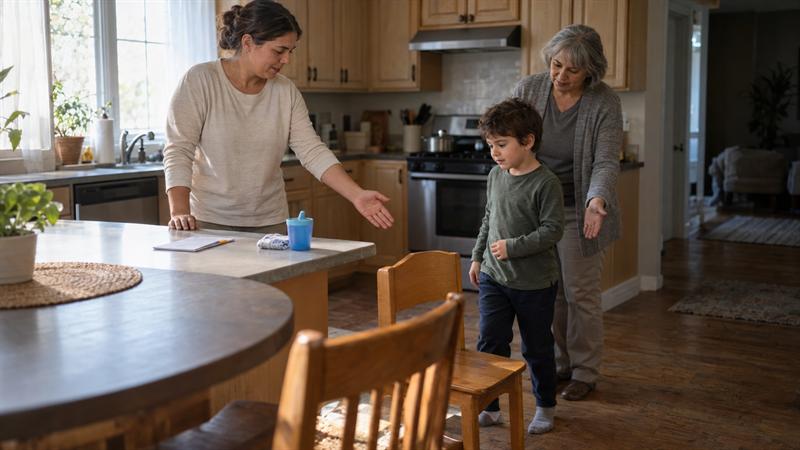
Quick Answer: Caregiver consistency in ABA support often breaks down when multiple adults handle the same routine in different ways. A workable plan helps by defining a few shared cues, responses, transition steps, and priority routines so support is clearer across home, school, and other caregivers.
At Strive ABA Consultants LLC, this issue often comes up when support is spread across parents, grandparents, babysitters, school staff, and after-school routines. The problem usually is not effort. It is that each adult is working from a slightly different version of the plan, and that can create mixed signals for the child.
Why caregiver consistency matters in ABA support
Children often respond better when expectations, cues, and follow-through are more predictable across adults. When one caregiver gives extra warnings, another moves too quickly, and another responds differently to the same behavior, the routine can become harder to understand. That can lead to confusion, slower carryover, and more stress for everyone involved.
A common pattern is that families focus on behavior when the issue is really coordination. A child is not just responding to one strategy. The child is also responding to how that strategy changes from person to person and from setting to setting.
What children notice when adults respond differently
Children notice more than adults sometimes expect. They notice when one person uses a short, familiar cue and another adds a long explanation. They notice when one adult waits and another steps in right away. They also notice when follow-through changes depending on who is present.
What looks like “it only happens with grandma” or “school is harder than home” often points to a mismatch in routines, prompts, or expectations. That can make support feel unpredictable, even when the goal is the same across caregivers.
Why inconsistency often shows up during busy routines
Inconsistency often shows up fastest during high-pressure parts of the day. That includes:
- morning routines
- arrivals and departures
- mealtimes
- transitions away from preferred activities
- bedtime
This is especially common when families are managing several schedules at once. The routine gets rushed, the handoff is unclear, or the support depends on who is available. When that keeps happening, the child may end up adjusting to each adult’s version of the routine instead of building one stable pattern.
What a caregiver consistency plan actually is
A caregiver consistency plan is a short shared guide for how adults handle common routines, cues, transitions, and responses. It is meant to be used in real situations, not stored away and forgotten. The goal is not perfect sameness in every interaction. The goal is alignment on the parts of support that matter most.
This usually works best when families keep it simple. A long document may sound thorough, but it often gets ignored during busy moments. A short plan is generally easier to use, share, and remember.
The difference between a treatment plan and a family-use consistency plan
A treatment plan is clinical. It may include detailed goals, data points, skill targets, and technical terms. A family-use consistency plan is practical. It should tell a caregiver what to say, what to do, and what to keep the same during important routines.
This distinction matters because families sometimes try to use clinical information as if it were a daily routine guide. That does not always work well. For a simpler format, a one-page ABA support plan is often easier to share across home, school, and caregivers.
Who should be included in the plan
The plan should include the adults who are regularly part of the child’s daily routines. That may include parents, grandparents, babysitters, after-school caregivers, and, in some cases, school or community-based adults.
Not everyone needs the same amount of information. A parent may need the full routine sequence, while a babysitter may only need the transition cue, support steps, and response to one common challenge. What matters is role-based clarity, not giving every adult the same page of instructions.
What to include in a multiple caregiver ABA support plan
This is usually the section families need most. A useful plan should focus on what several adults can actually follow in real time. It should not try to solve every possible scenario.
A common mistake is overbuilding the plan. Families add too many routines, too many phrases, and too many exceptions. That can reduce consistency because each adult starts choosing their own version in the moment.
Priority routines
Start with one or two routines, not ten. The best place to begin is where support breaks down most often, such as mornings, transitions, mealtimes, or bedtime.
This is usually where coordination gaps become visible first. If a child does well during most of the day but struggles during one repeated routine, that routine should move to the top of the plan. Families who need help spotting those breakdown points can use an ABA routines map to see where support is becoming inconsistent across settings.
Shared words and cues
Choose short phrases that several adults can use the same way. Long explanations tend to change from person to person. Short cues are often easier to repeat and easier for the child to recognize.
For example, a family might decide to use the same transition phrase every time a preferred activity is ending. The exact words matter less than the consistency. If one adult says, “Two more minutes, then shoes on,” and another gives a completely different cue every day, the child is learning several systems instead of one.
Reinforcement and motivators
The plan should note what tends to help the child stay engaged during the selected routines. That might include praise, breaks, visual supports, a preferred activity, or another familiar motivator.
These supports do not stay static forever. Interests change. Settings change. What helps at home may not work the same way in the car, at school, or during community outings. The key is making sure caregivers know which supports are currently helping and where they fit best.
Responses to common challenges
Pick a small number of situations where adults need a shared response. That might include difficulty ending a preferred activity, refusal during a routine step, or stress during a handoff.
The response should be observable. It should explain what the adult says, what the adult does next, and what follow-through looks like. That often works better than broad instructions like “be consistent” or “stay calm,” because those phrases leave too much room for interpretation.
Transition and handoff steps
Transitions and handoffs should be written down clearly because this is where consistency often breaks apart. The plan should include the warning or cue used before the transition, any visual or object that helps, and what information needs to move from one adult to the next.
This often becomes harder when adults assume the next person already knows what happened earlier. A short, repeatable handoff system often works better than relying on memory. Families who need a more specific transition structure can review transition support at home for examples of cues, warnings, and handoff planning.
What can be flexible versus what should stay consistent
Not everything has to match across caregivers. Core expectations, important safety responses, and key transition cues usually need more consistency. Those are the parts that shape predictability most directly.
Other parts can stay flexible. One adult may use a slightly different tone. Another may move more slowly through the routine. That is usually fine if the essential cue, sequence, and follow-through stay stable. This distinction matters because many families think consistency means every adult has to sound identical. It does not.
How to build the plan without overwhelming everyone
The most practical approach is to build the plan in layers. Start small, keep the language concrete, and revise it after real use. A plan that looks organized on paper but falls apart during a rushed day is not complete yet.
Many families create a detailed plan once, then assume the work is done. In practice, the first version often shows where the routine still needs to be simplified.
Start with one or two routines
Choose the routines causing the most stress or inconsistency first. That is the fastest way to see whether the plan is usable. If families try to standardize every part of the day at once, the plan often becomes too hard to follow.
Keep instructions brief and observable
Instructions should tell caregivers exactly what to do. “Use the transition card, give one warning, then move to shoes” is clearer than “help with transitions.” The more specific the wording, the less room there is for each adult to interpret it differently.
If a phrase could mean several different things, different adults may apply it differently. That can lead to uneven support and frustration during the exact moment the plan was supposed to make easier.
Update the plan when real life shows a mismatch
If a strategy is too hard to use consistently, simplify it. If a routine changes, the plan should change with it. If the child responds differently in one setting than another, that difference should be noted instead of ignored.
A common pattern is that families keep using a plan that no longer fits the routine. That can lead to drift. Each adult starts adapting on their own, and the consistency problem returns under a new label.
If the same routine keeps breaking down across different adults, the plan probably needs to be tightened.
- The child does well with one caregiver but not with others
- Transitions are harder during rushed handoffs or schedule changes
- Adults agree on goals but still respond differently in the moment
- The plan exists, but people are not using the same wording or follow-through
When these signs keep showing up, the issue is usually not just a rough day. The support system likely needs more clarity.
Common consistency breakdowns families run into
Most breakdowns are not random. They follow patterns. Once those patterns are clear, it becomes easier to decide what needs to be fixed first.
This is where families benefit from looking at the system instead of only the behavior. The child is responding to the structure around the routine, and when that structure changes from adult to adult, stress often shows up quickly.
Different adults using different expectations
Adults may agree on the goal but still use different prompts, different timing, and different limits. One caregiver gives several reminders. Another expects immediate follow-through. Another changes the step entirely to avoid conflict.
Even small differences like these create mixed signals. The fix is not making every interaction identical. The fix is identifying which expectations matter most and making those match across caregivers.
Unclear handoffs between home, school, and other caregivers
Handoffs become a problem when important context disappears between settings. One adult knows the child had a hard morning. The next adult does not. One caregiver knows a motivator stopped working. The next caregiver repeats the same routine anyway.
That can lead to avoidable confusion. A short update system can make a big difference here. Families who need a simple format can use a home-school weekly update for ABA to keep key information moving across the team.
Changes in routine, fatigue, or schedule pressure
Busy weeks expose weak points quickly. Fatigue, school changes, family travel, staffing changes, and time pressure all make consistency harder to maintain. If the plan only works on calm days, it is not strong enough yet.
The best plans hold up during imperfect days because they are simple, clear, and built around the routines that matter most. If this kind of drift is not addressed, every adult can end up solving the same problem in a different way.
How parent training can support caregiver alignment
Parent training helps when families need to turn broad ABA ideas into routine-specific actions. That usually means deciding what to track, what to simplify, and how to share the same support across multiple caregivers without overcomplicating the plan.
For many families, this is where the gap becomes obvious. They understand the recommendation, but they do not yet have a version that several adults can actually use during real routines. That is where parent training becomes practical.
Turning strategies into usable routines
Families often need help translating general recommendations into short actions that fit mornings, transitions, outings, or bedtime. A strategy becomes more useful when it is clear enough to hold up during handoffs, rushed moments, and different caregivers.
This often means reducing language, narrowing the routine, and defining what counts as follow-through. If a support step cannot be explained simply, it may not be used consistently.
When families may need extra help clarifying what to track or practice
If caregivers are unsure what matters most, where support breaks down, or what progress should look like across settings, extra structure is often helpful. That can come up when a family is preparing for autism evaluations or re-evaluations and trying to organize a clearer picture of the child’s daily support needs.
In those cases, the issue is not just routine management. It is also understanding which patterns are consistent, which are setting-specific, and what information should be documented more clearly over time.
Related tools that make a consistency plan easier to use
Some families do better when the consistency plan is supported by a few companion tools. The goal is not to create more paperwork. The goal is to make communication and follow-through easier across the adults already involved.
- A one-page support plan helps caregivers keep key cues, expectations, and routines in one place.
- A home-school update format helps important context move across settings.
- Transition planning tools help families tighten the moments where routines usually fall apart.
- Sibling support tools can reduce confusion when brothers or sisters are part of daily routines and changes.
- A routines map helps identify where support is actually breaking down instead of guessing.
Key Takeaways
- A caregiver consistency plan should focus on the routines and responses that matter most.
- The goal is aligned support, not perfect sameness in every interaction.
- Short, observable instructions are easier for multiple adults to use consistently.
- Transitions and handoffs are where inconsistency usually shows up first.
- If the plan is too hard to follow during a busy day, it likely needs to be simplified.
Conclusion
The real problem is not that families need more advice. It is that support breaks down when too many adults are using different cues, different expectations, and different follow-through during the same routines. When that is not addressed, confusion can build, handoffs can get harder, and the child may end up navigating several systems instead of one clear plan.
Strive ABA Consultants LLC can help families turn scattered strategies into a usable consistency plan. This is especially helpful when routines are breaking down across caregivers, settings, or transitions, or when families are also preparing for evaluations or re-evaluations and need a clearer picture of daily support needs. The next step should be simple: tighten the routine, clarify the shared response, and build a plan that works across the adults actually involved.
Company approach
At Strive ABA Consultants LLC, the focus is on helping families understand how support functions in real life, not just in theory. That means looking closely at where routines break down, what changes from caregiver to caregiver, and which parts of a plan need to stay stable across settings.
For families in Oak Forest, Chicago, and Merrillville who are navigating autism evaluations or re-evaluations, this kind of clarity matters. A better consistency plan can help organize what adults are seeing day to day, which routines are under strain, and what support needs are becoming clearer over time. It also gives families a more useful foundation for the next stage of ABA planning.
FAQ
What is a caregiver consistency plan in ABA?
A caregiver consistency plan in ABA is a short shared guide that helps multiple adults handle routines, transitions, cues, and common challenges in a more consistent way. It is different from a full treatment plan because it is built for everyday use across caregivers, not clinical documentation.
For example, it might include the phrase used before transitions, what support step comes next, and how adults should respond during one common sticking point like ending a preferred activity. The key distinction is that it helps several people use the same core approach during real routines.
How do you keep ABA strategies consistent across multiple caregivers?
The most practical way is to narrow the plan to a few high-priority routines and define them clearly. Families usually get better consistency from one short shared system than from a long list of general recommendations.
If transitions after school are difficult, for example, the adults involved should agree on the cue, the warning, and the follow-through. What commonly gets misunderstood is that consistency does not come from having more information. It comes from making the key information easier to repeat across people and settings.
What should all caregivers do the same way in an ABA support plan?
The parts that usually need to stay the same are key expectations, important safety responses, transition cues, and agreed-upon responses to common challenges. These are the parts that shape predictability most directly.
Other things can stay flexible, such as tone, pacing, or small style differences between caregivers. What matters most is knowing which parts of the routine protect clarity and which parts do not need to be standardized.
How can parents, grandparents, and babysitters follow the same ABA routine?
They usually follow it better when the routine is short, concrete, and easy to reference. A plan works best when it shows the order of the routine, the cue used, the support step if the child hesitates, and the follow-through if the routine stalls.
For example, a bedtime routine is easier to share as a simple sequence than as a page of general behavior advice. The biggest factor is whether the adults can realistically use the routine the same way during a busy evening.
What if a caregiver consistency plan is too hard to follow?
If the plan is too hard to follow, it is usually too long, too vague, or trying to cover too many situations at once. A useful plan should still work on a rushed day, not just on a calm one.
A common pattern is that families create a detailed plan that depends on memory, extra explanation, or several backup steps. That often leads each caregiver to simplify it differently. When that happens, the plan needs to be reduced to the few actions that matter most.
Can a caregiver consistency plan help with transitions between home and school?
Yes. It helps most when the transition problem is really a communication and coordination problem between settings. A consistency plan can define what needs to stay stable and what information should travel from one adult to the next.
For example, if a child had a difficult morning and a familiar motivator is not working the same way that day, a short update can change how the next caregiver handles the afternoon routine. Smoother transitions usually depend on clearer handoffs, not just better intentions.