
At Strive ABA Consultants LLC, this is treated as a consistency problem, not just a scheduling problem. Families may notice it when the written goals stay the same, but the session suddenly looks and feels different. That often points to a handoff that was too general to protect what was already working.
Why ABA Staff Handoffs Matter More Than Families Are Often Told
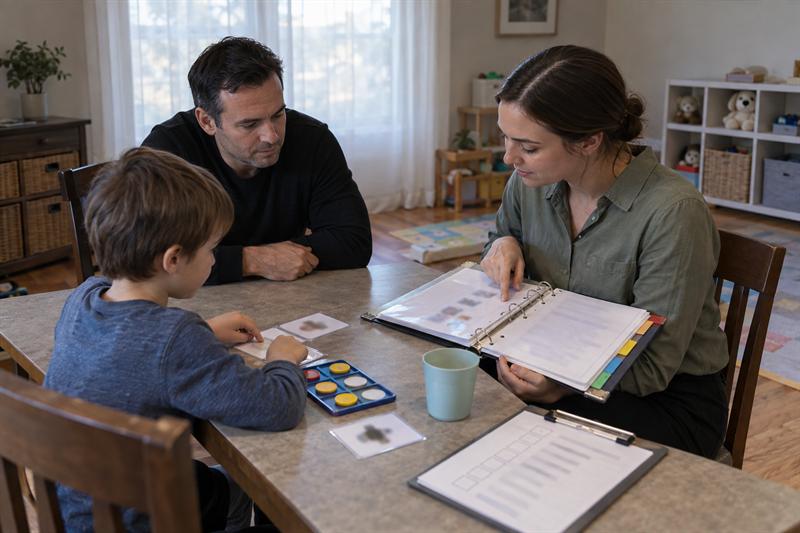
Staffing changes happen in ABA. What matters is whether the child’s support stays recognizable across those changes. A strong handoff helps connect the written plan to day-to-day implementation, so the next person is not guessing what language to use, which prompts are familiar, or what transition support already helps.
Families are sometimes told a new therapist has reviewed the plan, but the child still experiences a very different session. That can happen when goals transfer, but the working details do not. When support changes at that level, progress may slow, frustration can rise, and families may end up repeating the same information again and again.
What Can Change When a Handoff Is Incomplete
- Prompting style may shift, even when the target stays the same
- Communication supports may be skipped or used differently
- Reinforcement timing may change, so motivation drops
- Known triggers, routines, or transition supports may get missed
These are not minor details. They shape how the child understands expectations, responds to support, and moves through the session. During staff transitions, the plan can look unchanged on paper while the child is being asked to respond to a different rhythm, different cues, and different assumptions.
The Difference Between a Schedule Change and a Continuity Problem
A schedule change is logistical. A continuity problem affects how support is delivered. Families may adjust to a new day, time, or therapist more easily when the support still feels familiar. The trouble usually starts when the new session no longer follows the same cues, the same communication supports, or the same transition patterns.
That distinction matters. A child can adjust to a new therapist and still struggle because the implementation changed too much. For families already preparing for a transition, how to prepare your child for a change in ABA therapist or schedule can help with the family side of the shift, but staff continuity still depends on the quality of the handoff itself.
What an ABA Staff Handoff Checklist Should Include
An ABA handoff checklist should not be a vague summary. It should work as a practical guide that helps the next therapist keep support stable from the first session. Goals matter, but goals alone are not enough. The handoff should also explain how those goals are currently being supported in real situations.
This is where many systems break down. A treatment plan may be current, but it still may not tell a new team member what happens during transitions, which communication tools are already familiar, or what wording tends to work best. That gap is often where inconsistency begins.
Current Goals and Active Targets
The checklist should identify what the child is working on now, not just list every broad goal in the plan. That includes active targets, targets that are being faded, and anything recently paused or shifted. If a new therapist sees an outdated or overly broad list, the session may lose direction right away.
This is where problems can start for many families. The child may be expected to respond to instruction that is technically related to the plan but no longer aligned with the current focus. The result can be confusion, uneven prompting, and sessions that feel less organized than before.
Communication Supports the Child Already Uses
Communication supports should be one of the clearest parts of the handoff. That may include spoken language, gestures, visuals, AAC, choice boards, or a mix of supports depending on the setting. If those supports are not transferred clearly, the child may be left doing extra work just to communicate in a session that is supposed to feel familiar.
Sometimes communication tools are documented somewhere in the case, but not in a way the next therapist can use immediately. If a child regularly uses visuals or an AAC device, those supports should appear in the handoff as current working tools, not background information. Families looking more closely at this can also review AAC and ABA across home and school for a helpful explanation of why these supports need to follow the child across people and environments.
Prompts, Cues, and Teaching Strategies That Need Consistency
The handoff should explain what prompt style is currently working, what wording the child responds to best, and what level of support is typical. This matters because “same goal, different cue” can still feel like a major change to the child. A new therapist may think they are targeting the same skill, while the child experiences the teaching as very different.
This problem gets worse when the documentation is too broad. Notes like “used prompting” do not help anyone reproduce a successful session. What helps is clarity around whether the child responds best to brief verbal cues, modeled responses, visuals, wait time, or a specific prompt sequence. Families who want clearer language around this can also review prompting in ABA and when support is faded.
Reinforcement Preferences and Motivation Patterns
Reinforcement should be treated as current and practical information, not as a static preference list. What motivates participation can shift over time. The handoff should show what is working now, how reinforcement is delivered, and what helps keep momentum going through the session.
A useful distinction here is that it is not just about the item or activity. Timing matters. Access matters. Delivery style matters. Two therapists can use the same reinforcer and still get different results if one uses it in a way that matches the established flow and the other does not.
Known Triggers, Regulation Patterns, and Calming Supports
A strong handoff includes what tends to make regulation harder, what early signs staff should notice, and what support usually helps before the situation escalates. This section is not about labeling the child as difficult. It is about reducing preventable breakdowns during transitions, demands, or routine changes.
Sometimes a child seems to “suddenly” struggle with a new therapist when the signs were building all along. The next staff member may simply not have received the pattern information that helped previous sessions stay steady. When that information is missed, preventable escalation becomes more likely.
Daily Routines, Transitions, and Setting-Specific Notes
The checklist should include how the session usually starts, where support tends to be needed, and what differs across home, school, center, or community settings. A child may transition into work well in one setting and struggle in another. If that setting-specific context is not part of the handoff, the next therapist starts with less than the previous one had.
This is one reason support can look uneven across environments. It is not always a motivation issue or a staffing issue by itself. Often, it is a missing-context issue. Families managing consistency across settings may also find how to keep ABA consistent between home, center, or school settings helpful for seeing where handoffs need to stay aligned.
Caregiver Communication Notes and Practical Reminders
The handoff should also include practical context from caregivers that affects how support is delivered. That might include sleep disruption, routine changes, transportation stress, family schedule shifts, or changes in communication at home. Those details are easy to dismiss as informal, but they often help explain why a session goes differently than expected.
A common mistake is separating “clinical” information from “real-life” information too sharply. In actual service delivery, those areas overlap. If a child’s routine changed, if transitions were harder that week, or if a familiar support stopped being available at home, the next therapist needs that context. A strong companion resource here is a one-page ABA support plan for home, school, and caregivers.
If you are seeing these signs, the handoff process likely needs attention:
- Your child responds well to one team member but appears lost with another
- You keep repeating the same routines, cues, or communication details to each new therapist
- Visuals, AAC, or familiar prompts are used inconsistently from session to session
- Transitions that were manageable before are becoming difficult again
When these patterns show up together, the issue is often not just adjustment time. It may mean the support details are not transferring clearly enough between staff.
What Families Can Listen for When a New Therapist Joins the Team
Families do not need to audit the whole program to tell whether a handoff was done well. There are practical signs that suggest whether the new therapist received useful information. The goal is not to catch mistakes. The goal is to tell whether continuity is being protected.
Questions That Show the Handoff Was Done Well
Helpful signs include the new therapist already knowing the current goals, using familiar prompts, and showing awareness of what helps transitions go more smoothly. If the therapist seems oriented to the child’s communication system and daily rhythm from the start, that usually suggests the handoff included usable detail.
Another strong sign is supervisor involvement. When families want a clearer picture of what coordinated oversight should look like, BCBA supervision and communication expectations can help define what to listen for. Good supervision often shows up in the consistency of implementation, not just in whether meetings happen.
Signs That Important Information May Not Have Transferred
If your child is being prompted in unfamiliar ways, if known communication tools are being skipped, or if staff seem unaware of routines you have already explained, that can point to a weak handoff. Another clear signal is when caregivers keep reteaching the team the same basic information during every staffing change.
This does not mean the new therapist is unqualified. It usually means they started without enough practical context. If that is not corrected, families may spend more time repairing continuity than building on progress.
Where ABA Handoffs Often Break Down
Many handoff problems are not dramatic. They are ordinary documentation and communication gaps that can compound over time. This is why families sometimes describe a child as “starting over” even when the treatment plan is still active and services are still in place.
Overly Generic Session Notes
Generic notes are one of the biggest handoff problems. Phrases like “worked on requesting” or “had a hard transition” do not tell the next therapist what actually happened. They leave out what prompt was used, what support helped, what triggered the difficulty, and how the session recovered.
That kind of note does not preserve continuity well. It preserves a label. The next therapist still has to guess, and guessing is where inconsistency is often introduced.
Missing Communication or Sensory Information
When communication or sensory information is treated like a side note, it may drop out of daily implementation first. Then sessions may start to feel less accessible. A child who relies on familiar visuals, reduced language load, or a predictable setup often shows that need quickly when those elements disappear.
This is a common pattern in transitions that look behavioral on the surface but are really support mismatches underneath. If the key tools are missing, participation often drops before anyone clearly names why.
Inconsistent Prompting and Reinforcement
Inconsistent prompting and reinforcement change how the child experiences instruction. Even when the goal stays the same, the session can become less predictable. That may result in slower responding, more frustration, or behavior that looks like refusal but is really a response to changed support.
This is where many families connect the problem. The issue is not necessarily that the child forgot the skill overnight. The issue is that the teaching setup no longer matches what was already working.
No Clear BCBA Oversight During Transition Periods
Transitions benefit from active oversight. If no one is checking whether the new therapist is carrying over the right prompts, supports, and routines, drift can happen quickly. Families should not have to be the main system holding continuity together.
This may get worse when staffing changes stack together or when the team relies on documentation that has not been refreshed recently. Without clear oversight, small inconsistencies can spread into bigger ones, and the child often feels that instability first.
How BCBAs, RBTs, and Caregivers Each Support Continuity
Consistency is a shared responsibility, but the roles are not interchangeable. Strong handoffs happen when each person contributes the type of information they are best positioned to see and use.
BCBA Role
- Clarify which goals and strategies are active right now
- Guide implementation so the new therapist is not improvising core supports
- Monitor transition quality and adjust plans when continuity starts to slip
The BCBA helps turn broad treatment direction into something usable across staff. If that role is passive during a transition, important details may stay scattered instead of becoming a clear handoff.
RBT Role
- Document what worked in real sessions, not just what target was addressed
- Describe prompts, reinforcers, and transitions clearly enough for another staff member to follow
- Carry over agreed supports consistently from session to session
The RBT sees the practical details that make or break continuity. When that information is documented well, the next therapist starts with a usable picture. When it is not, the team may lose session-level knowledge that families can feel almost immediately.
Caregiver Role
- Share changes in routines, communication, regulation, or motivation that affect sessions
- Point out when support suddenly feels inconsistent across staff
- Help confirm what works across home, school, and community settings
Caregivers often notice continuity problems first because they see the child across settings and across team changes. That perspective matters. It is especially important when routines are changing at home or when multiple caregivers need to stay aligned.
A Simple ABA Staff Handoff Checklist Families Can Use
A practical checklist gives families and teams a shared reference point. It reduces vague conversations and makes it easier to see whether the details that support consistency are actually moving from one staff member to the next.
Checklist Items to Include
- Current goals and active targets
- Communication supports used now
- Prompting style and effective cues
- Preferred reinforcers and motivation patterns
- Known triggers and calming supports
- Transition routines and setting-specific notes
- Recent caregiver updates
- BCBA contact or supervision notes when relevant
If these items are missing, the next therapist starts with gaps that can quickly affect session quality. If they are clear, the child is more likely to experience continuity instead of a reset.
When to Request a Refresh or Update
The checklist should be refreshed when a new therapist starts, when schedules change, when goals shift, or when communication tools, routines, or regulation needs change. A handoff is only useful when it reflects what is true now.
A stale handoff can create the same problem as no handoff at all. It gives the appearance of coordination without the same practical value. That may lead to the same cycle families recognize: repeated explanations, inconsistent sessions, and setbacks in routines that were already becoming more stable.
Key Takeaways
- An ABA handoff checklist should protect consistency across staff, not just summarize the case.
- Goals alone are not enough. Communication supports, prompts, reinforcement, routines, and regulation patterns need to transfer clearly.
- When a child seems to be starting over with each staffing change, the handoff process is often too vague.
- BCBA oversight, detailed RBT notes, and caregiver context each play a separate role in keeping support stable.
Conclusion
The real problem is not simply that ABA staff change. The real problem is that handoffs are too often treated like a quick update instead of a continuity tool. When goals transfer without the practical support details behind them, children may experience inconsistent instruction, families may repeat themselves, and progress can become harder to maintain.
If that pattern is not addressed, small disruptions can turn into ongoing instability across sessions, settings, and team members. This is where clearer systems matter. Strive ABA Consultants LLC encourages families to address handoff quality directly because this is one of the most common places support can start to break down, even when everyone involved is trying to help.
For families who are already seeing these signs, taking action now is practical. Strive ABA Consultants LLC helps families make sense of ABA systems, expectations, and continuity questions so support does not keep resetting with every change. When communication, implementation, and handoff quality are clearer, the next step becomes simpler and more useful.
How Strive ABA Consultants LLC Approaches This Issue
Strive ABA Consultants LLC approaches handoff quality as part of broader support consistency. That means looking at what is happening between people, across routines, and from one setting to the next, not just at whether a document exists. A handoff only helps when it gives the next person enough working detail to keep support recognizable.
This perspective fits the larger pattern across ABA services. Families usually do not need more paperwork. They need clearer carryover, clearer expectations, and fewer resets when staffing or routines change.
FAQ
What should be included in ABA handoff notes?
ABA handoff notes should include current goals, active targets, communication supports, prompt patterns, reinforcement preferences, transition routines, and any known triggers or calming supports. The key point is that handoff notes should explain how support is working right now, not just what category of skill is being addressed.
For example, “working on requesting” is not enough by itself. A useful handoff would show whether the child requests with speech, visuals, gestures, or AAC, what prompt level is typical, and what reinforcement helps the response happen more smoothly. That distinction affects whether the next therapist can continue support or has to rebuild it.
How do you keep ABA consistent when a new RBT starts?
Consistency depends on transferring the working details behind the plan. That includes familiar prompts, communication tools, reinforcement timing, routines, transition supports, and active BCBA guidance. Without that information, the new RBT may still follow the plan but deliver it in a way that feels very different to the child.
A common misunderstanding is that reviewing goals is enough. It is not. The child is responding to the pattern of support that has already been established. If that pattern changes too much at once, the session can become less predictable and harder to navigate.
What is the difference between an ABA support plan and a staff handoff checklist?
An ABA support plan is broader and usually helps organize supports across home, school, and caregivers. A staff handoff checklist is narrower and focused on continuity during therapist changes or coverage shifts. It is built to help the next staff member step in without losing the practical details that keep sessions stable.
That means a support plan may summarize helpful routines and strategies, while a handoff checklist should capture what is active right now, what prompts are working, and what needs to stay consistent immediately. The difference is not just format. It is purpose.
How can families tell if an ABA therapist transition was handled well?
Families can usually tell by how quickly the new therapist shows familiarity with the child’s current supports. If familiar prompts, communication tools, transition routines, and expectations are already in place, the handoff was likely useful. The child may still need time to warm up to a new person, but the structure of support should not feel brand new.
One of the clearest signs of a weak transition is repeated re-teaching by the caregiver. If the family has to restate the same key supports during every staff change, the system may not be holding the information well enough between team members.
Who is responsible for making sure ABA handoffs are complete?
Responsibility is shared, but the roles are different. The BCBA helps define current strategy and monitor continuity. The RBT contributes the day-to-day details that show what is actually working in sessions. The caregiver adds context that may not appear in formal notes but still affects how support works.
What commonly gets misunderstood is that a handoff is not complete just because information exists somewhere in the case. It has to be organized in a way the next staff member can use. If those pieces stay disconnected, the child may still experience inconsistency even when the documentation is technically present.
When should an ABA handoff checklist be updated?
An ABA handoff checklist should be updated when a new therapist starts, when the schedule changes, when goals shift, or when communication tools, reinforcement patterns, routines, or regulation needs change. It should reflect the child’s current support picture, not an outdated version of it.
This matters because stale handoff information can create false confidence. It looks like the team is coordinated, but the next therapist is still walking in with the wrong practical picture. When that happens, familiar routines can break down faster than families expect.