

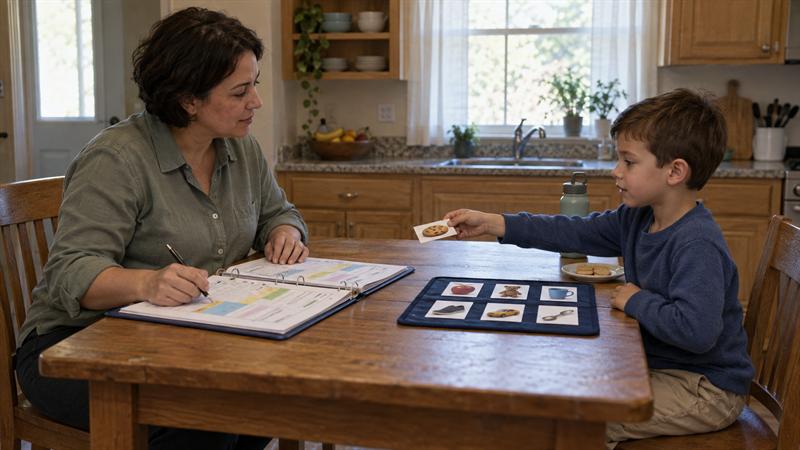
What an ABA treatment plan is
An ABA treatment plan is the written roadmap for therapy after the assessment phase is complete. It should turn evaluation information into clear treatment priorities, measurable ABA goals, support strategies, and a plan for reviewing progress over time.
This is where many families get stuck. A plan may sound professional, but if it does not clearly explain what will be worked on and why, it becomes hard to tell whether it is truly individualized or just broad clinical wording.
At Strive ABA Consultants LLC, this is often a point of confusion when families move from assessment into treatment planning. They know support is needed, but the written plan can still feel harder to interpret than expected.
How it differs from an evaluation report
An evaluation report identifies strengths, needs, skill gaps, and patterns in behavior or development. The treatment plan uses those findings to outline what therapy will focus on next.
In simple terms, the evaluation explains what was observed. The treatment plan explains what happens next. If you want a clearer picture of how those early steps fit together, this guide to which ABA appointment is next shows where treatment planning fits in the overall process.
Families may receive recommendations after an assessment but still not be sure how those recommendations become actual therapy targets. When that handoff is unclear, families may feel unprepared for the first phase of treatment.
What should be included in an ABA treatment plan
A strong ABA treatment plan should be specific enough to guide therapy and clear enough for a family to understand. It should not read like a list of generic goals that could apply to anyone.
Well-developed plans often include background context, assessment findings, priority areas, measurable goals, support strategies, progress measurement, caregiver involvement, and a review schedule. Each part matters because it shows not just what is being targeted, but how treatment decisions are being made.
Child and family background
This section gives context that helps make the plan useful in real life. It may include strengths, communication style, daily routines, support needs, and family priorities that affect how treatment should be structured.
If this part is thin or missing, the rest of the plan may become less practical. A goal might sound appropriate on paper but still fail to fit how the child moves through mornings, transitions, mealtimes, school demands, or community routines.
Summary of assessment findings
The treatment plan should show how assessment findings led to the chosen goals. That connection matters. Without it, the goals can feel arbitrary, even when they are reasonable.
For example, assessment findings may point to difficulty with functional communication, transitions, waiting, self-help routines, or responding safely in daily settings. The plan should make it easy to see how those observations shaped treatment priorities. Families who want more context on that step can review what happens during an ABA assessment before looking at the treatment plan itself.
Strengths, needs, and priority areas
Not every skill need gets targeted at once. A treatment plan should show what is being prioritized first and why.
Common priority areas include communication, daily living skills, safety, transitions, social interaction, and reducing barriers that interfere with learning or participation. This is often misunderstood. Families sometimes expect every concern to appear as an immediate goal, but treatment planning usually starts with the needs that have the biggest effect on everyday functioning.
This is also where poor planning becomes easier to spot. If priorities are broad but not sequenced, treatment can lose focus and progress becomes harder to interpret.
Measurable ABA goals
ABA goals should be specific, observable, and tied to a starting point. A broad need like “improve communication” is not enough on its own. The plan should make clear what skill is being taught, in what context, and what counts as progress.
Good goals usually include:
- a clear baseline or starting point
- observable language that describes what the learner will do
- conditions or situations where the skill matters
- criteria for determining when the goal is being met
Many providers say goals are individualized, but fewer explain what makes a goal usable. If a goal is too vague, therapy can still stay busy without being clearly directed.
Families are sometimes shown goals that sound positive but do not translate into something they can picture at home. That can lead to uncertainty during review meetings because no one is working from the same understanding of success.
Behavior support strategies
A treatment plan may also include strategies for reducing behaviors that interfere with learning, safety, communication, or participation. These strategies should not only focus on stopping a behavior. They should also explain what skill or replacement behavior is being taught instead.
This distinction matters. When a plan focuses only on reducing a behavior without building a more functional alternative, progress may stall. A child may stop one response in one setting, while the underlying need remains unaddressed.
Data collection and progress measurement
The plan should explain how progress is measured and reviewed. That usually includes baseline data, ongoing data collection, and a system for deciding whether goals should continue, be changed, or be replaced.
Families do not need every technical detail to understand the main point. They do need to know how the team will tell whether therapy is helping. For a plain-language breakdown of terms like baseline, data, goals, and generalization, this parent-friendly ABA vocabulary guide can help.
This is where another common problem shows up. Data may be collected, but the family still cannot tell whether the skill is becoming more useful outside therapy. Numbers matter, but meaningful progress is more than a chart. If a skill only happens in a narrow setup, the treatment plan may need adjustment.
Caregiver training and collaboration
Many treatment plans include caregiver collaboration because therapy often works best when goals make sense across settings. If a child is learning a skill during sessions but the adults around them do not know how to support it, carryover may break down.
This is something families often notice in everyday routines. Progress in session can look promising, but once the schedule changes, expectations shift, or different caregivers are involved, the skill may start fading because the support plan was not clear enough.
Caregiver involvement does not mean families have to run therapy themselves. It means the plan should account for how skills will be supported in the places where they actually matter.
If your child’s plan feels hard to apply outside sessions, it is usually a sign that the planning needs another look.
- The goals sound clear in a meeting but are hard to picture at home.
- Progress is being reported, but daily routines still feel stuck.
- Different caregivers are responding in different ways.
- The plan does not seem to match current school, home, or community demands.
When those signs show up together, the plan may need clearer treatment planning or a closer review.
Review schedule and plan updates
An ABA treatment plan is not supposed to stay frozen. It should be reviewed and updated as progress becomes clearer, needs change, or new priorities come into focus.
Updates are usually needed when:
- a goal has been mastered
- progress has slowed or stalled
- home, school, or community demands have changed
- new strengths or barriers have become more important
If this part is vague, families may be left wondering when changes should happen and what triggers a reevaluation. That uncertainty can lead to delayed updates, and delayed updates may mean time is being spent on goals that no longer fit.
How ABA goals should connect to real life
ABA goals should do more than sound appropriate in a report. They should make sense in the child’s actual routines.
This is where strong treatment planning stands out. A goal is more useful when a family can quickly recognize why it matters during transitions, communication breakdowns, school participation, meals, self-care, outings, or after-school routines. If the goal only makes sense inside a clinical explanation, it may need to be translated more clearly or reconsidered.
Communication in everyday routines
Communication goals should help the child participate more effectively in daily life. That might involve requesting help, indicating needs, following directions, or using a consistent way to communicate when something is wrong.
If communication goals are too abstract, families often struggle to see progress. A stronger plan ties those goals to moments that happen every day, such as getting dressed, joining a group activity, moving between tasks, or asking for a preferred item appropriately.
Safety and independence goals
Safety and independence goals are often some of the most meaningful parts of a treatment plan because they affect how a child moves through real environments. This may include self-care routines, safe transitions, waiting appropriately, following basic safety directions, or increasing independence in daily tasks.
This often matters more to families than polished clinical wording. If a plan sounds impressive but does not help with the routines that create the most stress, it may not be addressing the right priorities.
School, home, and community relevance
A goal should not only work with one therapist in one setting. It should become more usable across people, places, and routines. That is where generalization matters.
If a child can perform a skill during a session but not at home, at school, or during community activities, the skill may not yet be stable enough to count as reliable everyday progress. Families looking at broader routine use may also find it helpful to read about community participation in ABA and how support carries into outings and everyday social settings.
What good ABA goals usually have in common
Strong ABA goals tend to share a few qualities. These qualities make the plan easier to understand and easier to evaluate.
If these pieces are missing, the goal usually becomes harder to teach consistently and harder to review honestly.
Clear starting point or baseline
Baseline explains where the child is starting before active teaching moves forward. Without that starting point, it becomes difficult to judge whether progress is meaningful or just loosely described.
This is where confusion often begins in review meetings. If no one is clear on the starting point, the discussion may shift into impressions instead of measurable change.
Observable, measurable language
Good goals use language that can be seen, counted, or clearly identified. Vague terms make progress harder to judge and may lead to inconsistent interpretation across team members and caregivers.
If the goal does not define what success looks like, the plan leaves too much room for guesswork.
Functional importance
A goal should matter in daily life. Communication, participation, safety, independence, and access to routines usually matter more than targets that look structured on paper but offer limited real-world benefit.
This is one of the clearest ways to separate a useful plan from a generic one. Functional goals are more likely to lead to changes a family can actually notice.
A plan for generalization and maintenance
It is not enough for a skill to appear once in the original teaching setup. The plan should account for how that skill will hold up across people and settings and whether it remains useful over time.
This often gets overlooked when treatment planning is too narrow. A goal can look complete because it was met in session, but if it falls apart elsewhere, more work may still be needed.
Questions families can ask when reviewing an ABA treatment plan
Families should be able to ask direct questions about the plan without feeling like they are interrupting the process. Clear questions usually lead to clearer expectations.
This matters because a treatment plan should be understandable, not just technically correct. If the team cannot explain the reasoning behind a goal in everyday language, families are left trying to support something they were never fully brought into.
Questions about priorities
- Why are these goals being targeted first?
- How do these priorities connect to the assessment findings?
- Which daily routines or settings are these goals meant to improve?
Questions about measurement
- How will progress be measured?
- What does success look like for this goal?
- What happens if progress slows down?
Questions about parent involvement
- How will caregivers be updated on progress?
- What parts of the plan should be supported at home?
- How are family priorities reflected if routines change?
Questions about updates or reevaluations
- When is the plan expected to be reviewed?
- What leads to adding, changing, or retiring a goal?
- When would a reevaluation make sense?
When a treatment plan may need to be updated
A treatment plan should be updated when it no longer matches the child’s current needs, progress, or environment. Waiting too long may lead to stale goals, unclear expectations, and slower progress.
This is one of the most practical parts of treatment planning. Families do not need a crisis before a plan changes. They need enough clarity to recognize when the current plan is no longer the best fit.
New strengths or challenges
As skills improve, new priorities usually appear. At the same time, new challenges may stand out more clearly once earlier barriers become less urgent.
If the plan does not shift with those changes, treatment may start lagging behind the child’s actual needs.
Changes in school, home, or routines
Changes in schedule, school demands, caregiving patterns, or community routines often affect which goals matter most. A treatment plan that matched one season of life may no longer fit the next one.
This can become more difficult when transitions happen but the plan stays the same. Support may become less relevant, and families often notice that therapy no longer lines up with the problems they are dealing with day to day.
Progress that has plateaued or accelerated
If progress has slowed, the plan may need a different strategy, different teaching conditions, or a revised goal. If progress has moved quickly, the next step may be advancing the goal, broadening where the skill is used, or replacing it with a more relevant target.
Either way, unchanged goals can create drag. Therapy should reflect current performance, not just where the child was several months ago.
Key takeaways
- An ABA treatment plan should explain what is being targeted, why it matters, and how progress will be measured.
- Good goals are specific, measurable, functional, and connected to real routines.
- Assessment findings, family priorities, and everyday barriers should shape the plan together.
- If a goal sounds polished but does not make sense in daily life, the plan usually needs more clarity or a different direction.
- Treatment plans should change over time as progress, routines, and needs change.
Conclusion
The real problem is not that treatment plans are formal documents. The problem is that many plans sound complete before they are truly clear. When goals are vague, disconnected from daily life, or left unchanged too long, families may spend time in therapy without enough confidence that the work is focused where it should be.
If that is not addressed, confusion can build, progress becomes harder to judge, and important skills may not carry into home, school, or community settings. That usually points back to the way the plan was translated from assessment into action.
Strive ABA Consultants LLC can be a helpful next step for families who need clearer guidance, stronger treatment planning, or updated evaluation support that reflects what is happening now, not just what was true months ago. When a plan needs to make sense in real routines and lead to more useful next steps, practical, individualized review often matters most.
How Strive ABA Consultants LLC approaches treatment planning
At Strive ABA Consultants LLC, treatment planning is approached as a working guide, not a document families are expected to decode on their own. The focus stays on how assessment findings translate into goals that are understandable, measurable, and relevant to daily life.
This is especially important when families are dealing with changes in schedule, school expectations, communication needs, or access to services. Delays, unclear recommendations, or weak goal-to-routine connections can create more stress than families expected. That is why clearer evaluation and reevaluation support matters. It helps keep the plan aligned with what the child may need now.
FAQ
What is included in an ABA treatment plan?
An ABA treatment plan usually includes assessment findings, treatment priorities, measurable goals, support strategies, progress-tracking methods, caregiver involvement, and a schedule for review. In practical terms, it should explain what will be worked on, why those goals were chosen, and how the team will know whether progress is happening.
A useful distinction is that broad statements are not enough. “Improve communication” may describe a priority area, but the plan should also show what communication skill is being targeted and where it matters. That difference is what turns a general recommendation into an actual treatment roadmap.
Who writes an ABA treatment plan?
An ABA treatment plan is typically developed and supervised by a BCBA. That role includes reviewing assessment findings, selecting priority goals, and determining how progress will be monitored and updated over time.
This matters because families often interact with several team members and may not know who is responsible for clinical decisions. The BCBA is usually the person connecting the evaluation information to the overall direction of treatment. For more role clarity, this breakdown of BCBA, RBT, and ABA team roles explains how those responsibilities differ.
How are ABA goals chosen?
ABA goals are usually chosen based on assessment findings, daily functioning, and the priorities that affect participation, communication, safety, and independence the most. Strong planning does not start with a random list of targets. It starts with what is getting in the way most consistently.
A common misunderstanding is that every concern should become an immediate goal. In practice, treatment is usually more effective when goals are sequenced. If one communication skill affects several stressful routines, that goal often carries more weight than a target with less everyday impact.
How often is an ABA treatment plan updated?
An ABA treatment plan is updated when the current goals no longer match the child’s needs, progress, or routines. That may happen because a goal was mastered, progress slowed down, the environment changed, or new priorities became more important.
The main point is that updates should follow the child’s progress, not just the calendar. When a plan stays unchanged after clear shifts in performance or routine, treatment may become less efficient and less relevant.
What makes a good ABA goal?
A good ABA goal is specific, measurable, and functional. It should make clear what the learner is expected to do, what the starting point is, and how the team will tell whether the skill is improving.
What matters most is whether the goal changes something meaningful in daily life. A goal that is easy to count but not useful outside therapy is weaker than a goal that supports communication, independence, safety, or participation across real settings.
What questions should families ask about an ABA treatment plan?
Families should ask why those goals were chosen, how progress will be measured, what routines the goals connect to, and what will trigger changes to the plan. Those questions help reveal whether the plan is practical or just technically polished.
The most useful questions are the ones that link the document back to real life. If a team can clearly explain how a goal helps during home routines, school expectations, or community participation, the plan is usually built on stronger reasoning.