

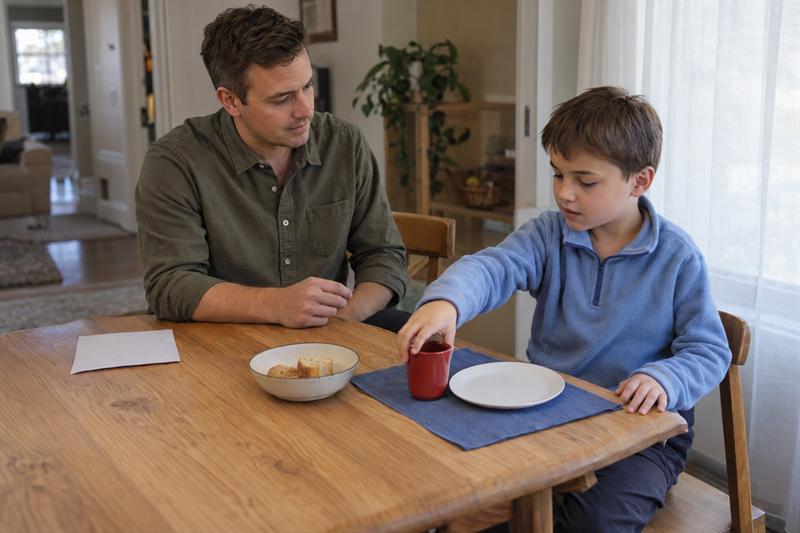
Families usually start looking into life skills training in ABA when the same routines keep going off track. Getting dressed may take too many prompts, meals may turn into repeated friction, or simple errands may feel harder than expected. At Strive ABA Consultants LLC, this pattern often shows up when a routine looks like a behavior problem on the surface, but the real issue is that one or more smaller skills inside the routine are not yet reliable.
That distinction matters. A child may know part of a skill, but still struggle to use it at the right time, in the right order, and with less support. For a broader foundation, life skills in ABA are best understood as daily living, community access, and independence skills that need to work in real settings, not just in theory.
What life skills training in ABA looks like in everyday routines
Life skills training in ABA focuses on practical daily tasks and the smaller support skills behind them. That includes self-help routines, communication during daily activities, participation in home routines, and functional behavior in community settings.
The key difference is this: completing a task once is not the same as using that skill consistently in daily life. A child who can put on shoes after repeated adult prompting is in a different place than a child who notices it is time to leave, gets shoes on, and moves to the next step with less help. This is why routine-based teaching is often more useful than broad goal lists.
- Morning routines like waking up, toileting, dressing, and getting out the door
- Mealtime routines like sitting, requesting, waiting, cleaning up, and transitioning away
- Community routines like walking safely, tolerating short errands, and participating in simple tasks
Why routine-based teaching matters for daily living skills
Skills are often easier to use when they are taught where they actually need to happen. If a child learns to follow steps only in a structured teaching moment, that does not automatically carry over to a rushed morning or an unpredictable store trip.
A common pattern is that families see a child do part of a skill in one setting, then struggle to see that same skill in another. This usually means the skill has not generalized across people, places, or routine demands yet. Routine-based teaching helps by targeting the skill inside the situation where it needs to work.
How ABA breaks daily living skills into teachable steps
ABA teaches daily living skills by breaking a routine into clear, manageable parts and identifying where the breakdown starts. In many cases, the problem is not the whole routine. It is one recurring point like moving from one step to the next, waiting for a direction, asking for help, or handling a change.
This is where routines often get harder when they are handled too broadly. If everything is treated as noncompliance, families may end up repeating prompts, increasing stress, and missing the actual skill gap that needs support.
- Task analysis: breaking a routine into smaller steps
- Prompts: support that helps the child complete a step successfully
- Reinforcement: making successful participation more likely to happen again
- Fading: reducing support over time so the routine becomes more independent
Families who want a clearer picture of how support is reduced over time can also review prompting in ABA and when support is faded. It gives helpful context for why too much help for too long can keep a routine stuck instead of moving it forward.
Task analysis, prompting, and reinforcement in simple terms
Task analysis means looking at a routine step by step instead of treating it like one single behavior. Prompting means giving support at the point where help is needed. Reinforcement helps make that success more likely to happen again in the same routine.
What often goes wrong is that support is either too vague or too late. A child who needs a visual cue before dressing is different from a child who needs help tolerating the transition into dressing. If the support does not match the breakdown, the routine may stay frustrating.
How clinicians decide where to start
The best starting point is usually the routine causing the most repeated stress or the one limiting independence most clearly. In practice, that often means choosing one or two routines that happen every day and create a clear bottleneck.
If you are seeing constant adult prompting, incomplete routines, or skills that only work in one setting, that usually means the target is too broad or the support plan is not matched to the actual problem. Focused goals are often more useful than trying to fix everything at once.
Morning routine examples of life skills training in ABA
Morning routines are one of the clearest places to see how life skills training works. They often involve timing pressure, multiple steps, transitions, and competing demands, which is one reason they may break down so often.
At Strive ABA Consultants LLC, one common pattern is that mornings look like refusal or delay, but the real issue is often one of three things: trouble shifting from one step to the next, difficulty following a sequence, or too much reliance on repeated verbal prompts. Once those patterns are identified, the routine is usually easier to target.
Getting out of bed and transitioning to the next step
This part of the routine may involve responding to a cue, leaving a preferred activity or resting state, and moving into the first expected task. For some children, the hard part is not waking up. It is the transition itself.
Visual supports and first-then language are often useful here because they make the routine more predictable. If getting out of bed only happens after several escalating prompts, the morning may become rushed and each next step may get harder.
Toileting, handwashing, and hygiene routines
These routines usually depend on sequencing, consistency, and clear expectations. A child may complete some steps independently and still get stuck in the middle of the chain, such as washing thoroughly, drying hands, or moving on without repeated reminders.
Families often describe this as inconsistency, but it usually points to one missing link in the routine. If the sequence is not stable, the skill may not hold under time pressure, and the routine may stay adult-driven.
Dressing, packing, and leaving the house
This routine combines multiple demands at once. Choosing clothes, putting them on in order, gathering needed items, and preparing to leave all require follow-through, flexibility, and some level of safety awareness.
A common pattern is that dressing gets blamed for the entire routine problem when the real issue starts earlier. If the child cannot move smoothly from hygiene to dressing or does not know what comes next, the whole leaving-the-house routine may slow down. That can result in more adult prompting and more pressure on everyone involved.
If your family is seeing these signs, routine-based support may be needed:
- The same morning steps require full adult prompting every day
- Your child can do parts of the routine, but not in sequence
- Getting out the door depends on repeated reminders, bargaining, or rushing
- One difficult step throws off the entire morning
When those patterns repeat, the issue is rarely just the morning itself. It usually means the routine needs clearer skill targets and a more structured support plan.
Mealtime examples of ABA daily living skills
Mealtime routines are not just about eating. They often involve sitting, waiting, requesting, tolerating routine expectations, and transitioning away when the meal ends.
This is where families often get stuck because the visible problem and the actual skill gap are not the same thing. A child leaving the table, refusing a step, or becoming upset during meals may need better routine clarity, stronger communication supports, or more realistic expectations around pacing and duration.
Sitting, waiting, and following a meal routine
Coming to the table, staying for a short expected period, and following the sequence of a meal are all daily living skills. These skills usually improve when the routine is predictable and the expectation matches the child’s current level.
What often goes wrong is that the family expects full mealtime participation before the child can handle the smaller pieces. That may lead to repeated correction, shorter tolerance, and a routine that becomes harder instead of easier.
Requesting food, utensils, help, or a break
Functional communication is often one of the most important mealtime targets. A child who can request more food, ask for help opening a container, indicate they are finished, or request a short break has a clearer way to move through the routine.
This comes up across daily routines, not just meals. When communication is weak, routine stress may rise quickly. If a child has no reliable way to ask for help or signal a need, frustration can build and the routine may break down sooner.
Cleaning up and transitioning away from the table
Finishing the meal is still part of the routine. Clearing dishes, wiping a space, throwing items away, and moving to the next activity are all functional life skills.
A lot of routines stall here because adults count the meal as over once eating ends. In practice, this is where transition problems often start again. If cleanup and next-step movement are not taught clearly, the child may learn that routines stop halfway and adults take over the rest.
Community routine examples for independence and safety
Community routines require a different kind of support because the environment changes, waiting is harder, and expectations are less predictable. That is why broad goals like “do better in the community” usually fall flat. The routine has to be broken into skills that can actually be practiced.
For families thinking beyond home routines, planning skill carryover from ABA sessions to home, school, and community is an important part of making progress last across settings.
Walking with an adult, staying nearby, and stopping at transitions
These are foundational community skills. Staying close, stopping when directed, and moving safely through transitions like sidewalks, doorways, or parking lots are often the first practical targets.
If these skills are not addressed, community outings may stay adult-controlled for much longer. That can limit independence and make simple routines like entering a store or crossing a parking lot more stressful than they need to be.
Tolerating stores, waiting areas, or short errands
Short errands require waiting, following a simple plan, and staying engaged long enough to complete the outing. That usually starts with small, manageable expectations rather than long trips or crowded environments.
A common pattern is that families try to build tolerance in settings that are already too demanding. When that happens, the outing becomes the problem instead of the routine goal inside it. Starting smaller usually leads to better participation and clearer information about what the child can actually manage.
Paying, carrying items, and participating in simple community tasks
Handing an item to a cashier, carrying a bag, or helping follow a short shopping list are meaningful community participation skills. These goals are useful because they move beyond simply tolerating the outing and into active involvement.
The important distinction is that participation should match readiness. If the child is still struggling with waiting, proximity, or transitions, larger independence tasks may fall apart. This is where stepwise planning matters most.
How goals are adapted for age, ability, and family priorities
The same routine does not look the same across children, teens, or adults. A younger child may be working on participation and basic follow-through, while an older learner may be working on initiation, flexibility, or more independent community involvement.
That is why routine goals should be chosen based on actual daily impact, not generic age expectations. Families comparing support across developmental stages may also find ages and stages of ABA support helpful for understanding how priorities shift over time.
Why the same routine can look different across developmental stages
Morning readiness for one child might mean moving through a short sequence with support. For another, it might mean completing the routine with fewer prompts and handling changes in the schedule without the whole morning falling apart.
What matters is not whether two children share the same routine name. What matters is which parts of that routine are limiting daily function right now. This is where overly broad age-based expectations usually create confusion.
Choosing goals that reduce stress and build usable independence
The best goals are usually the ones that happen often, create repeated stress, and affect the rest of the day when they fall apart. That is why routines like mornings, meals, and community transitions are strong targets.
- Prioritize routines that happen every day
- Focus on the step that disrupts the whole chain
- Choose goals that reduce adult prompting over time
- Look for skills that need to work across settings, not just in one place
If a goal does not make the routine more usable in daily life, it usually needs to be reconsidered.
How families can support skill carryover between ABA sessions and daily life
One of the biggest frustrations families face is seeing a skill show up during sessions but disappear at home or in the community. That usually means the routine, cues, or support level changed more than expected.
This is where carryover breaks down. The child is not necessarily losing the skill. The problem is that the skill has not been practiced enough with the people, materials, and timing demands that exist outside the teaching setting.
Visual supports and environmental setup
Visual schedules, checklists, first-then boards, and consistent placement of materials help reduce the need for constant verbal prompting. They make routines clearer and help the child know what comes next.
This usually works better than repeating directions over and over. When the environment does more of the teaching, adults can step back sooner and the routine may become more stable.
Consistency without turning every moment into therapy
Families do not need to turn the whole day into a teaching session. What helps most is using a few predictable supports in the same routine and responding consistently when the same step breaks down.
At Strive ABA Consultants LLC, another common carryover problem is that too many changes at once make it hard to tell what is helping. A simpler approach is often more effective: one routine, one clear support plan, repeated enough times to become usable.
When routine-based life skills support may be worth exploring
Routine-based support is usually worth exploring when the same daily tasks keep requiring high levels of adult help, when skills do not carry across settings, or when safety and participation are limited by routine breakdowns.
If those issues are left unaddressed, they do not always stay contained to one part of the day. Morning problems may affect school readiness. Mealtime problems may spill into broader routine resistance. Community difficulties may limit what families feel able to do outside the home.
Signs a routine may need more structured support
- The routine depends on repeated adult prompting every time
- Your child can complete parts of the routine, but not the full sequence
- The skill works in one setting but falls apart in another
- Safety, transitions, or community participation are consistently limited
When those patterns keep repeating, the routine usually needs a clearer target, better-matched supports, or an updated plan.
How evaluations and reevaluations help clarify needs
An evaluation can help identify where the routine is breaking down and which daily living skills should be prioritized first. A reevaluation can become especially important when routines have changed, progress has stalled, or current goals no longer match what daily life requires.
Families trying to sort out whether existing supports still fit can review what an ABA treatment reevaluation involves. That is often the next step when a child can do parts of a routine but is no longer making practical gains where it counts.
Key Takeaways
- Life skills training in ABA works best when it targets the exact step inside a routine that keeps breaking down.
- Morning, mealtime, and community routines often involve hidden skill demands like transitions, sequencing, communication, waiting, and safety.
- Repeated prompting usually means the routine is still adult-supported and the support plan needs to be clearer.
- Skills that work in one setting but not another usually need stronger carryover planning, not just more repetition.
- When routine problems keep affecting daily life, a more structured evaluation or reevaluation is often the clearest way to identify what needs to change.
Conclusion
The real problem is not that a routine feels hard once in a while. It is when the same routines keep breaking down for the same reasons, and adults end up carrying more and more of the day. That usually leads to more prompting, more stress, and less usable independence over time.
Routine-based life skills support works because it identifies where problems actually start and builds the smaller skills that make daily life more workable. When mornings keep stalling, meals keep breaking down, or community outings stay difficult to manage, earlier support often makes those patterns easier to untangle.
Strive ABA Consultants LLC can be a practical next step for families who need a clearer plan for daily living skills, routine fit, and support needs. That is especially true when evaluation, reevaluation, or more focused planning is needed to understand why a routine is not improving and what should be targeted next.
How Strive ABA Consultants LLC approaches routine-based life skills support
At Strive ABA Consultants LLC, routine-based planning starts with what is happening in daily life, not with generic goal categories. The focus is on identifying the part of the routine that is creating the bottleneck, understanding what skill is missing there, and making the next step clear enough to support consistently.
This approach matters because routine problems usually build over time. A child who needs full prompting for one morning step today may need even more support later if that pattern continues. A family that cannot carry a skill across settings usually needs better routine mapping and clearer supports, not just more repetition.
For families in Oak Forest, Chicago, and Merrillville who are trying to connect evaluation, support planning, and day-to-day function, Strive ABA Consultants LLC offers a practical way to sort out what is not working and what should come next.
FAQ
What are life skills in ABA?
Life skills in ABA are the practical skills used to function more independently during everyday routines. That includes self-help tasks like dressing or handwashing, communication during daily activities, participation in mealtime routines, and community skills like staying with an adult during errands or following simple directions in public.
The important distinction is that life skills are not just about whether a child can do part of a task. They are about whether that skill happens in the right moment, in the right order, with less support. For example, putting on shoes after several prompts is not the same as noticing it is time to leave and getting ready with fewer reminders. That difference is what makes a routine usable in real life.
How does ABA teach daily living skills?
ABA teaches daily living skills by breaking routines into smaller steps and targeting the exact point where the routine stops working. Support is then matched to that point through tools like task analysis, prompting, reinforcement, and fading.
A handwashing routine is a simple example. A child might know how to turn on the water but still miss the next steps or need help moving through the sequence. In that case, the routine is not taught as one broad goal. It is taught as a chain, with support placed exactly where the breakdown happens. What changes progress most is not more repetition alone. It is matching the support to the real barrier inside the routine.
What are examples of ABA daily living skills?
Examples of ABA daily living skills include getting out of bed and following a morning routine, toileting and hygiene steps, dressing, sitting for meals, asking for help, cleaning up after eating, waiting during errands, and participating in simple community tasks like carrying an item or stopping at transitions.
These examples make more sense when seen as routine chains rather than isolated skills. A morning routine, for instance, may involve waking, transitioning to the bathroom, completing hygiene steps, getting dressed, and preparing to leave the house. That means one routine can reveal problems with sequencing, communication, transitions, and follow-through all at once. In many cases, “morning routine trouble” points to one repeated weak point inside the chain.
Can ABA help with morning routines and mealtimes?
Yes, ABA can help with morning routines and mealtimes when the difficulty comes from unreliable routine skills such as transitions, waiting, following steps, asking for help, or moving to the next part of the routine without repeated adult support.
A child who leaves the table may not be struggling with the meal itself. The harder part may be waiting, unclear expectations, or not having a clear way to request a break. A child who resists dressing may not be refusing clothes as much as struggling with the transition into that step. What matters most is whether the same breakdown happens repeatedly. When it does, the routine usually needs more structured support rather than more reminders.
Why can a child do a skill in therapy but not at home?
A child can do a skill in therapy and still struggle at home because skills do not automatically carry across settings. The prompts, pace, materials, and expectations in one place are often very different from those in another.
For example, cleanup may work during a structured session with clear cues and a predictable sequence, then fall apart at home where the routine is faster and less defined. This usually does not mean the skill was never learned. It means the skill has not been practiced enough in the settings where it actually needs to work. What matters most is whether the home routine includes supports that match the real environment, not just the teaching setting.
When should families consider an evaluation or reevaluation for life skills concerns?
Families should consider an evaluation or reevaluation when daily routines keep depending on heavy adult prompting, when skills only work in one setting, when safety is limiting community participation, or when current goals no longer match what daily life requires.
The key point is that evaluations and reevaluations help clarify more than whether a problem exists. They help identify where the routine is breaking down and which daily living skills should be prioritized first. A reevaluation is especially useful when routines have changed, progress has slowed, or the child can do part of the routine but is no longer gaining practical independence from the current plan.