

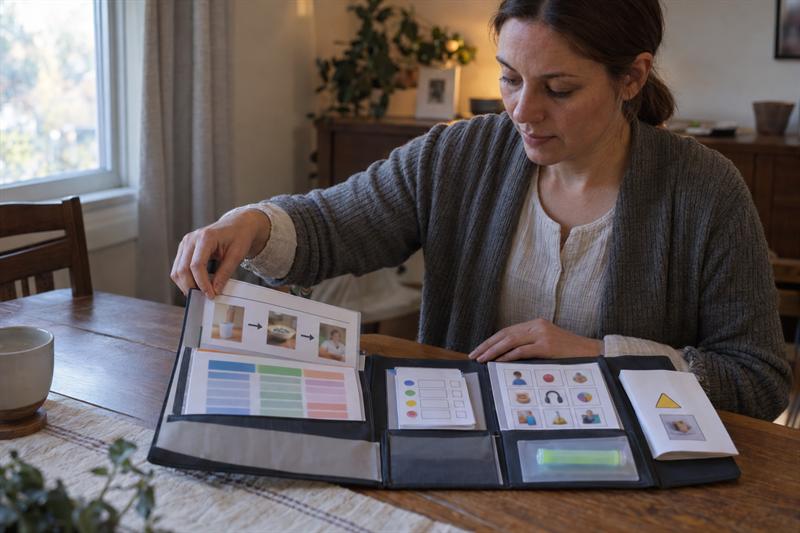
What an ABA Transition Kit Is
An ABA transition kit is a physical or digital handoff tool that keeps important support information in one place. It helps a new therapist, substitute caregiver, school staff member, respite provider, or other support person understand what matters right away.
This is more than a folder of paperwork. It is a practical tool for consistency. Families already using broader caregiver systems may recognize it as one part of a larger communication setup, similar to the tools described in this guide to caregiver update formats in ABA.
- It keeps key information easy to find
- It reduces repeat explanations during handoffs
- It can help supports carry over across people and places
The Difference Between Transition Preparation and a Transition Kit
Transition preparation focuses on helping the child or adult get ready for a change. A transition kit focuses on helping the adults around that person respond more consistently once the change starts.
That distinction matters. A family might prepare well for a change emotionally, but the handoff can still break down if the next adult does not know what supports are current, what usually works, or which part of the routine causes the most strain. That is why this article works alongside how to prepare a child or adult for an ABA staff, schedule, or setting change, rather than replacing it.
When Families and Support Teams Usually Need One
An ABA transition kit becomes useful any time support is moving from one adult, one routine, or one setting to another.
- When a new therapist, aide, or direct support staff member is starting
- When a substitute caregiver or respite provider is stepping in
- When school, childcare, camp, or after-school routines are changing
- When transportation, pickup, or timing changes affect the day
- When support shifts temporarily during travel, breaks, or family schedule changes
Many teams run into this during routine changes that seem minor at first. The change itself is not always the main issue. The breakdown often starts because the next person is missing details that help the routine work.
Why an ABA Transition Kit Helps During Changes
Many transition problems are not caused by a total lack of support. They happen because information is scattered across texts, memory, old notes, school papers, and separate provider documents.
A new adult steps in and has to guess. That can lead to inconsistent prompts, missed communication supports, outdated reinforcers, or added stress during parts of the day that already tend to be difficult.
Common Breakdowns During Staff, Schedule, or Setting Changes
- Routines in the handoff materials no longer match the actual day
- The new adult does not know which reinforcers still matter
- Visual or communication supports are missing or outdated
- The person receiving the handoff gets too much background and not enough immediate guidance
- No one is clearly responsible for updating or handing off the materials
A common pattern is that families already have the right information, but it is spread across too many places. When that happens, the new support person may feel like they are starting from zero, even when the team has worked hard to build consistency.
How a Kit Supports Consistency Across Adults and Environments
A transition kit gives the next adult a clearer starting point. It shows what the routine looks like, how communication typically works, what helps during transitions, and what tends to throw the day off track.
This often matters most when support crosses settings. Home, school, clinic, after-school care, camp, and community routines all place different demands on the same person. For families managing those shifts, after-school, camp, and childcare ABA consistency planning can help connect the bigger picture.
If these patterns sound familiar, it may be time to tighten the handoff process.
- The new caregiver keeps asking the same questions every time
- Transitions go poorly after staffing or schedule changes
- Supports work in one setting but fall apart in another
- Everyone says they were not told what to do
When those signs keep repeating, the issue is usually bigger than one rough transition. It often means the handoff system is too weak to support consistency.
What to Include in an ABA Transition Kit
This is the most important part of the kit. The goal is not to collect everything. The goal is to include what the next adult needs in order to support the person well from the start.
A useful kit separates immediate-use information from background information. That is what makes it practical instead of overwhelming.
Must-Have Items
- A one-page support summary
- The current daily routine or visual schedule
- Communication preferences or supports
- Preferred reinforcers and motivators
- Known transition triggers or hard parts of the day
- Calming or regulation supports that are currently helping
- Relevant safety information for the setting
- Key contacts and who should be updated if something changes
The one-page summary should come first because it gives the fastest orientation. Families building that piece can use a structure similar to this one-page ABA support plan.
In many real handoffs, there may be plenty of documentation, but the next person still does not know what to do early in the interaction. The problem is often not missing paperwork. It is missing prioritization.
Helpful Optional Items
- Photos of visual supports or setup examples
- Short notes on phrases, prompts, or transition cues that work well
- Favorite activities that help build rapport
- Setting-specific notes for transportation, camp, childcare, or community routines
- Backup items or short instructions for temporary caregivers
Optional items help when they make the handoff easier. They become a problem when they bury the essentials. A short-term respite provider usually does not need the same level of detail as a long-term therapist.
What Should Stay Private or Be Shared Only as Needed
Not every person needs full records or a detailed history. A transition kit often works best when information is matched to the role and the setting.
A school aide may need classroom routines, current supports, and key communication details. A respite caregiver may need mealtime patterns, calming strategies, and what to do if the plan changes. Problems often get worse when teams use one oversized version for everyone.
A Simple Way to Organize the Kit
A good transition kit is easy to use under time pressure. If the next person has to dig through long notes to find the basics, the kit is too hard to use.
The structure should help someone understand the situation quickly.
Physical Binder, Digital Folder, or Both
A printed binder works well when a handoff happens in person and fast access matters. A digital folder works well when multiple adults need updated versions or when changes happen often.
For many families, both formats are the most practical option. The printed version helps with immediate use, while the digital version is often easier to revise when routines, visuals, or contacts change.
Suggested Section Order
Put the most important information first. That usually means starting with the one-page summary, then the current routine, then communication and reinforcement details, followed by regulation supports, setting-specific notes, and background items.
A common pattern is that families organize materials by document type instead of usefulness. That makes sense for storage, but it often works poorly for handoffs. What matters here is what the next person needs first, not what was created first.
How to Label for Fast Handoff Use
- Use simple section titles
- Label the first page clearly
- Make emergency and contact information easy to spot
- Separate “what to do first” from longer background notes
If a substitute caregiver or new staff member only has a few minutes, labels matter more than design. Clear naming often does more for consistency than a polished layout.
How to Build the Kit Step by Step
The most practical approach is to build the kit in layers. Start with the shortest, highest-value information, then add the items that support consistency across settings.
This usually works better than trying to create a full kit all at once.
Step 1: Start With the One-Page Summary
Begin with a short summary of the person’s routine, communication style, current supports, motivators, hard transitions, and what helps when the day becomes difficult. This page should answer the question, “What does the next adult need to know before starting?”
If that page is not clear, the rest of the kit will not fully solve the problem. This is where a focused tool like a one-page support plan becomes the anchor for everything else.
Step 2: Add Routine Supports and Transition Visuals
Next, include the visual schedules, first-then supports, routines, or cueing systems that are currently used. These help the next adult keep the day predictable instead of improvising.
This becomes especially important when the hard part of the day is already known, such as arriving home, shifting between activities, or preparing for pickup. When routine tools are missing, support often breaks down faster.
Step 3: Include Communication, Reinforcement, and Regulation Information
Add the details that help another adult respond in a way that matches the current plan. That includes how the person communicates, what tends to motivate participation, and what usually helps when frustration starts building.
This is where fast support changes can create problems: the new adult uses the wrong language, offers the wrong motivator, or misses the first signs that regulation is slipping. Once that happens, the rest of the transition often gets harder.
Step 4: Review It With the Next Caregiver, Staff Member, or Setting
A kit still needs a real handoff. Review what the person receiving it actually needs, what they should focus on first, and who will update the kit going forward.
For short-term care changes, a focused tool like this respite and substitute caregiver handoff checklist for ABA supports can help narrow the handoff to the essentials. When no one owns the handoff, outdated information can stay in circulation and confusion can keep repeating.
When to Update the Transition Kit
An ABA transition kit is a living tool. If it does not reflect the current routine, it stops being reliable.
This often becomes obvious after a rough handoff. The issue is not that the family failed to prepare. The issue is that the kit describes an older version of the support plan.
Signs the Kit Is Outdated
- The routine or schedule no longer matches the current day
- Preferred reinforcers have changed
- Communication supports are different now
- School, staffing, transportation, or care arrangements have shifted
- Safety information needs review
If repeated confusion shows up around supports that used to work, the kit is often behind the current routine. That can lead to avoidable mistakes because the next adult is following instructions that no longer fit.
A Practical Review Schedule
Review the kit before any known transition. Review it again after any meaningful change in routine, supports, staffing, or setting. Even when things feel stable, a quick regular check helps catch details that have quietly gone stale.
A practical standard is simple: if the next adult would be surprised by the current version of the day, the kit likely needs updating.
How to Use the Kit for Different Types of Changes
One core kit can work across different situations, but it should be adapted to fit the actual handoff. The same full version does not need to go to every person in every setting.
This is where many families and teams get stuck. They either share too much or too little. A better approach is to keep one core version and adjust what is handed off based on the role.
Staff Changes
When a new therapist, aide, or support staff member is starting, the first priorities are rapport, predictability, and clarity. The handoff should highlight what to do first, what tends to work during introductions, and what to avoid during early sessions.
If the staff role itself is confusing for the family or the new team member, understanding the difference between roles can help the handoff go more smoothly. That is where a guide like BCBA vs RBT: what each role does on your child’s ABA team can add context.
Schedule Changes
Schedule changes usually affect more than timing. They also change transitions, expectations, pacing, and parts of the day that already require support.
If mornings, pickups, or post-school routines are the hardest points, update those sections first. When the timing changes but the supports do not, the day often becomes less predictable and harder to carry over.
Setting Changes Such as School, Childcare, Camp, or Respite
Setting changes require more adaptation because each environment has different demands. A school team may need classroom-facing supports, while camp staff may need practical transition cues, activity preferences, and what to do if group routines shift.
Shorter, role-specific versions usually work better in these settings. The core information stays the same, but the handoff becomes tighter and more useful.
Common Mistakes to Avoid
- Adding too much information up front
- Keeping outdated supports in circulation
- Leaving no clear owner for the handoff
- Using the same version for every person and setting
- Waiting until the change is already happening
The biggest mistake is assuming the existence of a kit is enough. If the tool is too long, too old, or too generic for the setting, people may stop using it and the same transition problems can keep coming back.
Key Takeaways
- An ABA transition kit works best when it gives the next adult the information they need first
- The strongest kits are simple, current, and organized for real handoffs
- Many breakdowns happen because details are scattered, outdated, or hard to use quickly
- One core kit can support multiple settings, but role-specific versions usually work better
- Updating the kit matters as much as creating it
Conclusion
The challenge is not just that transitions can be hard. It is that support details get lost, diluted, or handed off too late, which can lead to inconsistent routines, confused caregivers, and unnecessary disruption.
If this is not handled well, the same patterns may repeat every time staffing, scheduling, or settings change. The next adult starts without the right information, the person receiving support may lose predictability, and the team may spend time fixing avoidable breakdowns instead of building continuity.
At Strive ABA Consultants LLC, this issue is approached as a systems problem, not just a behavior problem. Families navigating autism evaluations, reevaluations, and ongoing support decisions often need clearer tools that make daily handoffs more usable across home, school, and caregiver changes.
If transitions are becoming harder because routines, supports, or team communication are not staying aligned, Strive ABA Consultants LLC may be a practical next step. A clearer support process now can make future handoffs smoother and more consistent.
Company Approach
Strive ABA Consultants LLC serves families seeking autism evaluations and reevaluations while also supporting clearer coordination around what those services mean in daily life. That matters because document quality and handoff quality are closely connected.
A common pattern is that families have evaluations, school documents, and ABA materials, but the information is not organized in a way that helps the next caregiver or provider act on it. This is where structured tools, consistent communication, and a realistic update process can make a difference.
For families in Oak Forest, Chicago, and Merrillville who are trying to reduce delays, improve access, and keep support more consistent across changing settings, Strive ABA Consultants LLC offers a grounded, practical approach. The goal is not to create more paperwork. The goal is to make the right information usable when it is needed most.
FAQ
What should be included in an ABA transition kit?
An ABA transition kit should include the information another adult needs in order to support consistency right away. That usually means a one-page summary, current routine or visual schedule, communication supports, preferred reinforcers, transition triggers, regulation tools, relevant safety information, and key contacts.
The most important distinction is between immediate-use information and background history. A substitute caregiver usually needs to know what the day looks like, how to support transitions, and what helps if things start going off track. Full records may still matter, but they should not block access to the basics.
How is an ABA transition kit different from a transition plan?
A transition plan prepares for the change. An ABA transition kit carries the support information through the change.
That difference matters because families can do a strong job preparing emotionally and still run into breakdowns if the next adult does not know what works in practice. For example, a new staff member may know a change is coming but still miss the communication supports, reinforcement details, or visual tools that help keep the routine stable.
When should an ABA transition kit be updated?
An ABA transition kit should be updated whenever the information no longer matches current routines, supports, or settings. The clearest triggers are changes in schedule, staffing, communication supports, reinforcers, transportation, or safety details.
What commonly gets misunderstood is that small routine shifts still matter. If the first difficult part of the day has moved, if a motivator no longer works, or if staff roles have changed, the handoff becomes less reliable. A shorter current kit is usually better than a detailed outdated one.
Should an ABA transition kit be physical, digital, or both?
Both is usually the most practical option when multiple people or settings are involved. A printed version helps during fast in-person handoffs, while a digital version is easier to revise and share.
The decision changes based on how the kit will actually be used. A camp counselor or substitute caregiver may need a quick printed version, while a broader team may rely on digital updates. The format matters less than whether the information is current and easy to find.
Who should receive an ABA transition kit?
The people receiving the kit should be the ones who need it to support the individual during the transition. That may include therapists, school staff, substitute caregivers, respite providers, childcare teams, or camp staff.
Not everyone needs the same version. That is usually where confusion starts. A classroom aide may need focused support details for the school day, while a replacement caregiver may need routines, meals, transition cues, and calming supports. Sharing by role makes the kit more useful.
Can the same ABA transition kit be used for school, home, and respite care?
One core transition kit can support all three, but it usually needs shorter role-specific versions. The base information can stay consistent while the details shift based on setting.
For example, the school version may focus on classroom transitions and staff coordination, while the respite version may focus on meals, downtime, and what to do if the schedule changes unexpectedly. What matters most is whether the person receiving it can use it quickly in that specific environment.