

Quick Answer: ABA goals for the school year are most useful when they address the routines where a child needs support every day, rather than existing as a separate list of therapy targets. Families can choose a few functional priorities, coordinate communication between home, school, and ABA providers, and plan for transportation, scheduling, and after-school capacity from the start.
A new school year changes more than a classroom. It can change the morning pace, transportation, staff relationships, after-school energy, and the moments when a child needs to communicate, transition, ask for help, or use support strategies. Strive ABA Consultants LLC helps families consider these everyday routines so ABA planning stays connected to what the child is navigating each day.
Why ABA Goals May Need to Change When the School Year Starts
ABA goals may need adjustment because a new school year introduces new people, settings, schedules, expectations, and transitions. A child who uses a skill successfully at home or during therapy may need additional practice and support to use that same skill on the bus, during classroom arrival, or with a new teacher.
This is the difference between learning a skill and generalizing it. Generalization means using a learned skill across different people, places, and routines. When a goal works in one setting but breaks down in another, the goal is not necessarily ineffective. The plan may need to identify what is different about that routine and what support helps the child use the skill there.
- A new classroom may bring different noise levels, seating, peers, and expectations.
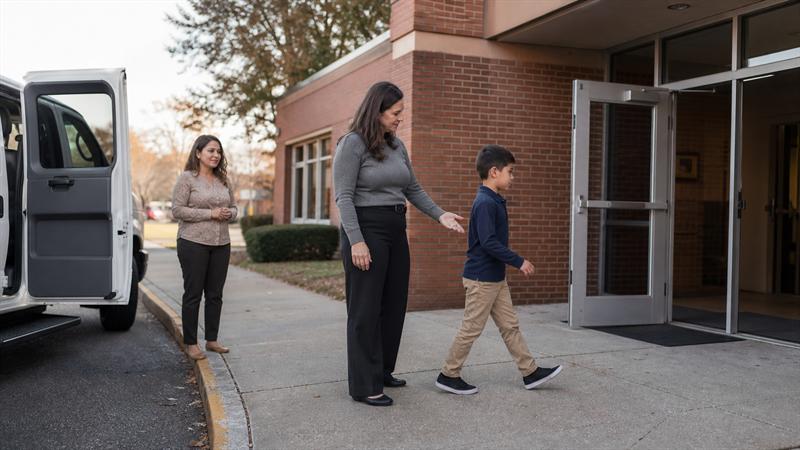
- School arrival may require a child to separate from caregivers, navigate transportation, and shift into a group routine quickly.
- After-school therapy can feel different after a full day of classroom demands.
- New adults may not yet know which communication tools or transition supports are most helpful.
Families may naturally focus on the behavior they see at the hardest point of the day while overlooking the routine leading into it. When mornings are rushed, transportation is unpredictable, or a child has no clear way to request support, that difficulty can carry into the next setting. ABA therapy support for school readiness can help families understand how foundational daily skills connect to participation once school begins.
Start With Daily Routines That Matter Most
A practical starting point is the part of the day that affects the child and family most often. Broad goals such as “do better at school” are hard to apply. A specific routine, such as getting from the car to the classroom or moving from school to an afternoon appointment, gives the adults involved something clear to observe and support.
Identify the Times of Day That Need the Most Support
Families can map the day before deciding which goals need immediate attention. The purpose is not to identify every difficult moment. It is to find the routines that have the greatest effect on participation, stress, safety, and family follow-through.
- Waking up, getting dressed, eating breakfast, and leaving home
- Car rides, bus rides, and school arrival
- Entering the classroom and separating from a caregiver
- Moving between lessons, lunch, recess, specials, and dismissal
- Starting after-school therapy or returning home after school
- Homework, meals, sibling routines, and bedtime
If a child is calm during therapy but struggles consistently at arrival, the arrival routine may need closer attention. If the hardest point is after school, fatigue, hunger, a rushed handoff, or too many back-to-back demands may be contributing. Identifying the routine shifts the planning conversation from “What is wrong?” to “What skill and support are needed here?”
Separate Immediate Needs From Longer-Term Goals
Not every concern needs the same level of attention at the same time. Immediate priorities may involve safety, communicating basic needs, substantial difficulty with a required transition, or a barrier that interferes with regular participation in school or therapy.
Longer-term goals may include broader independence, peer interaction, flexibility with changes, or completing longer periods of independent work. These goals still matter, but they can be harder to address when a child is struggling with the routines that structure the day. Stabilizing the routines creating the largest daily disruption gives the rest of the plan a stronger foundation.
Choose Two to Four Shared Priorities
Choosing two to four priorities makes it easier for families, school staff, and therapy teams to maintain a shared focus. A short list gives parents, educators, and ABA providers direction without turning every interaction into a progress meeting.
For example, a family might focus on requesting help, using a transition support, completing part of the arrival routine, and communicating when a break is needed. Adults do not need to use the exact same words or tools in every setting. They do need a shared understanding of what the child is working toward and which supports are most helpful.
Choose Functional ABA Goals for School, Home, and Community
Functional ABA goals connect to real routines and meaningful participation. Useful goals are not selected simply because they sound impressive on paper. They are selected because they can help a child communicate needs, access learning, move through daily routines, or build independence in a way that matters to the child and family.
Examples of functional ABA goals for the school year may include the following. These are planning examples, not a universal list or a replacement for an individualized treatment plan.
Communication and Self-Advocacy Goals
Communication goals can help a child express needs before a routine becomes more difficult. At school, this may include requesting help when directions are unclear, asking for a break, communicating discomfort, or using a preferred communication method to make choices and express concerns.
During school transitions, adults may recognize that a child is overwhelmed while the child does not yet have a reliable way to communicate what support is needed. When requesting help or a break becomes a shared priority, adults have a clearer opportunity to respond before the routine becomes more challenging.
Transition and Flexibility Goals
Transition goals focus on moving from one activity, place, or expectation to another with appropriate preparation and support. A visual schedule, countdown, first-then support, or practiced communication response may help a child understand what is changing and what happens next.
Flexibility should not be treated as a demand to ignore distress or sensory needs. A meaningful goal is helping the child navigate smaller changes with support and communicate when a change is too difficult. Challenges can increase when adults expect a child to manage unfamiliar transitions without preparation because the same routine appeared manageable in a different setting.
Participation and Independence Goals
Participation and independence goals can include completing part of an arrival, lunch, classroom, or dismissal routine; starting an assignment with an appropriate level of prompting; organizing materials; or following a familiar sequence of steps.
Independence does not always mean doing every part of a task without help. It can also mean using a visual tool, asking for clarification, or following a routine with less adult prompting than before. Removing support too quickly can lead to frustration and inconsistent participation, so progress should reflect the child’s readiness and support needs.
Regulation and Support-Request Goals
Goals related to regulation can focus on recognizing when a routine is becoming difficult and using a safe, agreed-upon way to request help, space, a break, or sensory support. The focus is not on forcing a child to appear calm. It is on helping the child communicate and access support in a way that keeps the routine manageable.
If a child’s difficulty appears most often after a long school day, that pattern may reflect limited capacity rather than a lack of effort. The plan may need fewer back-to-back demands, clearer transition supports, or a better way for the child to communicate the need for a pause.
Align ABA Goals With School Supports Without Duplicating Everyone’s Role
ABA goals can align with school supports when home, school, and therapy teams focus on related functional skills while maintaining separate roles. An ABA treatment plan is not the same as an IEP, 504 Plan, school evaluation, or classroom instruction plan. Alignment means the adults recognize the same daily need and communicate useful observations about it.
For example, a family may want smoother morning departures, a teacher may be focused on classroom arrival, and an ABA provider may be working on using a visual routine or requesting help during transitions. These priorities connect because they address the same functional skill. They do not need to become identical goals in every plan.
Compare Family Priorities, School Priorities, and ABA Goals
Families see what happens before and after school. School staff see classroom demands, peer settings, and educational supports. ABA providers focus on individualized treatment goals and the conditions that may help a child use skills more consistently.
- Family priority: Leaving home with less stress and fewer rushed transitions.
- School priority: Participating in arrival and beginning the classroom routine.
- ABA goal: Using a visual sequence, communication response, or support request during arrival.
Problems can develop when each adult works from a different assumption. A child may receive one expectation at home, another at school, and a third in therapy. The child may then need to learn the routine differently in each setting instead of building a skill that transfers.
Keep Goals Connected but Role-Specific
Parents can share what works at home, what has changed in the family routine, and which situations create the most pressure. School staff can describe classroom expectations and educational supports. ABA providers can use that information to consider how treatment goals relate to the child’s daily routines.
Information sharing should happen with parent consent and in accordance with applicable privacy practices. The goal is not for every adult to take over another person’s role. It is to reduce the chance that important details are lost between settings. For a closer look at maintaining connected supports without conflicting strategies, review how to support ABA therapy at school.
Build a Simple Home-School-ABA Communication Plan
A home-school-ABA communication plan should be brief enough to use consistently. Long updates can become difficult to maintain once the school year becomes busy. A few specific observations about what happened, what helped, and what the next adult needs to know are generally more useful than saying the day went well or poorly.
What Parents May Want to Share
- Major schedule changes that affect the child’s day
- Transportation or pickup changes
- Communication methods and transition tools that have been helpful
- Relevant changes in sleep, medication, or family routine when appropriate to share
- Patterns that may help explain a new concern
The key is relevance. A short note that a child had an unusually early morning, a substitute pickup adult, or a disrupted transportation routine may help explain why a familiar transition was harder that day. It gives the next adult useful context without creating unnecessary documentation.
Questions That Can Reveal Useful Patterns
When a routine becomes difficult, useful questions are direct and specific. What happened just before the challenge? When was the routine easiest or hardest? What did the child do to communicate? What support helped? Is the same pattern appearing in more than one setting?
Adults may report the outcome without describing the conditions leading up to it. Saying that a child “had a hard afternoon” does not show whether the problem began with an unexpected schedule change, a missed meal, a long bus ride, a difficult task, or a transition with no warning. Those details may help the team identify the next practical adjustment.
Use a Brief Shared Update Format
A simple update can follow four points:
- What happened before the routine or challenge?
- What did the child communicate or do?
- What support was helpful?
- What should the next adult know?
This format can support clearer communication without replacing clinical documentation or school records. Families who want to build stronger shared-goal communication can also use A Parent Guide to ABA Home-School Communication for Shared Goals.
Plan for Transportation, Therapy Schedules, and After-School Capacity
ABA therapy may fit into a school schedule more smoothly when the plan accounts for the full day, not just the therapy appointment. Long travel times, delayed buses, changing pickup plans, skipped meals, caregiver work schedules, homework, and after-school fatigue can affect how manageable a routine feels for a child.
Ignoring these logistics can lead to missed sessions, rushed transitions, and a plan that looks workable on paper but breaks down during the week. This is not necessarily a sign that a family is not committed. It may mean the schedule does not reflect the child’s capacity and the family’s responsibilities.
Treat Logistics as Part of the Support Plan
Families can confirm how the child will get to and from school and therapy, who handles pickup changes, and what happens when there is an early dismissal or transportation delay. These details can be especially important when a child relies on predictability to move through transitions.
If the child is consistently struggling at the same handoff point, the schedule may need review instead of expecting the child to simply adjust. A therapy time that worked during summer may no longer be practical after a full school day. Identifying the specific bottleneck helps the family and support team consider whether the routine needs adjustment.
Explore Available Access Supports Early
Transportation and affordability barriers are worth addressing early because they can affect consistency. Strive ABA Consultants LLC offers transportation support and works through partnerships that may help eligible families explore financial assistance pathways. Availability, eligibility, and assistance options vary, but planning for access before routines become unstable can be more practical than waiting until missed appointments become a pattern.
If school routines are regularly disrupting therapy follow-through, it may be time to review the plan.
- Transportation changes are causing late arrivals, missed sessions, or rushed handoffs.
- The child is consistently exhausted before therapy or struggling to transition into the appointment.
- School pickup, caregiver schedules, and therapy hours no longer fit together.
- New school demands are creating repeated stress at the same time each day.
These patterns may not improve by leaving the schedule unchanged. They suggest that the school-year plan should be reviewed around the routines creating the barrier.
Review ABA Goals After the First Few Weeks
The first few days of school do not always show what the longer-term routine will look like. Once the child has had time to learn the classroom, transportation pattern, and daily schedule, families and providers can better identify which challenges are temporary and which ones need a more focused plan.
Goals should be reviewed when the same barrier continues across days or settings. A goal may need to be broken into smaller steps, practiced with different adults, supported with a clearer routine, or replaced with a more immediate functional priority.
What to Watch for as Routines Become Familiar
- Whether a challenge happens in one setting or across several routines
- Whether a certain time of day, task, person, or transition makes participation harder
- Whether the child uses a skill with one adult but not with others
- Whether transportation, fatigue, sleep, or after-school demands are affecting the routine
These observations can help show whether the issue is tied to a particular environment or whether the skill still needs support across settings. When the same difficulty appears at home, school, and therapy, the plan may need a broader generalization focus rather than a setting-specific adjustment.
When to Ask About an Evaluation or Reevaluation
A difficult school adjustment does not automatically mean a child needs a new autism evaluation. New routines can be demanding, and adjustment challenges should be understood in the context of the child’s full schedule, communication needs, developmental history, and existing supports.
Families with broader questions about developmental needs, current diagnostic information, or changes in support needs can discuss whether an autism evaluation or reevaluation is appropriate. Strive ABA Consultants LLC provides autism evaluations and reevaluations for families seeking clearer information for ongoing planning.
New-School-Year ABA Goals Checklist for Families
- Identify two to four functional priorities for the school year.
- List the daily routines where each priority matters most.
- Ask the school team which routines currently need the most support.
- Share relevant observations with ABA providers using appropriate consent and privacy practices.
- Confirm transportation, pickup, therapy, and after-school schedules.
- Choose a brief communication method that adults can maintain consistently.
- Set a time to review what is working after routines have had time to settle.
Key Takeaways
- ABA goals for the school year should reflect the routines a child faces most often, not only skills practiced during therapy.
- A skill that works at home or in therapy may need additional support before it transfers to school.
- Two to four shared priorities are generally more practical than a long list of disconnected goals.
- Home, school, and ABA teams can align around functional skills while maintaining separate roles.
- Transportation, scheduling, and after-school capacity are part of a workable support plan.
- Repeated difficulty in the same routine is a signal to review the plan rather than continue an approach that is not working.
How Strive ABA Consultants LLC Approaches School-Year Planning
Strive ABA Consultants LLC approaches school-year planning by looking at the conditions around a goal, not only the goal itself. A child’s ability to use a skill can be shaped by the routine, people, timing, expectations, and supports present in that moment.
Families are not managing therapy in isolation. They are coordinating school mornings, transportation, classroom transitions, caregiver schedules, after-school fatigue, and changing family demands. A useful plan should account for those conditions. When access barriers are part of the problem, transportation support and available partnership pathways can also be part of the planning conversation.
FAQ: ABA Goals for the School Year
How do parents choose ABA goals for a new school year?
Parents can begin with the routines that have the biggest effect on school participation and family life, then narrow the focus to two to four functional priorities. For example, a family may identify school arrival, requesting help with unfamiliar work, and moving from school to therapy as the routines needing the most support.
This approach can be more manageable than creating a separate goal for every concern because it gives all adults a clear starting point. The important question is not which goal sounds most advanced. It is which skill is most likely to make a meaningful difference in the child’s actual day.
What are examples of ABA goals that can help at school?
Examples include requesting help when directions are unclear, asking for a break, using a preferred communication method to express needs, moving between activities with individualized transition support, and completing part of an arrival or dismissal routine. Each goal should connect to a situation the child faces regularly.
For example, requesting help may look different at home, during therapy, and in class, but it can support participation in all three settings. The goal is not to make every setting identical. The goal is to help the child use a meaningful skill where it is needed.
How can ABA goals be aligned with an IEP?
ABA treatment goals and IEP goals are developed through different processes, but they can support the same functional need. A school may focus on participating in classroom transitions, while an ABA plan addresses communicating the need for help during a transition.
The distinction is important. Alignment does not mean the plans must use the same language or that one team takes over the other’s role. It means the adults understand how a related skill affects the child’s participation across settings.
Should teachers and ABA therapists communicate directly?
Direct communication can be useful when a parent authorizes it and communication follows applicable privacy practices and school policies. The most helpful updates are generally short and specific, such as noting that a visual schedule supported arrival or that the child used a break request before a difficult transition.
Communication becomes less useful when it is vague or when roles are blurred. Educators address educational supports, while ABA providers address individualized treatment goals. Clear information sharing can help both groups understand the pattern without duplicating responsibilities.
How can ABA therapy fit into a child’s school-year schedule?
ABA therapy may fit best when scheduling considers the full day, including transportation, school hours, meals, fatigue, homework, caregiver work schedules, and the child’s ability to handle another transition after school. An appointment time alone does not show whether the routine is sustainable.
If a child is repeatedly exhausted before therapy, late because of transportation, or struggling during the same handoff every day, the schedule may need attention. Leaving those patterns unchanged can lead to inconsistent attendance and more pressure on the child and family.
When should a family ask about an autism reevaluation?
A new school-year challenge alone does not automatically mean a child needs a reevaluation. The more important distinction is whether the family has broader questions about current developmental needs, existing diagnostic information, or changes in the child’s support needs over time.
Temporary adjustment to a new teacher, classroom, or schedule is different from a larger question about diagnostic or developmental planning. A qualified professional can consider that full context when discussing whether reevaluation is appropriate.
Conclusion: Shared ABA Goals Can Make School-Year Routines More Manageable
The school year can create new challenges when therapy goals, school expectations, family routines, transportation, and after-school capacity are treated as separate issues. That disconnect can lead to repeated stress at the same transitions, inconsistent follow-through, and goals that remain easier to use in one setting than another.
Strive ABA Consultants LLC can help families connect ABA planning to real school-year routines. Identify the two to four routines creating the most pressure, bring those observations to the child’s support team, and address transportation or scheduling barriers before they become a repeated pattern. For upcoming disruptions beyond the school day, families can also review planning for school breaks and routine changes while receiving ABA support.