

When transitions, self-care, meals, schoolwork, or community outings repeatedly lead to distress or unsafe behavior, families may need more than reminders to “be consistent.” They may need to understand what is making the routine hard and what skill could help their child move through it with more support.
At Strive ABA Consultants LLC, behavior reduction support is approached as a skills-and-routines issue, not simply a compliance issue. This article explains how behavior reduction ABA and replacement skills in ABA can work together to support safer, clearer, and more manageable daily routines.
What Is Behavior Reduction Support in ABA?
Behavior reduction support is an individualized ABA approach that may be used when a behavior creates a meaningful barrier to safety, communication, learning, or participation in daily life. It involves looking at the situation, teaching a practical alternative, and adjusting the routine or environment when appropriate.
The concern is not simply that a behavior occurs. In some situations, a child may not yet have a reliable way to communicate a need, manage a transition, ask for help, or move through a difficult routine safely. A plan focused only on stopping the behavior may leave that need unaddressed.
It Is More Than Trying to Stop a Behavior
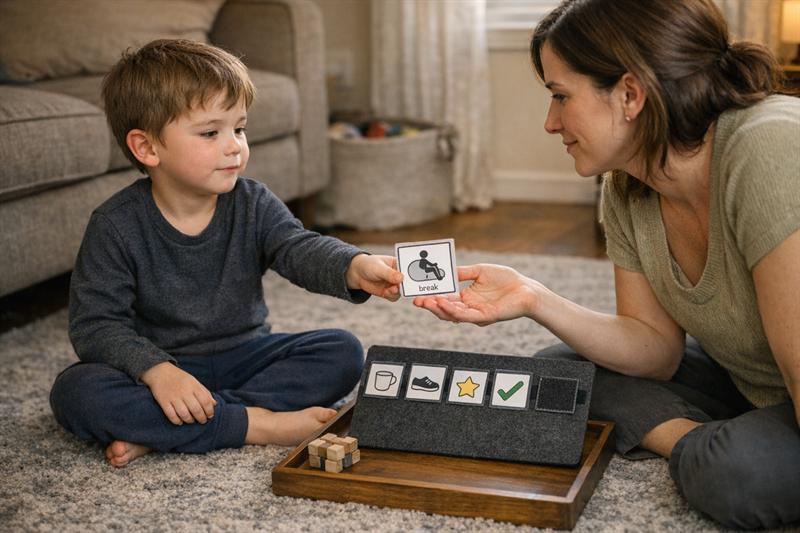
Behavior reduction support can include teaching a replacement skill that works for the child in the moment. That might involve requesting help, asking for a break, using a visual support, making a choice, or using another communication method that is easier to access during a challenging routine.
Adults may focus on the visible behavior without identifying what the child needs instead. When there is no workable alternative, the same pattern may return during the next difficult transition, demand, wait, or communication breakdown.
Meaningful goals can focus on safety, access, communication, and participation. They should not target harmless autistic traits, personality, or self-expression simply to make a child appear more compliant.
When Additional Behavior Support May Be Helpful
Additional support may be worth discussing when a behavior creates a safety concern, causes significant distress, repeatedly disrupts essential routines, or prevents a child from communicating needs. These concerns can appear during hygiene routines, leaving the house, ending a preferred activity, waiting, completing tasks, or navigating school transitions.
A difficult routine does not automatically mean a child needs ABA therapy. But when the same issue repeatedly limits safety or participation, the family may benefit from a more structured response than reminders or consequences alone.
Why Understanding the Reason Behind a Behavior Matters
ABA considers the context around a behavior because the same behavior can serve different purposes in different situations. A child who leaves an activity might be trying to avoid a difficult task, access something preferred, respond to an unexpected change, or communicate a need for help.
Guessing can lead to mismatched strategies. A support plan is more useful when it is based on repeated patterns in real routines rather than assumptions about intent.
Looking at What Happens Before, During, and After
A qualified provider may look at what happened immediately before the behavior, what the behavior looked like in observable terms, and what changed afterward. This helps identify patterns over time instead of treating one difficult moment as the whole story.
The event before a behavior is often called an antecedent. It could be a transition, request, noisy environment, denied item, waiting period, new expectation, or change in the usual routine. What happens afterward also matters because it can show what changed for the child once the behavior occurred.
A behavior may become more likely when it consistently helps a child escape a demand, gain access to something, or communicate when no easier communication method is available. Overlooking that pattern can leave the routine difficult and the child without a reliable alternative.
Common Needs a Behavior May Be Communicating
Behavior can occur for many reasons. These examples are not universal explanations, but they show why context matters:
- A need for help or clearer instructions
- A need for a break, more time, or a reduced demand
- Difficulty with waiting, transitions, unexpected changes, or sensory aspects of the setting
- A desire to access a preferred activity, item, or person
- Limited access to a communication method that works in that moment
Strong support plans can connect these patterns to specific goals, teaching methods, and progress review. Families who want to understand how those pieces fit together can read what makes a strong ABA treatment plan.
How Replacement Skills in ABA Are Chosen
Replacement skills in ABA are practical skills that give a child another way to communicate, cope, participate, or meet a need during a specific situation. The replacement skill needs to do more than sound appropriate. It should work when the child needs it.
For example, telling a child to “use words” may not be enough if they do not have a communication response they can access while upset, rushed, or overwhelmed. A more practical option may be teaching a response that fits the child’s abilities and is likely to be understood by the adults around them.
A Replacement Skill Must Work for the Child and the Situation
A replacement skill needs to be relevant to the routine, accessible for the child, and useful in the moment. If it takes too long, depends on skills the child has not learned, or does not lead to a meaningful response from adults, it may not effectively replace the behavior causing concern.
Communication can look different from one child to another. It may include spoken language, gestures, pictures, visual supports, or a communication device. What matters is that the child has a functional way to express a need before the routine becomes harder to manage.
A child may understand what adults expect but still struggle to respond quickly enough during a difficult moment. The plan should teach a response the child can use under real-world conditions, not only when the setting is calm and highly structured.
Examples of Replacement Skills for Everyday Routines
Replacement skills are selected individually, but examples may include:
- Requesting help during a difficult task instead of leaving or refusing
- Requesting a break before frustration escalates
- Using a visual schedule to move through a transition
- Choosing between two acceptable options during a self-care routine
- Using a communication system to request a preferred item or activity
- Practicing waiting, coping, or transition skills in smaller, supported steps
The goal is not to force one response on every child. The goal is to identify an option that helps the child communicate or cope more effectively in the routine that is causing difficulty.
What a Behavior Reduction ABA Plan May Include
A behavior reduction ABA plan should connect a clear goal with the routine where support is needed. It may include meaningful goals, replacement-skill teaching, changes that make the routine easier to navigate, caregiver input, and regular review of what is working.
Plans are less useful when they focus only on what adults want less of. A stronger plan identifies what the child can do instead, what support adults need to provide, and how everyone will know whether the routine is improving.
Clear, Meaningful Goals
A meaningful goal identifies what should become safer, easier, or more functional in a specific part of daily life. It should be observable and measurable, but it also needs to matter to the child and family.
For example, a goal might focus on using a break request during transitions, completing part of a hygiene routine with support, or using a communication system to request help. Goals that are vague or disconnected from daily life can make it harder to see progress and easier for support to drift away from what families actually need.
For a closer look at the difference between useful and ineffective targets, read what makes ABA goals meaningful versus ineffective.
Changes That Make a Routine Easier to Navigate
Behavior support is not only about teaching the child a new skill. The routine itself may need changes. Visual information, transition warnings, choices, clearer task steps, communication access, and smaller demands can make a difficult moment easier to understand and complete.
When every responsibility is placed on the child, adults may miss parts of the environment that are making the routine harder than it needs to be. A stronger plan considers both the skill gap and the situation around it.
Teaching, Practice, Reinforcement, and Review
New skills need to be taught and practiced before adults expect a child to use them consistently. Reinforcement can mean recognizing and supporting a response that helps the child succeed, so the replacement skill becomes more useful in the routine.
Progress data and caregiver feedback can help show whether the plan fits the child’s real life. If a strategy is not helping, the plan may need adjustment. Continuing with the same approach while the routine remains difficult can add stress and delay meaningful progress.
How Behavior Reduction Support Connects to Everyday Routines
Behavior reduction support matters most when it helps outside a controlled therapy setting. Daily life includes rushed mornings, changing schedules, busy stores, classrooms, family meals, appointments, and transitions that do not always happen in the same way.
The goal is to build skills that remain useful when routines are less predictable. That is why support should be tied to the places, people, and situations where the child needs the skill most.
Support at Home, School, and in the Community
Generalization means using a skill across different people, places, and routines. A child who learns to request help in one setting may still need opportunities to practice that skill at home, school, and in the community when appropriate.
Skills do not automatically transfer just because they were learned once. This can become harder when adults use conflicting prompts or expectations across settings. Clear communication between caregivers, schools, and providers can help make support more understandable for the child.
Daily living goals can be especially meaningful because they connect directly to routines families repeat every day. Learn more about how ABA therapy supports daily living skills beyond behavior reduction.
Making Support Practical for Family Life
Family feedback is essential to building practical support. Parents and caregivers know which routines matter most, what has already been tried, which strategies fit the household, and where a plan is likely to break down.
A plan is more likely to be useful when families can participate in shaping it and carry skills into the routines that matter most.
When a Behavior Reduction Plan Needs Professional Attention
Repeated distress, safety concerns, and routines that keep breaking down may call for a more structured response. If the same pattern continues without a clear replacement skill and individualized support, the behavior may remain the child’s most effective response in that moment.
- Transitions regularly lead to unsafe behavior, prolonged distress, or difficulty continuing the day.
- Your child has no reliable way to request help, a break, more time, or a preferred item.
- Strategies work briefly in one setting but fall apart at home, school, or in the community.
- Adults are responding differently, and the routine is becoming more stressful over time.
If these patterns are present, it may be helpful to speak with a qualified provider. An individualized ABA assessment can help identify factors contributing to the routine problem and determine which supports may be appropriate.
Questions Parents Can Ask About Behavior Reduction Support
Families should leave a provider conversation with more than a promise to reduce behavior. These questions help clarify whether the proposed support is specific, respectful, and connected to real routines:
- How was this goal selected?
- What patterns or needs is the team considering?
- What replacement skill will be taught, and why does it fit this child?
- How will the child be supported to communicate needs or request help?
- How will progress, safety, and family feedback be monitored?
- How will the plan be practiced at home, school, and in the community?
- When will the plan be reviewed or adjusted?
- How does the plan protect the child’s dignity, communication, and meaningful participation?
A provider should be able to explain these answers clearly. If the plan centers on stopping behavior without explaining what the child will learn instead, families may want to ask additional questions.
When to Seek Professional Guidance
Professional guidance may be appropriate when behavior creates an immediate safety concern, causes significant distress, or substantially limits participation in essential routines. A qualified provider can consider the full context and help determine whether ABA-based behavior reduction support, another service, or a combination of supports fits the child’s needs.
When a difficult pattern is affecting everyday life, an assessment can give the family a practical starting point and help clarify the next steps.
Key Takeaways
- Behavior reduction support should focus on safety, communication, access, and meaningful participation.
- The same behavior can occur for different reasons, so context should come before assumptions.
- Replacement skills in ABA give children a more functional way to communicate, cope, or move through a difficult routine.
- Strong plans can include meaningful goals, routine supports, skill teaching, family input, and ongoing review.
- Support can be more effective when it fits the child’s real routines across home, school, and community settings.
Conclusion: Support That Builds Skills for Everyday Life
The concern is not that a child has a difficult moment. It is that a routine keeps breaking down because the child may not yet have enough support, communication access, or a workable replacement skill for that situation.
When challenges continue across transitions, self-care, school demands, and community routines, Strive ABA Consultants LLC can help families identify the routines creating the greatest barriers and discuss whether an individualized assessment and behavior reduction support plan may be appropriate.
For families managing repeated safety concerns, escalating stress, or daily routines that no longer work, contacting Strive ABA Consultants LLC can be a practical next step toward a more structured support plan.
FAQ
What is behavior reduction in ABA?
Behavior reduction in ABA is individualized support for reducing behaviors that interfere with safety, communication, learning, or meaningful participation. It should include understanding the routine and teaching a functional replacement skill, rather than focusing only on stopping behavior. Families can ask how proposed goals connect to their child’s actual needs and daily routines.
What are replacement skills in ABA?
Replacement skills are alternative ways for a child to communicate, cope, request help, request a break, transition, or meet a need during a specific situation. The skill should be practical for the child and may involve spoken language, gestures, pictures, visual supports, or AAC. Families can ask providers which replacement skill they recommend and why it fits the child’s communication style.
Is behavior reduction the same as punishment?
No. A skills-first, assessment-informed behavior reduction plan focuses on understanding context, teaching useful alternatives, and supporting safer participation. A response focused only on consequences may not explain what the child can do instead when the same need or difficulty occurs again. Families can ask how a plan supports dignity, communication, and meaningful participation.
How does ABA determine why a behavior happens?
ABA providers may look for patterns in what happens before, during, and after a behavior, along with input from caregivers and others who know the child’s routines. Similar behaviors can serve different purposes in different contexts, so one difficult event does not provide the full answer. An individualized assessment can help connect recurring patterns to practical support goals.
What should be included in a behavior reduction plan?
A behavior reduction plan may include meaningful goals, assessment-informed supports, replacement-skill teaching, routine or environmental changes, caregiver collaboration, and regular progress review. A strong plan addresses both the skill the child is learning and the setting where that skill is needed. Ask when the provider will review the plan and what will happen if the strategy is not working.
Can behavior reduction support help with daily routines?
Behavior reduction support can address routines such as transitions, self-care, meals, school activities, and community outings when goals are individualized and skills are practiced in relevant settings. Progress may depend on helping the child use the skill with different people and across different routines. Families can identify the daily moments that are most difficult when discussing next steps.