
Quick Answer: The right time to start social skills groups for autism is when a child can actively participate in a group, not just be present. If a child does not yet have basic communication, tolerance for peers, or the ability to follow simple directions, group settings may create frustration instead of meaningful progress.
Introduction
Parents are often told that early intervention matters, but very few are given clear guidance on timing. Social skills groups are commonly recommended, yet it is not always obvious when a child is actually ready for that step.
This is where uncertainty builds. Starting too early can make participation stressful, while waiting without a clear plan can slow progress. Readiness is not about age. It is about whether a child has the skills needed to benefit from a group setting.
Why Timing Matters for Social Skills Groups
Social skills groups are built around interaction, structure, and shared activities. When a child has the right foundation, these environments can support growth. Without that foundation, the same environment can feel overwhelming.
The Difference Between Exposure and Readiness
Being around other children does not automatically lead to social learning. A child may sit in a group, watch others, and still not engage in a meaningful way.
This is where progress can stall. Without the ability to respond, communicate, or participate, the group becomes more about observation than practice. A deeper look at how these skills build over time is outlined in how ABA therapy supports social development.
Risks of Starting Too Early or Too Late
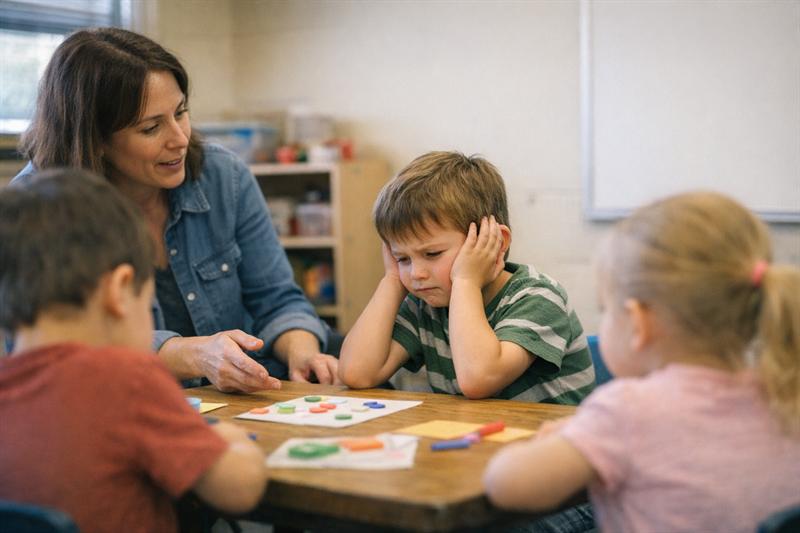
Starting too early can lead to frustration. Children may withdraw, avoid participation, or show signs that the setting is too demanding. Negative experiences in social settings can start there.
Waiting too long creates a different challenge. Without guided opportunities to practice with peers, social development can remain limited, especially as expectations increase in school and community settings.
Featured Snippet Target: Starting too early can lead to overwhelm and disengagement, while starting too late may delay structured social learning opportunities.
Core Skills Your Child Should Have Before Joining a Group
Children do not need to master every skill before joining a group. They do need enough ability to participate in a basic way. Without that, the group setting becomes difficult to navigate.
- Basic communication to express needs or responses
- Ability to follow simple directions
- Tolerance for being near and around peers
These are functional skills. They allow a child to take part, even if support is still needed. More detail on how these abilities develop can be found in how social skills develop in children with autism.
Basic Communication Abilities
This can be verbal or nonverbal. A child does not need complex language, but they do need a reliable way to express needs. Without that, frustration can build quickly and limit participation.
Ability to Follow Simple Directions
Group settings rely on structure. Children are expected to respond to basic instructions, even with support. When this skill is not in place, it becomes difficult to stay engaged with group activities.
Tolerance for Peers and Shared Space
This is often one of the first challenges families notice. If being near other children causes distress or avoidance, group participation becomes stressful rather than productive.
Featured Snippet Target: Children should have basic communication, follow simple directions, and tolerate peers before joining social skills groups.
Behavioral Signs Your Child Is Ready for Social Skills Groups
Readiness shows up in small, consistent behaviors. These are early signs that a child may begin to benefit from group interaction.
Showing Interest in Other Children
This may look like watching peers, moving closer, or attempting simple interaction. Even brief moments of interest can indicate awareness and curiosity.
Beginning Turn-Taking or Shared Play
Early back-and-forth interaction is a strong indicator. Some children begin to engage in simple exchanges, even if they still need prompting.
Managing Short Transitions
Group settings involve moving between activities. When a child can handle short transitions with support, they are more likely to stay engaged throughout a session.
Featured Snippet Target: Signs of readiness include interest in peers, early turn-taking, and ability to handle short transitions.
Signs Your Child May Need More 1:1 Support First
Some children benefit from building skills individually before entering a group. This is not a delay. It is often what allows group learning to be effective later.
- Frequent frustration due to limited communication
- Difficulty handling transitions or structured activities
- Distress or avoidance in social environments
When children enter groups without these foundations, they may disengage or begin to associate social settings with stress. Understanding this early helps guide better next steps, which are explained in what happens during an ABA assessment.
Limited Communication or Frequent Frustration
When a child cannot express needs clearly, frustration often increases. This can interrupt learning and make group participation difficult.
Difficulty With Transitions or Group Structure
Group environments follow routines. If transitions are consistently challenging, the child may struggle to stay engaged from one activity to the next.
High Levels of Distress in Social Settings
If social environments regularly lead to distress, it may signal that the current setting is not the right fit yet. More targeted support is often more useful first.
Featured Snippet Target: Children may not be ready if they show distress, struggle with communication, or have difficulty handling group structure.
If You’re Seeing These Signs, It’s Time to Take the Next Step
If your child is struggling in group-like settings or not making progress socially, waiting without a plan can make next steps less clear.
- Your child becomes frustrated when trying to communicate
- Group settings lead to shutdown or avoidance
- Peer interaction attempts are limited or inconsistent
- Transitions between activities trigger stress
When these patterns are present, it may be time for a structured evaluation and a targeted plan before group placement is likely to be a good fit.
Age vs Readiness: What Matters More
Age is often used as a reference point, but it does not determine readiness. Children with autism develop skills at different rates, and group success depends more on those skills being in place.
This is where decisions can go off track. A child may meet an age guideline but still lack the ability to participate meaningfully in a group.
How an Autism Evaluation Helps Determine Readiness
An evaluation can provide a clearer picture of current skills and areas that need support. This reduces guesswork and helps families make informed decisions.
Some families try different programs without clear direction, which can make progress harder to measure. A structured evaluation can help identify communication abilities, behavior patterns, and readiness for group learning so the next step is more purposeful.
Reevaluations can be just as important. As children grow, their needs change, and readiness for group settings can develop over time.
How Social Skills Groups Fit Into Long-Term Development
Social skills groups can support peer interaction, independence, and school readiness when introduced at the right stage.
When introduced too early, children may not engage in a way that builds skills. When introduced at the right time, they can practice and apply what they already know, which strengthens learning.
Key Takeaways
- Readiness is based on skills, not age
- Group settings require communication, structure, and peer tolerance
- Starting too early often leads to frustration and disengagement
- Waiting without a plan can slow progress
- Evaluations help clarify the next step
Conclusion
The core issue is not whether social skills groups help. It is whether a child is ready to benefit from them. When groups are introduced too early, children may disengage, and social environments can become more difficult over time.
Without a clear understanding of readiness, families are left guessing. That guesswork can slow progress.
Strive ABA Consultants LLC focuses on removing that uncertainty. Through structured autism evaluations and reevaluations, families get a clearer understanding of what their child can do now and what may need to come next. With added support like transportation and access pathways, taking that next step can become more realistic for families facing barriers.
If you are unsure about timing, the next step is to get clearer answers and a plan that matches your child’s development.
How Strive ABA Consultants LLC Approaches Readiness
Readiness is considered through observable behavior, communication, and how a child responds to structure. This avoids relying on assumptions or age-based decisions alone.
One common issue is mismatch. Children may be placed into settings that do not align with their current skill level, which can slow progress. A more effective approach builds the necessary skills first, then introduces group settings when participation is more realistic.
This helps make group participation more useful when a child does enter a social skills setting.
FAQ
What age should a child start social skills groups for autism?
There is no set age. Readiness depends on communication, ability to follow directions, and tolerance for peers. Children develop these skills at different times. An evaluation can help determine when group participation is more likely to be effective.
How do I know if my child is ready for group therapy?
Look for interest in peers, basic communication, and the ability to handle simple routines. These skills help a child participate instead of just observe. If these abilities are inconsistent, an evaluation can help guide the decision.
Can social skills groups help nonverbal children?
They can, if the child has a reliable way to communicate and can tolerate the group setting. Nonverbal communication can still support interaction. Without that foundation, participation becomes more difficult and less productive.
What happens in autism social skills groups?
Children practice interaction through structured activities such as turn-taking and shared play. Sessions are guided and focused on building practical social skills in a group setting.
Is it better to start social skills training early?
Early support is helpful when the child is ready to engage. Starting before that point can lead to frustration. The focus should be on readiness, not just starting early.
Do children need an autism evaluation before joining a group?
In many cases, an evaluation is helpful. It can identify whether a child has the skills needed for group learning and whether the setting is likely to be a good fit.