

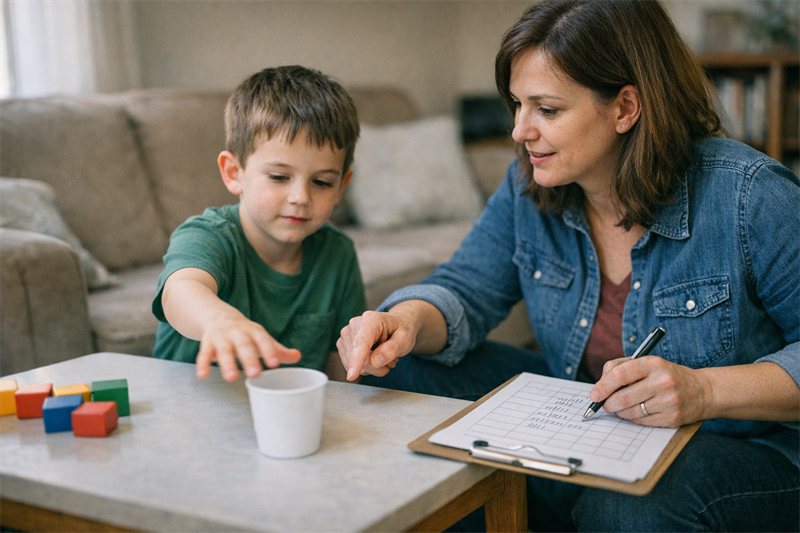
Quick Answer: ABA therapy goals are specific, measurable targets based on a child’s current skills, and they are adjusted over time using data to track progress. When goals are unclear or not measured consistently, it becomes harder to see whether therapy is helping and what should change next.
Most parents are told their child will have “goals” in ABA therapy, but that word can feel vague. What actually happens day to day? What does real progress look like? And how can you tell if therapy is working?
At Strive ABA Consultants LLC, this is one of the first areas families want clarity on. Clear, well-defined goals are what make therapy structured, trackable, and meaningful.
What ABA Therapy Goals Actually Look Like
ABA therapy goals are not general ideas like “improve communication.” They are clearly defined targets that describe what a child will do, when they will do it, and how progress will be measured.
When goals are too broad, it becomes difficult to measure improvement, and therapy can start to feel inconsistent or unclear.
Most ABA goals fall into three core categories:
Skill Acquisition Goals
These focus on building new skills a child does not yet have, such as communication, early learning, and social interaction.
This is often the starting point. When communication or learning skills are limited, some behavior challenges may be connected to those gaps.
Behavior Reduction Goals
These focus on reducing behaviors that interfere with safety, participation, or learning, such as aggression or frequent tantrums.
The goal is not just to reduce a behavior, but to teach a functional replacement. Without that, the behavior may continue or show up in other ways.
Functional and Daily Living Goals
These focus on independence in everyday routines like getting dressed, transitioning between activities, and following instructions.
This is where progress often becomes more visible in daily life. Without these goals, improvements may stay limited to therapy sessions.
Real Examples of ABA Therapy Goals
Examples make it easier to see how structured ABA goals really are. Each goal includes a clear outcome so progress can be tracked.
Communication Goal Examples
- Child will request preferred items using 2-3 word phrases in 4 out of 5 opportunities
- Child will independently use a communication device to make requests across multiple settings
As communication improves, frustration-related behaviors may decrease because the child has a clearer way to express wants and needs.
Social Skills Goal Examples
- Child will take turns during structured play for at least 3 exchanges
- Child will respond to peer greetings in most observed opportunities
Social skills often begin in structured settings and then need to be practiced in more natural environments. Without that next step, carryover can be limited.
Behavior Management Goal Examples
- Child will reduce tantrum duration across sessions
- Child will use a taught coping strategy instead of aggression in a majority of observed situations
Reducing a behavior without teaching an alternative response usually does not lead to lasting change.
Independence and Daily Skills Examples
- Child will complete a multi-step morning routine with minimal prompting
- Child will transition between activities with reduced resistance in most opportunities
These are often the skills families notice most because they directly affect how smoothly daily routines run at home.
Many of these goals are identified through structured assessments. For a clear breakdown of that process, this step-by-step guide to ABA assessments explains what to expect.
How ABA Goals Are Created
ABA goals follow a structured process. They are based on what a child can currently do and which skills are most important to build next.
Initial Assessments and Baselines
Every goal starts with baseline data. This shows current skill levels and helps identify gaps.
If baseline data is incomplete or inaccurate, goals may be set too high or too low, which can slow progress.
Identifying Priority Skills
Effective plans usually focus first on communication, safety, and independence.
Targeting less important skills too early can leave more pressing challenges unresolved.
Collaborating with Parents
Parent input helps ensure goals match real-life routines.
When goals do not reflect daily life, progress in sessions does not always carry over at home.
How Progress Is Measured in ABA Therapy
ABA therapy relies on consistent data collection. Progress is based on what is observed and recorded, not guesswork.
Data Collection Methods
Common methods include tracking how often a behavior occurs, how long it lasts, or how a child responds across repeated trials.
When data is not tracked reliably, it becomes difficult to tell what is actually improving.
Tracking Progress Over Time
Data is reviewed over time to identify patterns. This shows whether a skill is improving, staying the same, or needing a different approach.
Progress is not always steady. Plateaus can happen and may signal that something in the plan needs to change.
Adjusting Goals Based on Results
Goals are updated as skills develop or when progress slows.
This is what keeps therapy responsive. When goals stay the same for too long, progress can stall.
For a closer look at how data is tracked in practice, this guide to tracking behavior in ABA sessions explains how consistency is maintained.
Why Personalized Goals Matter for Long-Term Progress
ABA therapy is not one-size-fits-all. Goals need to change as a child’s skills develop.
Generic plans can fall short. When goals are not updated, progress may slow and frustration can increase.
Early improvement followed by a plateau can be a sign that the goals no longer match the child’s current level and need to be adjusted.
What Parents Should Look for in an ABA Therapy Plan
The structure of a therapy plan says a lot about its quality. Clear goals and consistent tracking are key indicators.
- Goals are specific and measurable
- Progress is reviewed and updated regularly
- Data is shared in a way that is easy to understand
- Parents are involved in planning and feedback
- Sessions are consistent and accessible
Real-world logistics also matter. Missed sessions, transportation issues, and inconsistent schedules can slow progress and make it harder to build skills.
For families dealing with access issues, transportation support options for autism services may help maintain consistency.
If You’re Seeing This, It’s Time to Take Action
If your child’s therapy feels unclear or progress is hard to track, it may be time to review the plan more closely.
- Goals are vague or not measurable
- Progress is not clearly explained
- Skills improve in sessions but not at home
- Behaviors return instead of improving over time
These can be signs that the current approach is not fully aligned with your child’s needs. In that situation, a more structured review and updated goals may help.
Key Takeaways
- ABA therapy goals are specific, measurable, and individualized
- Goals are based on assessments and baseline data
- Progress is tracked using consistent data collection
- Goals should evolve to match the child’s development
- Consistency and access to care can affect progress
Conclusion
ABA therapy depends on clear, measurable goals. When those goals are missing or poorly defined, it becomes harder to evaluate progress and make therapy more effective over time.
Without strong assessments, consistent tracking, and regular updates, families may not get a clear picture of what is working and what needs to change.
Strive ABA Consultants LLC focuses on building structured, measurable goals from the start and adjusting them as progress is made. With support for evaluations, re-evaluations, and consistent access to services, families can better understand their child’s plan and next steps.
If your child’s current plan feels unclear or inconsistent, the next step may be to start with a structured evaluation and build a plan that reflects real needs and measurable progress.
Frequently Asked Questions
What are examples of ABA therapy goals?
ABA therapy goals include measurable targets like requesting items using words, reducing tantrum duration, or completing routines more independently. These goals are defined with clear criteria so progress can be tracked. Reviewing examples helps clarify what structured therapy looks like.
How are ABA therapy goals measured?
Goals are measured using data collection methods such as frequency tracking, duration recording, and repeated trials. Progress is reviewed over time to identify patterns and guide changes. This helps families understand whether therapy is moving in the right direction.
Who creates ABA therapy goals?
Goals are created by qualified ABA professionals based on assessments, observed behavior, and parent input. This helps ensure the plan reflects both treatment priorities and daily routines. A structured evaluation is typically the starting point.
How often are ABA goals updated?
Goals are updated as progress is made or when improvement slows. This keeps therapy aligned with the child’s current skill level. Regular updates are an important part of maintaining progress.
What makes a good ABA goal?
A good ABA goal is specific, measurable, and clearly defined. It outlines the expected behavior and how success is tracked. Clear goals make progress easier to evaluate.
Are ABA therapy goals individualized for each child?
Yes, goals are tailored to each child’s strengths, needs, and environment. They are based on assessments and ongoing data. This helps keep therapy relevant and practical for daily life.