

At Strive ABA Consultants LLC, this is a point where many programs get stuck. A team knows something is not working, but the next step feels unclear. The issue is usually not lack of concern. It is lack of structure around the concern.
If a school or care program is getting ready for ABA behavior consultation support, the goal is not to arrive with perfect data or a finished solution. The goal is to bring the right information so the first conversation can help clarify whether the issue centers on one student, one classroom, staff implementation, or a broader system.
Why preparation matters before an ABA behavior consultation
A behavior consultant needs enough context to understand the concern clearly. That includes the concern itself, when and where it shows up, who is involved, what the team is already doing, and what the program wants to improve.
This is where many programs lose clarity. The concern is real, but it is described too broadly. Statements like “staff are overwhelmed,” “behaviors are getting worse,” or “the classroom is inconsistent” may reflect a real problem, but they do not give enough detail to identify what kind of support is likely needed.
Preparation matters because it helps move the conversation from urgency to direction. When the first meeting starts with organized observations, relevant records, and a practical goal, the consultant can usually sort out scope more efficiently. When it starts with vague descriptions and disconnected paperwork, the meeting can turn into basic fact-gathering instead of planning.
If the team is still sorting out what ABA consulting includes, it may help to review what ABA consulting is and how it differs from direct therapy, behavior coaching, and OBM before the first meeting.
What a consultant is trying to understand in the first meeting
- What the main concern looks like in observable terms
- When and where the issue tends to happen
- Who is involved when the concern occurs
- What responses, supports, or procedures are already in place
- What improvement the program wants to see
Common reasons early consultation conversations stay unclear
- The concern is described in labels instead of observable terms
- The team brings a large amount of paperwork without a clear summary
- There is no distinction between a student behavior issue and a consistency problem
- The meeting includes many people, but no clear point person or shared goal
A practical checklist to prepare for a behavior consultation
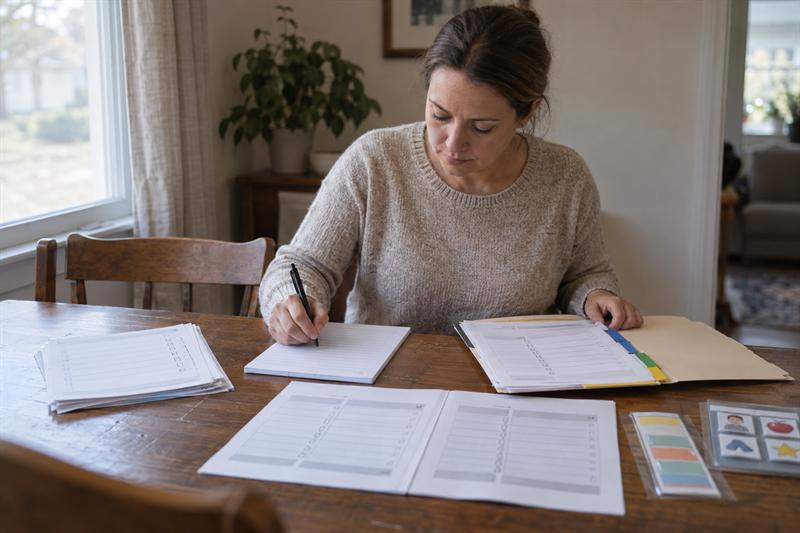
The most useful consultation prep is simple, specific, and organized around patterns. A common mistake is assuming more paperwork means better preparation. It often does not. What helps most is gathering the information that shows what is happening, when it happens, how staff are responding, and what the program wants to change.
1. Clarify the main concern in observable terms
Start with what is happening, not what it seems to mean. That means describing behavior in a way another team member could recognize without interpretation. Instead of “the student is noncompliant,” a more useful version is “the student leaves the table during group work after verbal demands.” Instead of “staff are struggling,” a more useful version is “staff responses during transitions vary by person and the routine breaks down when expectations change.”
Many teams run into this early. Programs describe the impact before they describe the behavior. That creates urgency, but not enough clarity. The first step is to define the concern in a way that can actually be reviewed.
2. Identify where and when the issue tends to happen
Context usually matters more than teams expect. Note the setting, time of day, transition points, task demands, staffing pattern, and peer context. If the concern appears mostly during arrival, cleanup, group instruction, waiting, or handoff periods, that may point to a routine problem that needs closer review.
A common pattern is that teams remember the biggest incidents but miss the regular conditions around them. That makes behavior support harder than it needs to be. If the team cannot show where the issue is most likely to happen, the first consultation may stay too broad.
3. Gather recent behavior data, notes, or incident documentation
Bring the records that help show frequency, timing, and response patterns. That can include behavior logs, ABC-style notes, incident reports, classroom notes, communication logs, and internal summaries.
Formal data is useful, but consistent informal notes are useful too. If a program has staff notes showing that escalation happens most often during dismissal or after schedule changes, that is still meaningful. What often goes wrong is sending a large stack of records without a short summary of the patterns the team has already noticed.
If documentation is part of the problem, it may help to review documentation that supports consistency in ABA and care programs. Strong documentation does not just record incidents. It can also help teams see whether support is being implemented the same way across people and settings.
4. Bring relevant plans, procedures, or classroom expectations
Useful materials often include behavior plans, classroom rules, reinforcement systems, crisis procedures, transition routines, schedules, and visual supports. These documents matter because they show what the team expects to happen and what support is already supposed to be in place.
This issue can become more complicated when written plans do not match daily practice. A classroom may have a reinforcement system on paper, but if staff use it differently across the day, the issue is no longer only plan design. It may also involve implementation.
5. List the staff roles involved and who should attend
The right people for the consultation are the people who know the situation directly and the people who can support follow-through after the meeting. That often includes a classroom lead, direct staff member, special education or behavior support point person, case manager, and a program-level decision-maker.
Too many attendees can slow a consultation if roles are unclear. Too few can create a different problem. A consultant needs enough context to understand what is happening and enough decision authority in the room to help determine what happens next.
If the concern already involves staff follow-through or unclear implementation, it may help to read when staff coaching helps in ABA and care programs. Sometimes the presenting issue looks like behavior escalation, but the actual barrier may be inconsistent staff response.
6. Note what strategies have already been tried
List what the team has tried, who used it, and what happened. This should include both formal strategies and routine adjustments. The point is not to prove that nothing worked. The point is to avoid repeating incomplete or inconsistently applied approaches, or assuming a strategy failed when it was never used consistently enough to evaluate.
This is another common pattern. A team says a strategy did not work, but different staff used different instructions, prompts, or consequences. That may mean the program has information about inconsistency, not yet information about whether the strategy itself was effective.
7. Define what improvement would look like
The program should be able to describe what better looks like in practical terms. That might mean safer transitions, fewer escalations during group work, more consistent staff responses, improved classroom flow, or better participation during daily routines.
Vague goals can slow down decision-making. “We want things to go better” does not help much. “We need dismissal to be safer and more predictable” gives the consultation a clearer direction.
8. Prepare questions about scope, coaching, and next steps
The consultation should help the program understand what kind of support fits the problem. That means asking whether the concern appears student-specific, classroom-wide, tied to staff implementation, or connected to broader systems.
If the team is still deciding between school-based ABA, consultation, or coaching support, review which approach fits a program. The right next step often becomes clearer when the concern is organized around where support appears to be breaking down.
If your team is seeing these signs, the issue may benefit from structured outside review:
- The same behavior concern keeps showing up across routines, even after internal changes
- Staff describe the problem differently and respond differently from person to person
- There is documentation, but no clear picture of the pattern
- Written plans exist, but daily implementation does not look the same across staff or settings
When those signs are present, the issue may require more than another informal team discussion.
What to bring if the concern involves one student, one classroom, or the whole program
Not every consultation starts from the same kind of problem. This matters because the preparation should match the level of the concern. One student concern, one classroom breakdown, and one program-wide consistency issue do not call for the same materials.
If the concern is student-specific
Bring the student schedule, recent incidents, current support plan, known triggers, communication supports, relevant motivators, and examples of how staff typically respond. Keep the focus on what helps explain the support need.
The key distinction here is relevance. The consultant does not need every record a team has ever created. The consultant needs enough information to understand what the student is experiencing in that setting and what support is already being attempted.
If the concern is classroom-wide
Bring the daily schedule, transition points, group expectations, reinforcement system, staffing pattern, and notes on routines that regularly break down. Classroom-wide concerns usually become clearer when the team shows how the environment is structured across the day.
This is where problems are often mislabeled as individual behavior concerns. If multiple students struggle during the same routine, or if the issue appears most strongly during transitions and waiting, the classroom structure itself may need review.
If the concern is program-wide or tied to consistency
Bring training procedures, documentation systems, supervision patterns, handoff processes, staffing coverage information, and any internal procedures related to response consistency. Program-wide issues often show up as drift. Different staff do the same task in different ways, documentation is uneven, and expectations change across rooms or shifts.
When that pattern is showing up, the issue may go beyond one plan or one case. It can point to a systems problem. In those cases, broader review around supervision, documentation, staffing, and consistency may become more relevant, which is why some teams also benefit from understanding how OBM supports ABA and behavior support teams.
What if the program does not have complete data yet?
The program can still prepare and still move forward. Waiting for perfect documentation often delays the clarity the team is trying to create. Partial but organized information is usually enough to make the first conversation useful.
Teams sometimes delay a consultation because they think they need a polished packet first. In practice, that delay can mean the issue continues, staff frustration grows, and more time passes without a clear plan.
What is still useful to share
- Staff observations
- Schedule patterns
- Notes on high-risk times or routines
- Examples of current responses
- Incomplete logs that still show a pattern
- Information about classroom setup or routine structure
If the team has noticed that a concern is more likely during arrival, after peer conflict, or when one routine changes, that is useful. If staff have noticed that one response tends to escalate the issue while another helps settle it faster, that is useful too. The first consultation does not require perfect measurement to begin identifying where support is breaking down.
How to describe patterns without overclaiming
Use language like “tends to happen during,” “is more likely when,” or “staff have noticed.” That keeps the focus on observed patterns rather than unsupported conclusions about cause.
This matters because teams sometimes jump too fast from pattern to explanation. A stronger consultation starts with accurate observation first. The function, driver, or barrier often becomes clearer when the context is mapped well.
Questions to ask before the consultation begins
A good consultation should not leave the program guessing about scope, process, or likely next steps. Asking the right questions early helps the team determine whether the support fits the actual problem.
Questions about fit and goals
- What kinds of concerns are best suited for consultation?
- How is the concern likely to be scoped at the start?
- What information is most helpful before the first meeting?
These questions matter because programs sometimes seek consultation for one issue and discover the core barrier is somewhere else. The earlier that becomes clear, the more useful the process can be.
Questions about staff coaching and implementation
- Will staff coaching be part of the process?
- How are implementation issues identified?
- What happens if the challenge is consistency rather than plan design?
If the issue keeps showing up because staff responses vary, that often means implementation needs direct attention. Without that distinction, programs can spend time redesigning plans that were never used consistently enough in the first place.
Questions about timelines, communication, and next steps
- Who should be included?
- How will recommendations be communicated?
- What follow-up or documentation should the program expect?
These questions help the team understand what action may follow the consultation. If there is no clarity around communication and follow-through, the meeting can produce discussion without enough usable movement.
Key takeaways for a more useful first consultation
- You do not need perfect records to prepare well.
- The most useful prep usually includes a clear concern, the context around it, current responses, relevant documentation, and a practical goal.
- If the issue is described too broadly, the first consultation may stay broad too.
- If staff responses vary across people or settings, implementation consistency is likely part of the problem.
- If the same concerns keep resurfacing across routines, the issue may need a more structured review.
Conclusion
The real problem is not just the behavior concern itself. A bigger problem is when a team enters consultation without a clear picture of what is happening, where it happens, who is involved, and what has already been tried. When that is not addressed well, the issue may continue, staff frustration may increase, and the program can lose time repeating the same incomplete responses.
Strive ABA Consultants LLC may be a practical next step for programs that need help organizing the problem clearly and identifying what support fits. If the concern keeps resurfacing, implementation is inconsistent, or documentation exists without a usable pattern, it may be time for structured outside guidance rather than another round of internal guesswork.
Company approach
At Strive ABA Consultants LLC, the focus is on helping teams make sense of what is already happening before adding more moving parts. That means looking at observable concerns, routines, implementation patterns, staff roles, and the points where consistency starts to break down.
This approach matters because programs rarely need more vague advice. They often need a clearer way to sort student-level concerns from classroom issues, implementation problems, and broader systems barriers. When that distinction is made early, the next step often becomes more practical and the consultation more useful.
FAQ
Can a school prepare for an ABA behavior consultation without formal behavior data?
Yes. Formal behavior data helps, but it is not the only useful preparation material. Staff observations, incident notes, routine patterns, and examples of how the team currently responds can still provide a clear starting point. If the team can show that the concern tends to happen during a specific transition, after a certain demand, or under a certain staffing pattern, that already gives the consultation useful structure.
Who should attend a behavior consultation for a school or care program?
The most useful attendees are the people who know the situation directly and the people who can support follow-through after the meeting. That usually includes direct staff or a classroom lead, someone responsible for behavior support or case coordination, and a decision-maker who can help implement changes. If the room is full of people without clear roles, the meeting may produce opinions instead of usable direction.
What documents are most helpful before an ABA consultation?
The strongest documents are the ones that show patterns, expectations, and current responses. That can include behavior logs, incident reports, communication notes, classroom expectations, support plans, reinforcement systems, and transition procedures. A short summary of what the team has noticed is often more useful than a large packet with no explanation of what matters inside it.
How do schools describe a behavior concern clearly before a consultation?
The clearest descriptions focus on what is observable. Instead of saying a student is “refusing” or that staff are “struggling,” describe what happens, when it tends to happen, who is present, and what follows. For example, saying “the student leaves the group area during large-group instruction after repeated verbal prompts” gives a consultant far more to work with than a label alone.
What if the issue seems like staff inconsistency rather than one student’s behavior?
That usually changes the focus of the consultation. If staff respond differently to the same routine or concern, the issue may center more on implementation, coaching, supervision, or unclear expectations than on one student’s behavior alone. This distinction matters because redesigning a plan will not fix a consistency problem by itself. The team first needs to understand whether the current approach is being used in the same way across people and settings.
How can a program tell whether it needs consultation, staff coaching, or broader systems support?
The answer usually depends on where the breakdown is happening. If the concern centers on one student or one recurring behavior pattern, consultation may be the right starting point. If the team understands the plan but applies it unevenly, staff coaching is usually more relevant. If the same issues show up across rooms, shifts, or team members, broader systems support is often needed because the barrier is no longer isolated to one case or one routine.