

Quick Answer: The best choice between in-home and center-based ABA therapy depends on how your child learns, behaves, and responds in daily situations. In-home therapy focuses on building skills in real-life environments, while center-based therapy emphasizes structure and opportunities for social interaction. When the setting does not match your child’s needs, progress may be slower or less consistent.
Many families reach this decision after hearing different recommendations or noticing that their child needs more consistent support. The challenge is that both options can be effective, but they work in different ways.
At Strive ABA Consultants LLC, this decision often comes up early in the process. What matters most is not the setting itself, but how well it fits your child’s learning style, behavior patterns, and daily routine.
Understanding the Two Types of ABA Therapy Settings
What Is In-Home ABA Therapy?
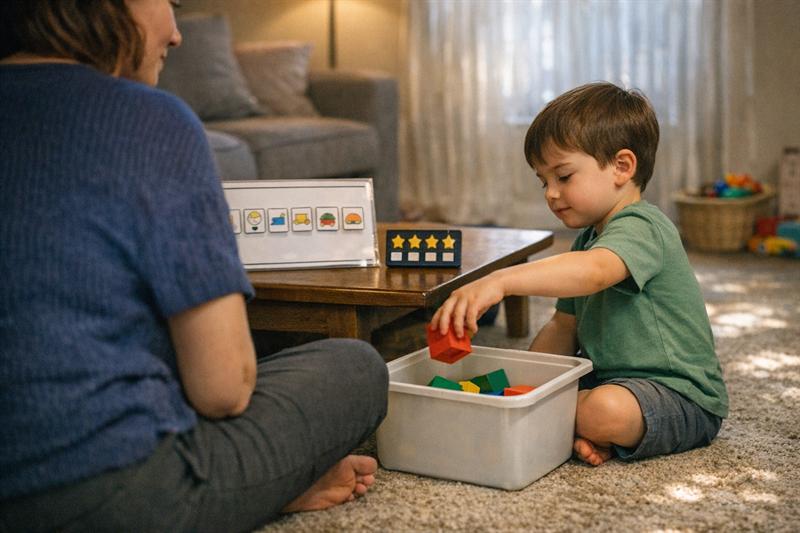
In-home ABA therapy takes place in your child’s everyday environment. Sessions are built around real routines such as meals, play, transitions, and communication within the home.
Because therapy happens in a familiar space, children may engage more naturally and practice skills where they are used most. At the same time, distractions and inconsistent routines can make sessions less effective if the environment is not set up to support learning.
What Is Center-Based ABA Therapy?
Center-based ABA therapy takes place in a structured setting designed for learning. Sessions follow consistent routines, and children may work with multiple therapists and peers.
This environment can support focus and repetition. Many children respond well to clear expectations and fewer distractions. However, skills learned in a center do not always carry over into home and community settings without intentional follow-through.
Key Differences Between In-Home and Center-Based ABA Therapy
Key differences: In-home therapy focuses on applying skills in real situations, while center-based therapy focuses on building skills in a structured environment with more opportunities for social interaction.
Learning Environment
In-home therapy uses everyday routines as teaching moments. Center-based therapy uses controlled settings to reduce distractions and increase consistency. This can affect how easily skills carry into daily life.
Social Interaction Opportunities
Centers provide regular access to peers. At home, social interaction usually needs to be planned more intentionally. This often means more structured social practice in centers and more individualized attention at home.
Structure and Routine
Center-based programs usually follow predictable schedules. Home environments can vary from day to day. Some children benefit from flexibility, while others need consistent structure to stay engaged.
Parent Involvement
In-home therapy naturally includes parents and caregivers. In center-based settings, involvement is often more structured and may happen outside of sessions. This can affect how consistently strategies are used throughout the day.
Skill Generalization
Skills learned in one setting do not automatically transfer to another. A child may follow instructions in a center but struggle to apply the same skills at home.
Without a clear plan for generalization, progress can stay limited to one environment. A deeper explanation of this challenge is covered in why ABA skills don’t carry over.
Pros and Cons of In-Home ABA Therapy
- Pros: Skills are practiced where they are actually needed
- Pros: Easier to align therapy with daily routines
- Pros: Greater parent involvement during sessions
- Cons: Fewer opportunities for peer interaction
- Cons: More potential distractions
- Cons: Progress depends partly on consistency in the home environment
In-home therapy often works best when routines are reasonably predictable and caregivers can stay involved. When routines change frequently, progress may be slower.
Pros and Cons of Center-Based ABA Therapy
- Pros: Structured environment with clear expectations
- Pros: Built-in opportunities for social interaction
- Pros: Consistent programming across sessions
- Cons: Skills may not carry over to home without support
- Cons: Requires transportation and schedule coordination
- Cons: Some children need time to adjust to the setting
Some children do very well in the center but have difficulty using those same skills at home. When that happens, it may point to gaps in how generalization is being supported across settings.
How to Choose the Right Setting for Your Child
The most reliable way to decide is to look at how your child currently learns and where challenges show up most often.
Age and Developmental Stage
Younger children may benefit from structured learning, but some need familiarity first. If transitions are difficult, starting at home can make early sessions more productive.
Social Needs
If social interaction is a primary goal, center-based therapy may provide more consistent opportunities. If communication and daily living skills are the priority, home-based therapy allows those to be practiced in real situations.
Behavior Challenges
If challenging behaviors happen most often at home, addressing them in that same environment can make therapy more relevant to daily life. If the main concerns involve group routines, transitions, or peer interaction, a center setting may offer useful practice opportunities.
Family Schedule and Logistics
Consistency matters. Missed sessions and irregular schedules can make it harder to build and maintain skills over time.
Access to Transportation and Services
Transportation and provider availability can limit what is realistic. At Strive ABA Consultants LLC, these practical factors are discussed early because access directly affects whether a plan can be followed consistently.
For a step-by-step approach to evaluating providers, review how to choose the right ABA provider.
If you are noticing these signs, the current setting may not be the best fit:
- Your child performs well in sessions but not at home
- Sessions are inconsistent or frequently missed
- Challenging behaviors continue during daily routines
- Skills are not showing up outside structured therapy time
When these patterns continue, it may be worth revisiting the setting, structure, or overall approach.
When a Hybrid Approach May Be the Best Option
A hybrid model uses both in-home and center-based therapy. This can help bridge the gap between learning skills and using them in real situations.
One approach is to build foundational skills in a structured setting and then practice them at home. This can reduce the disconnect between environments.
This works best when both settings are aligned. Without coordination, it can create confusion and slow progress.
Questions to Ask Before Choosing an ABA Setting
- How are therapy goals adapted to my child’s environment?
- How is progress tracked across different settings?
- What does a typical session involve?
- How are parents included in the process?
- How are challenges outside of sessions addressed?
For a more detailed checklist, see what to ask an ABA provider before starting therapy.
If answers are vague, expectations may be unclear as well, which can make it harder to judge whether therapy is working.
Finding ABA Therapy Near You
Access to care affects consistency. Even a strong plan becomes harder to follow if sessions are difficult to schedule or attend.
Evaluations and re-evaluations can help guide the setting and adjust services over time. At Strive ABA Consultants LLC, this process is used to align services with how the child functions in daily life.
If you are looking for local options, start with how to evaluate ABA therapy providers near you.
Final Thoughts on Choosing the Right ABA Therapy Setting
There is no single setting that works for every child. The right choice depends on where your child can learn effectively and apply those skills consistently.
Many families choose based on convenience or recommendations alone. If the setting does not match the child’s needs, progress may slow and the plan may need to be adjusted later.
Key Takeaways
- In-home therapy focuses on real-life skill use and parent involvement
- Center-based therapy provides structure and peer interaction
- Skills do not automatically transfer between settings
- The best choice depends on where challenges occur and how your child learns
- Hybrid approaches can help connect structured learning with daily life
Conclusion
Choosing between in-home and center-based ABA therapy affects how your child learns and whether those skills carry into everyday life.
When the setting does not match your child’s needs, progress may slow, behaviors may continue in daily routines, and skills may not transfer across environments. Over time, that can lead to frustration and the need to revisit the decision.
Strive ABA Consultants LLC helps families make this decision based on how children learn and function day to day. With evaluations, re-evaluations, and support that considers access and consistency, the focus stays on building skills that work in real life.
If you are unsure which setting is right, the next step is to look closely at where your child struggles most and choose a plan that supports consistent progress in those situations.
Frequently Asked Questions
Is in-home ABA therapy as effective as center-based therapy?
Both can be effective when aligned with the child’s needs. In-home therapy supports real-life application, while center-based therapy supports structure and social learning. The better fit usually leads to more consistent progress.
Which ABA therapy setting is better for young children?
Many young children benefit from structured environments, but those who have difficulty with transitions may respond better to starting at home. An evaluation can help identify the best starting point.
Does center-based ABA help with social skills more?
Center-based settings typically offer more opportunities for peer interaction. However, those skills still need to be practiced outside the center to become more consistent in daily life.
Can a child switch between in-home and center-based ABA therapy?
Yes. Many children move between settings or use both. This approach can support both structured learning and real-life application.
How many hours of ABA therapy are typically recommended?
The number of hours depends on the child’s needs and goals. Some children need only a few hours per week, while others may benefit from a more intensive schedule.
What should parents look for in an ABA provider?
Look for clear goals, measurable progress, and meaningful caregiver involvement. Providers should be able to explain how therapy works across different settings and how progress is tracked.